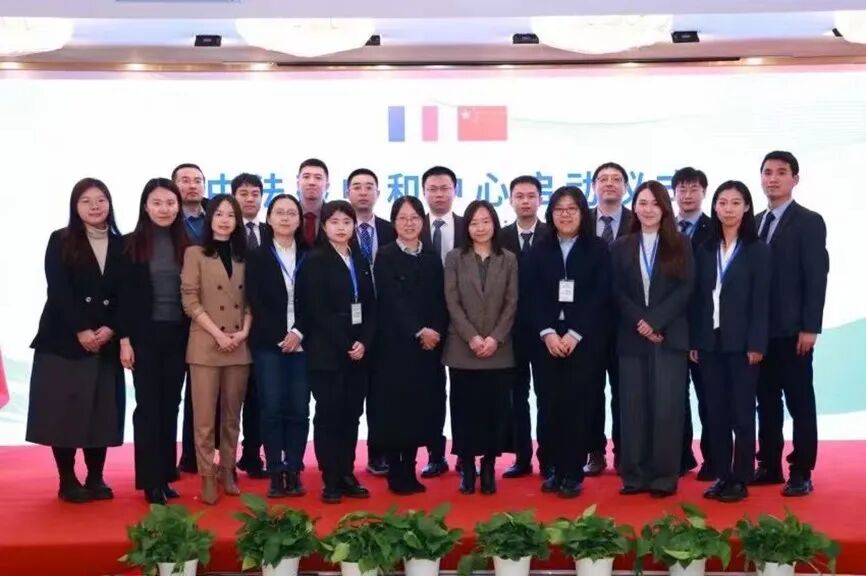
Launch Ceremony and Symposium of the China-France Carbon Neutrality Center Held Successfully

To implement the consensus reached by the Chinese and French heads of state on cooperation in addressing climate change, the launch ceremony of the China-France Carbon Neutrality Center was held in Beijing on November 24 during the 6th China-France High-Level People-to-People Exchange Mechanism meeting. The ceremony was jointly hosted by China's Ministry of Science and Technology, France's Ministry for Europe and Foreign Affairs, France's Ministry of Higher Education and Research, and the French Embassy in China. It was organized by the Administrative Center for China's Agenda 21, with support from Tsinghua University's Institute for Carbon Neutrality, the China Emission Accounts and Datasets (CEADs) team, and others.
Opening Session of the Launch Ceremony
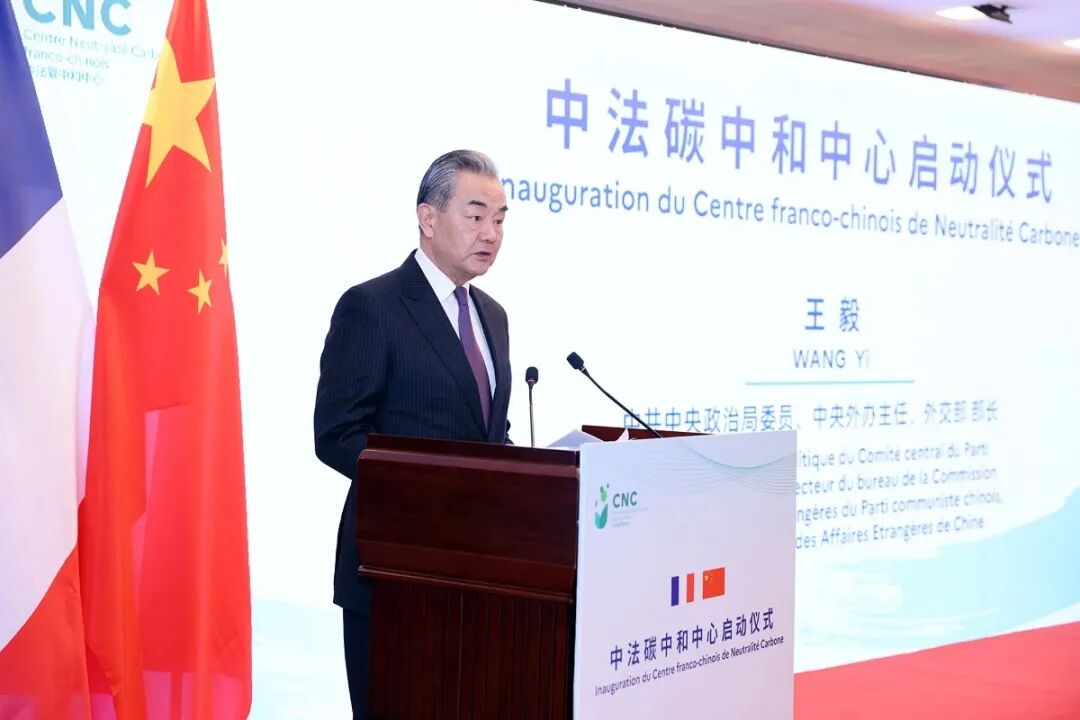
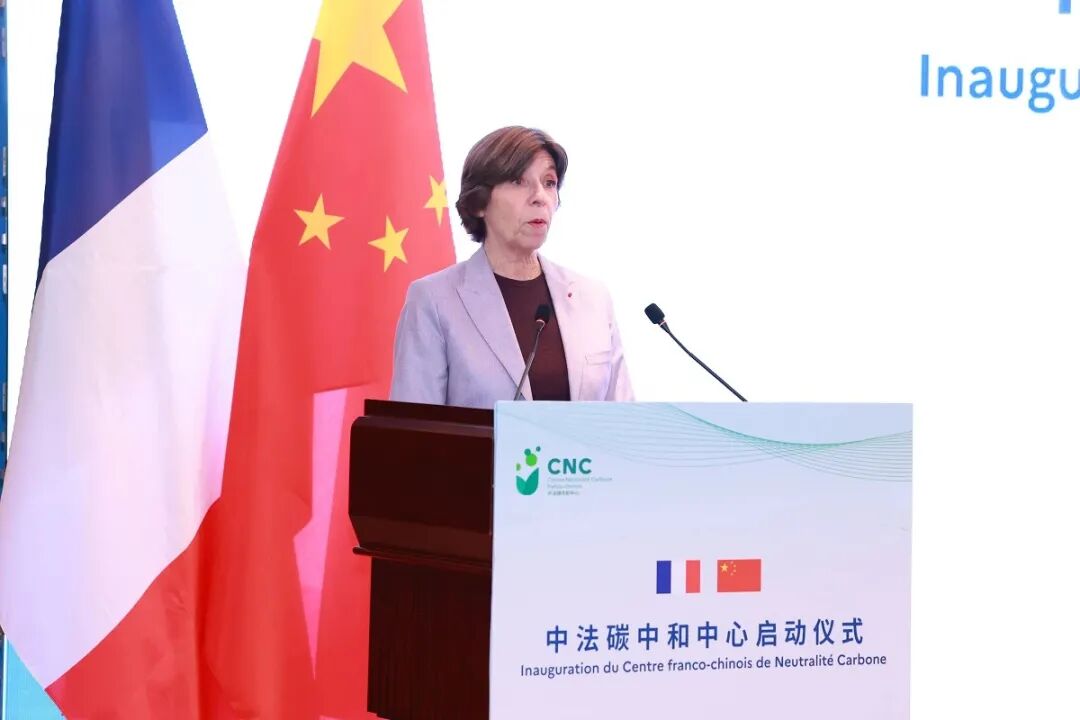
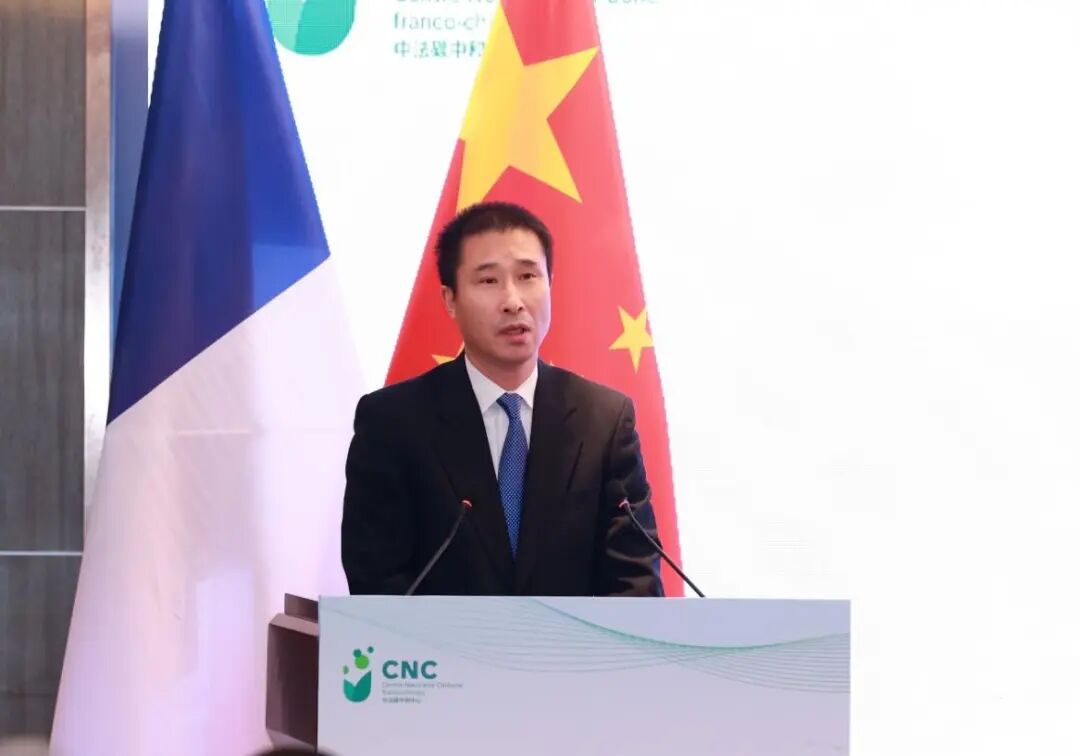
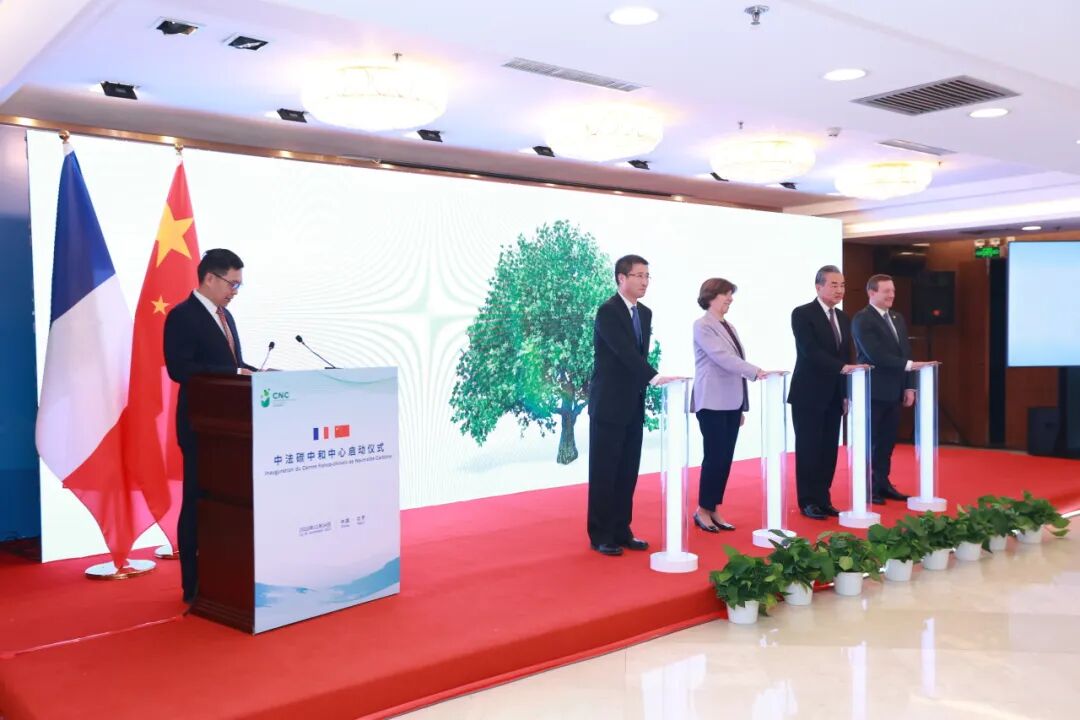
The launch ceremony featured opening remarks and a symposium. Wang Yi, the Chinese lead of the China-France people-to-people exchange mechanism and Minister of Foreign Affairs; Catherine Colonna, the French lead and Minister for Europe and Foreign Affairs; and Zhang Guangjun, Vice Minister of Science and Technology of China, attended the ceremony and delivered speeches.
Chinese Foreign Minister Wang Yi said that the joint establishment of the Carbon Neutrality Center by China and France is an important consensus reached by President Xi Jinping and President Emmanuel Macron, and that China is ready to work with France to ensure that scientific and technological innovation benefits all humanity.
French Foreign Minister Catherine Colonna said that tackling climate change and protecting biodiversity are important consensus points between the two heads of state and key areas of pragmatic cooperation, demonstrating the two sides' ambition for collaboration in innovation and low-carbon transition.
Zhang Guangjun, Vice Minister of Science and Technology of China, stressed that the China-France Carbon Neutrality Center is the first carbon neutrality center established through cooperation between China and a foreign government. It will focus on agriculture, biodiversity, and the environment, and promote the integration and application of scientific and technological innovation achievements from both countries.
Later, Wang Yi, Catherine Colonna, Zhang Guangjun, and French Ambassador to China Bertrand Lortholary jointly unveiled the China-France Carbon Neutrality Center.
Keynote Report Session
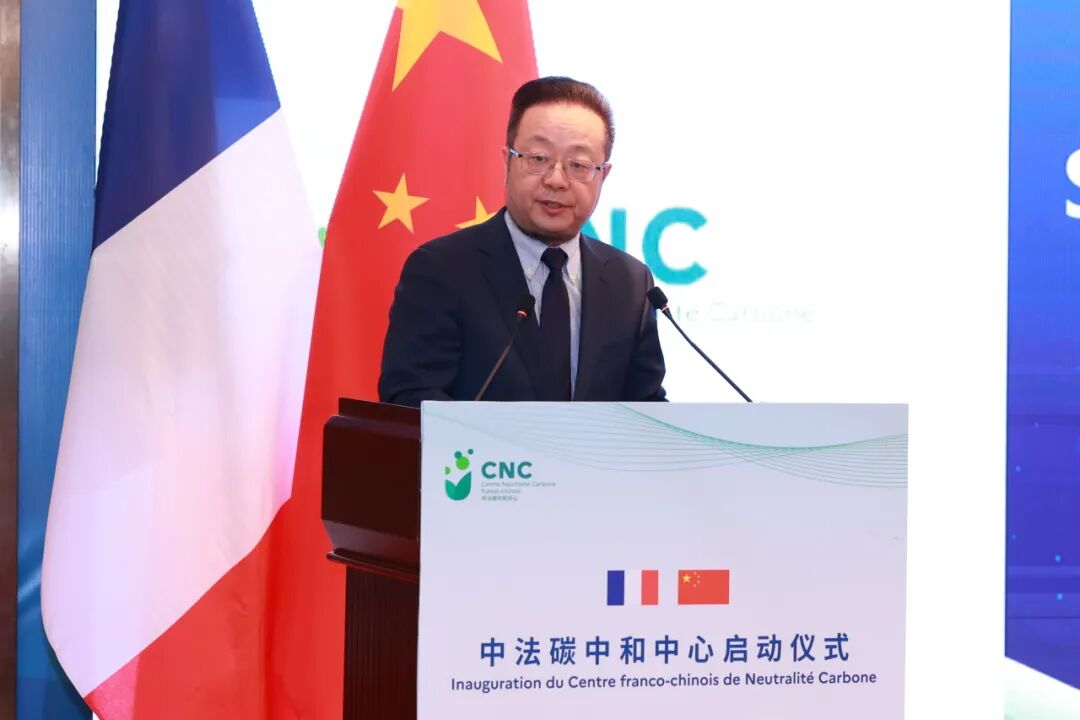
The keynote report and symposium were moderated by Zhang Xian from the Administrative Center for China's Agenda 21 and Annoth from the Science and Technology Service of the French Embassy in China.
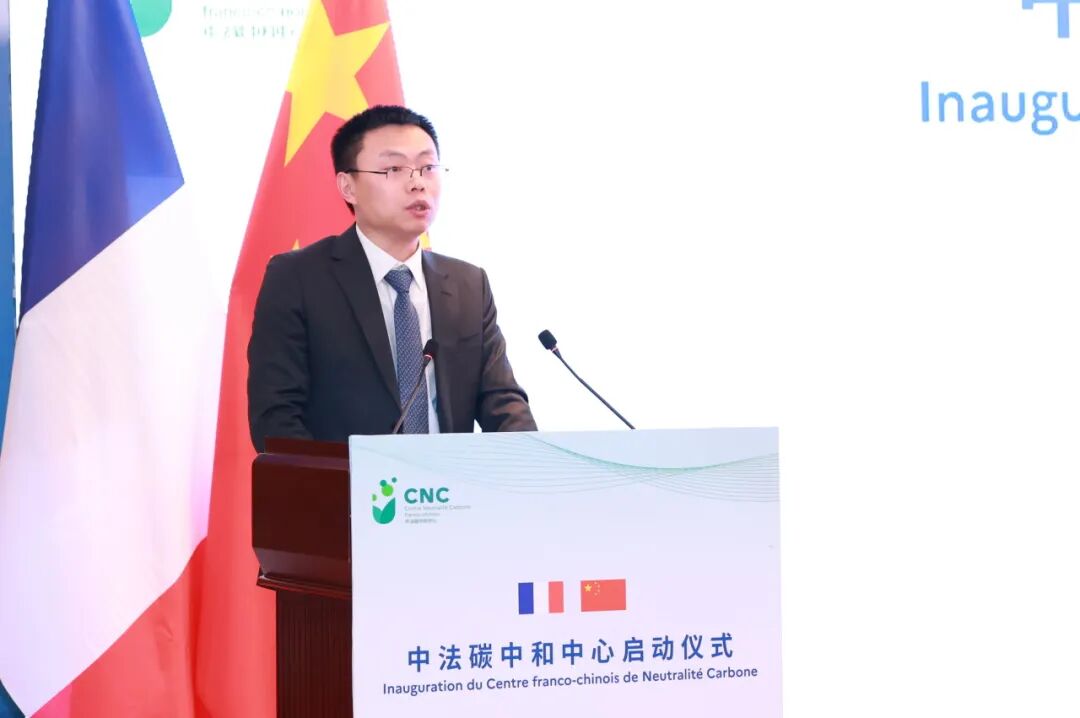
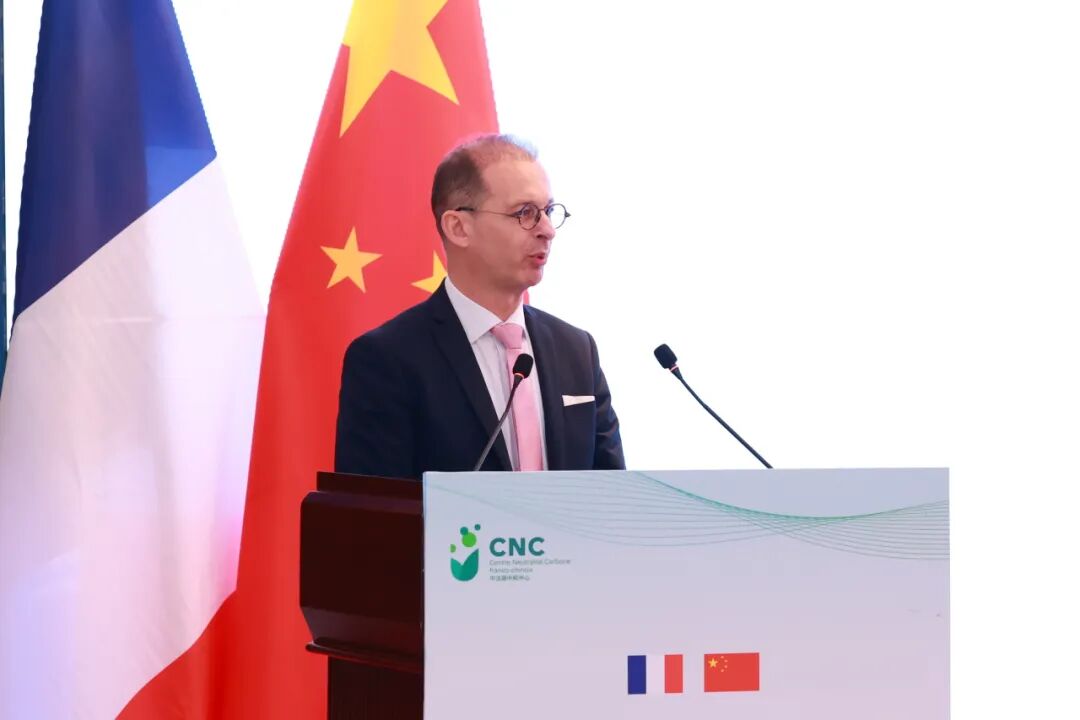
In the keynote report session, He Kebin, Dean of Tsinghua University's Institute for Carbon Neutrality and Academician of the Chinese Academy of Engineering, delivered the Chinese keynote report, while Valerie Masson-Delmotte, Academician of the French Academy of Sciences, delivered the French keynote report. Together, they addressed the severe climate challenges facing humanity and shared their vision for future China-France cooperation on carbon neutrality.
He Kebin said that the large-scale emission of carbon dioxide has intensified the global climate crisis, and that China and France have long shared a solid foundation for cooperation in climate change. He proposed practical collaboration in areas such as energy transition and technological innovation, industrial net-zero transition, transport emissions, zero-carbon and resilient urban building transition, ecology and carbon sequestration, and agriculture and biodiversity protection.
He Kebin suggested that China and France could further establish a bilateral academic committee on this important platform and jointly prepare a cooperation guide for the carbon neutrality field. He also proposed a cooperation mechanism linking research, academia, enterprises, and local communities to help translate university innovation into enterprise demonstration projects. In addition, he called for building an education and research base in the carbon neutrality field and promoting exchange and interaction among talent through alliance partnerships. On the basis of bilateral cooperation, he further suggested developing a multilateral cooperation framework and extending the education and research base and technological innovation to other regions of the world.
Valerie Masson-Delmotte delivered her keynote report online. She said that China and France should deepen exchanges, promote scientific diplomacy, establish institutions for science and technology policy, provide strong support for outstanding scientists, complement each other's strengths in technological innovation, and make wise scientific and technological decisions together. She also said that the two countries should effectively communicate the science of climate change and carbon neutrality, and jointly support the cultivation of talent in carbon neutrality.
Symposium Session
The keynote report and symposium were moderated by Zhang Xian from the Administrative Center for China's Agenda 21 and Annoth from the Science and Technology Service of the French Embassy in China.
During the symposium, Pei Shilong and Dai Minhan from the Chinese Academy of Sciences, together with Philippe Ciais and Christophe Chalon from France, delivered academic presentations.
Pei Shilong shared his firsthand experience in scientific cooperation with France and introduced the outcomes of jointly establishing the China-France Institute for Earth System Science. He suggested that the two countries should form a scientific partnership alliance, build an open academic platform, and devote efforts to advancing breakthrough scientific and technological development.
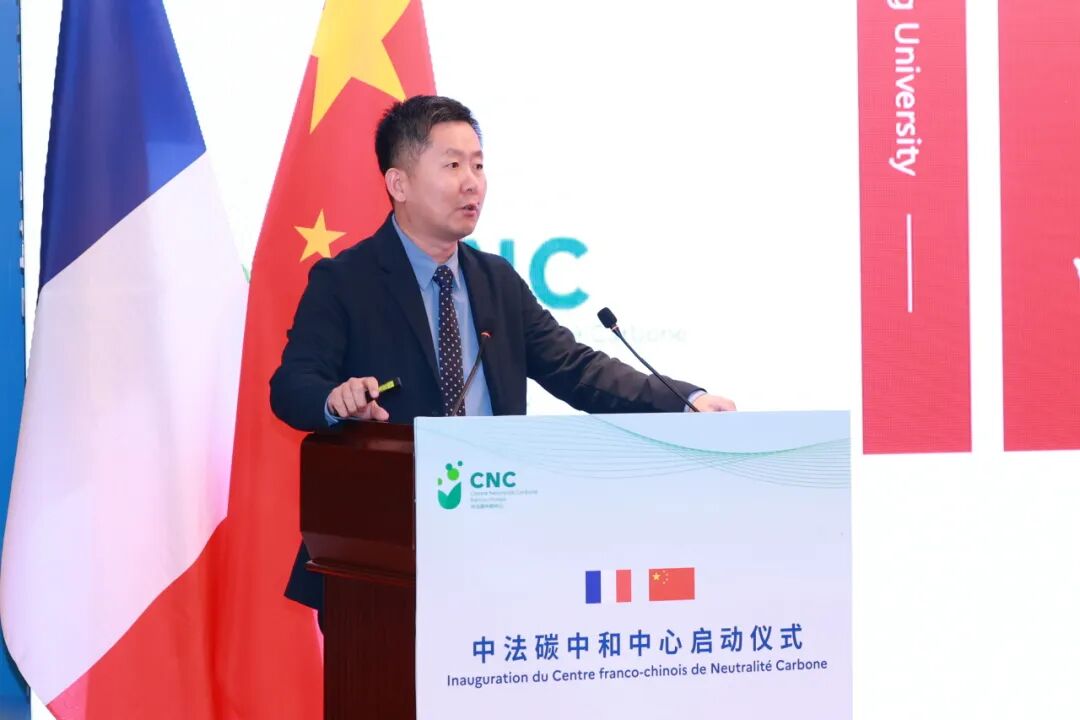
Philippe Ciais said in his online report that forests make a major contribution to human health and well-being and can help advance the Sustainable Development Goals. He suggested that China and France jointly conduct in-depth research on forest carbon change, forest carbon emission forecasting, and high-resolution satellite data observation.
Dai Minhan presented data showing the key role of the ocean in capturing atmospheric carbon dioxide and shared China-France research cooperation in marine geology and marine satellites. He said that China-France ocean cooperation has a long history and promising prospects in the carbon neutrality field, and suggested establishing a coordination office for the Carbon Neutrality Center, strengthening basic research cooperation, and jointly advancing ecosystem-based integrated marine governance research.
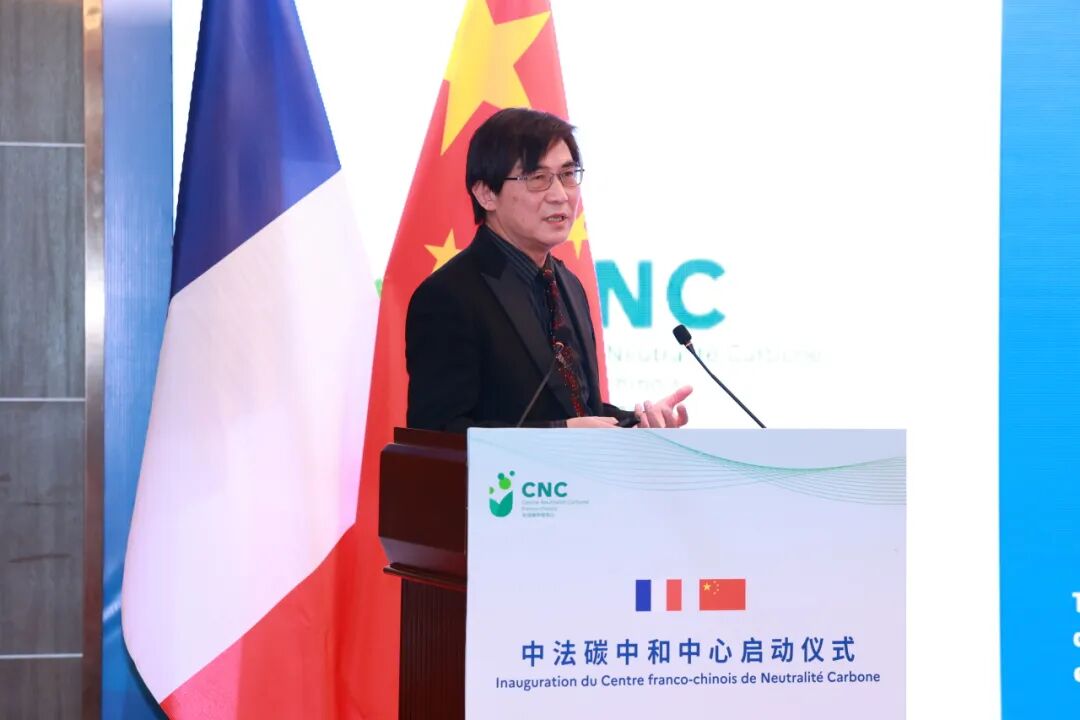
Christophe Chalon, a senior researcher at France's National Research Institute for Agriculture, Food and Environment, introduced the research achievements of the China-France Joint Innovation Laboratory in his online report. He said the laboratory's main goal is to bring together scientific expertise from both sides in agroecology and to cultivate young agricultural scientists. He proposed that China and France complement each other's expertise in science and technology and jointly train talent for carbon-neutral agriculture.
Invited Commentary Session
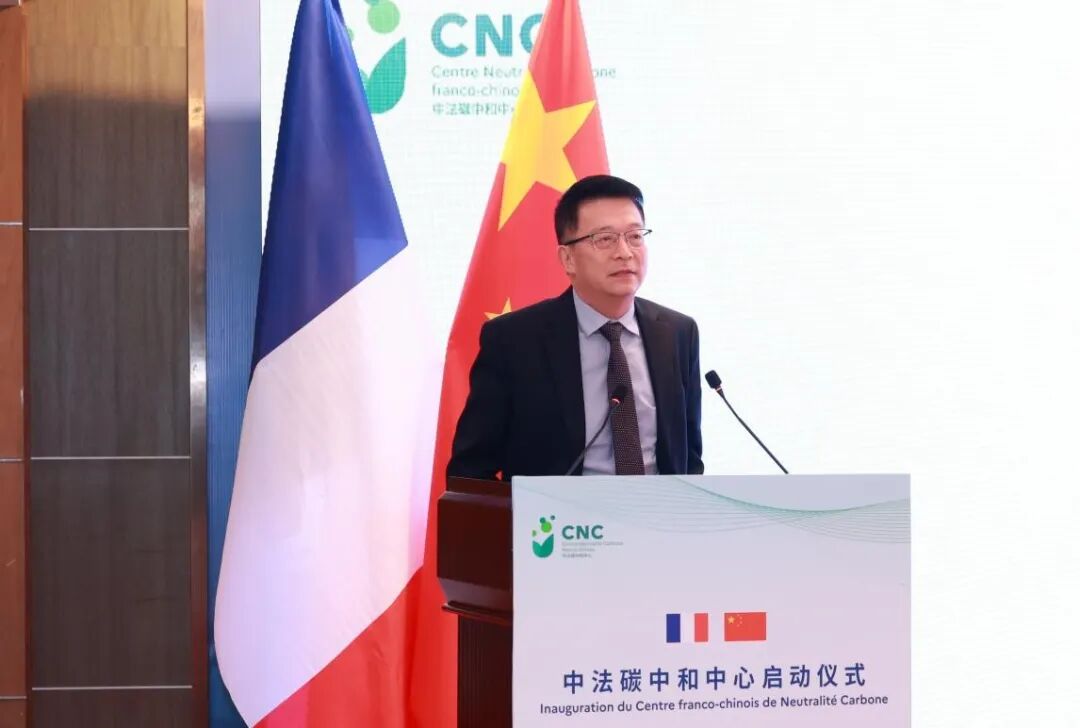
The invited commentator was Chen Dake from the Chinese Academy of Sciences. He introduced the research achievements of the Southern Marine Science and Engineering Guangdong Laboratory and highlighted the laboratory's unique platform for carbon neutrality work. Chen said that China and France have a deep foundation for scientific cooperation, and that climate change is a global issue requiring international collaboration. He called for continued bilateral and even global multilateral exchanges and cooperation in the carbon neutrality field.
Closing Session
Finally, Huang Jing, Director of the Administrative Center for China's Agenda 21, and Nicolas Chalon, Director of the International Cooperation Department of France's Ministry of Higher Education and Research, delivered concluding remarks on the launch ceremony of the China-France Carbon Neutrality Center.
Huang Jing said that climate change is a common challenge facing all humanity, and that the establishment of the China-France Carbon Neutrality Center carries far-reaching significance for promoting green and sustainable development in both countries. It is an important platform for scientific and technological innovation cooperation in low-carbon technology and sustainable development, and will inject new momentum into scientific research, technological development, and climate action in the future.
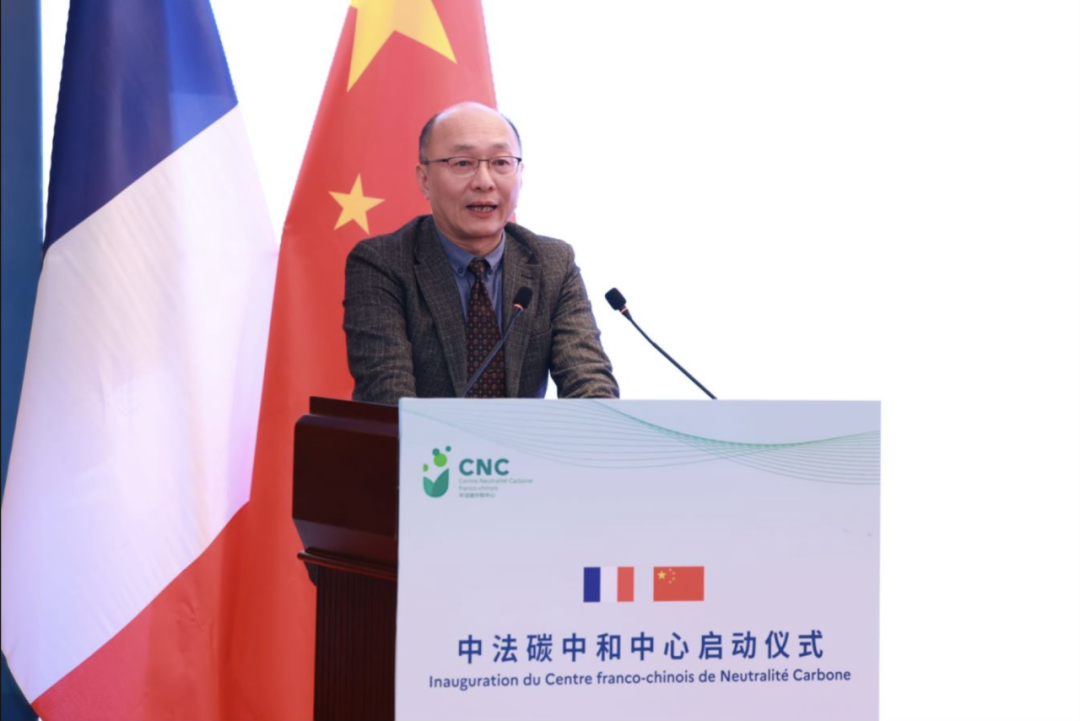
Nicolas Chalon said that China and France have continued to advance scientific and technological cooperation in addressing global climate change and protecting biodiversity. The establishment of the China-France Carbon Neutrality Center provides a platform for exchanges among researchers from both countries. In the future, the two sides should strengthen bilateral academic exchanges and talent training in carbon neutrality technology research, and work together to address climate change challenges and achieve a vision of green and sustainable development.
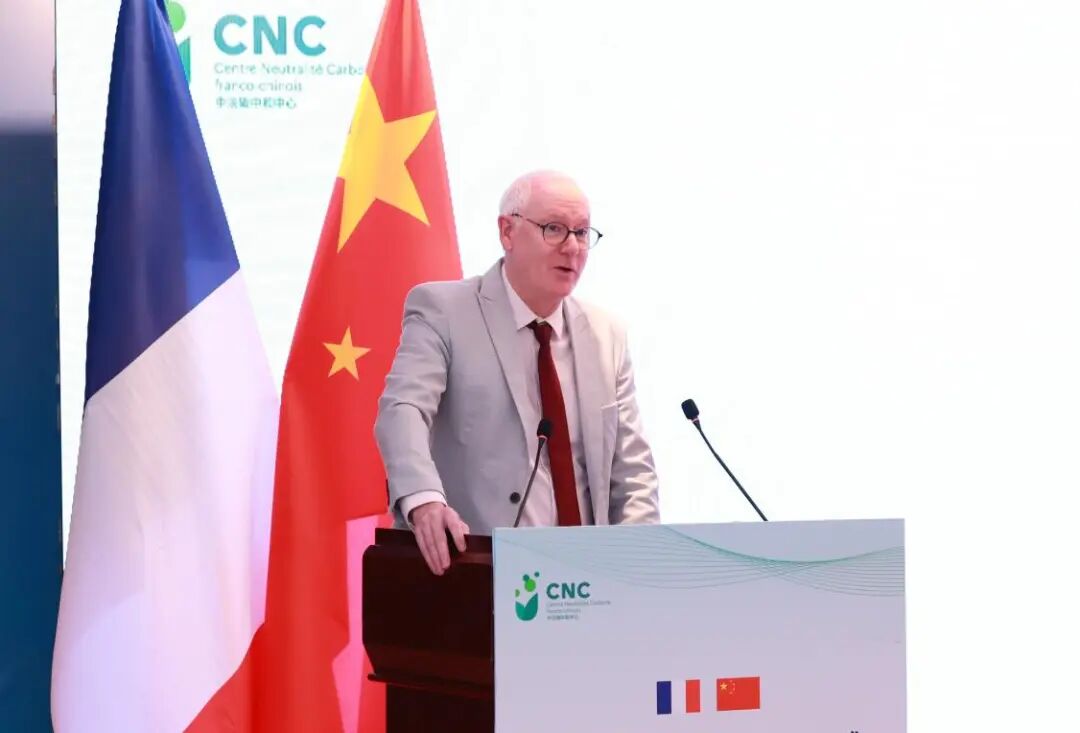
This launch ceremony was organized by the Administrative Center for China's Agenda 21, with support from Tsinghua University's Institute for Carbon Neutrality, the China Emission Accounts and Datasets (CEADs) team, and others.