
CEADs Supports China-UK Research Innovation Cooperation Workshop on Climate Change and Carbon Neutrality Successfully Held in London, UK
China-UK Research Innovation Cooperation Workshop on Climate Change and Carbon Neutrality
On November 6, 2024, the China-UK Research Innovation Cooperation Workshop on Climate Change and Carbon Neutrality was held in London, United Kingdom. The meeting brought together leading scholars from Tsinghua University, University College London, the University of Cambridge, Imperial College London, and the University of Reading, along with representatives from the China-UK research and innovation communities, for in-depth discussions on future areas of cooperation in carbon neutrality and to advance China-UK science and technology exchange and collaboration.
The workshop was hosted by the Bartlett School of Sustainable Construction at UCL and co-organized by Tsinghua University's Institute for Carbon Neutrality and the School of Earth System Science. Guests attending the event included Ren Zeng, Vice President of Tsinghua University; Mark Maslin, Vice President of UCL; Ding Mingqin, Science and Technology Counsellor at the Chinese Embassy in the UK; Daniel Brook, Director of UK Research and Innovation at the British Embassy in China; Priti Parikh, Director of the Bartlett School of Sustainable Construction at UCL; and Wang Zhe, Deputy Director of Tsinghua University's Institute for Carbon Neutrality. Together, they engaged in broad exchanges and forward-looking reflections on a new chapter in China-UK cooperation on carbon-neutral technologies.
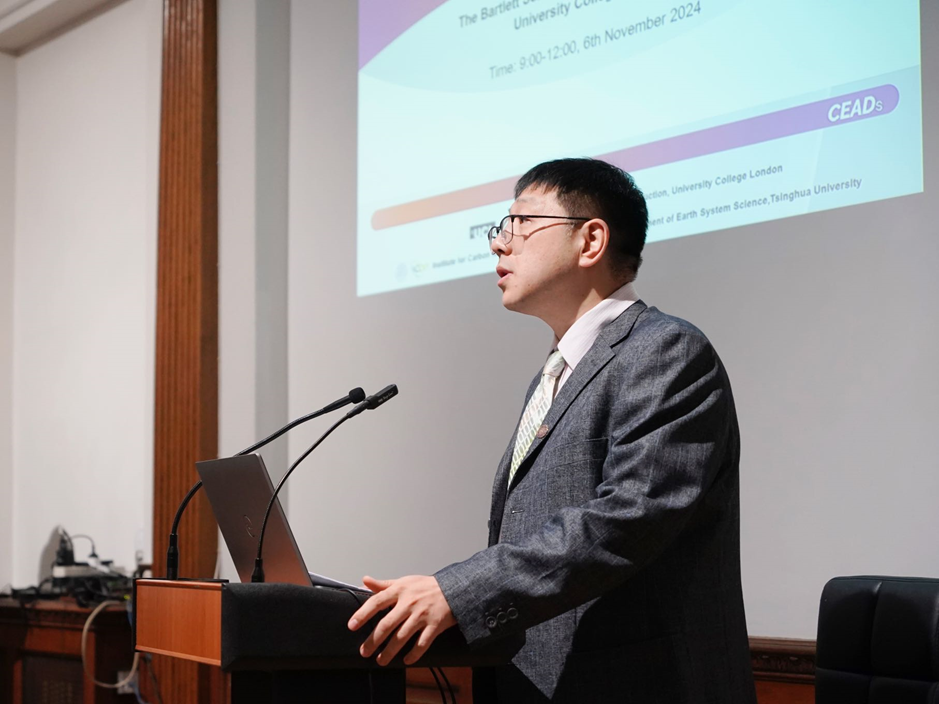
The opening ceremony was moderated by Professor Guan Dabo, Deputy Director of Tsinghua University's Institute for Carbon Neutrality. In his remarks, Professor Mark Maslin, Vice President of UCL, stressed the need for global cooperation in addressing climate challenges and announced the launch of the Tsinghua-UCL Carbon Neutrality Research Center to support continued research collaboration and academic exchange between the two countries.
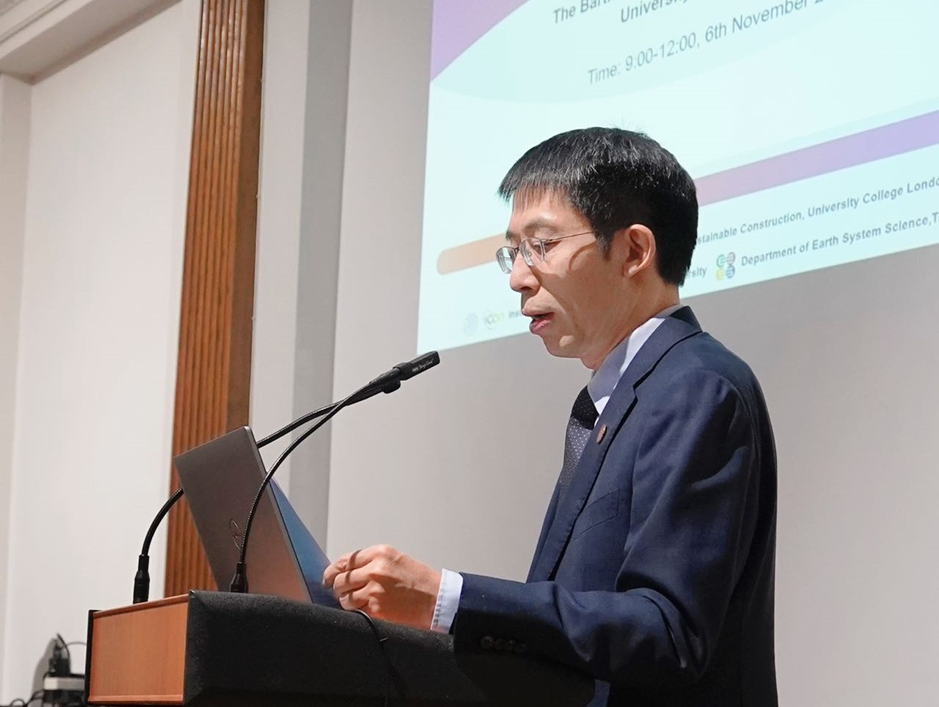
Professor Zeng Rong, Vice President of Tsinghua University, emphasized the important role of academic institutions in talent cultivation and climate research, and highlighted the importance of sustaining research and talent exchange between universities in China and the United Kingdom.
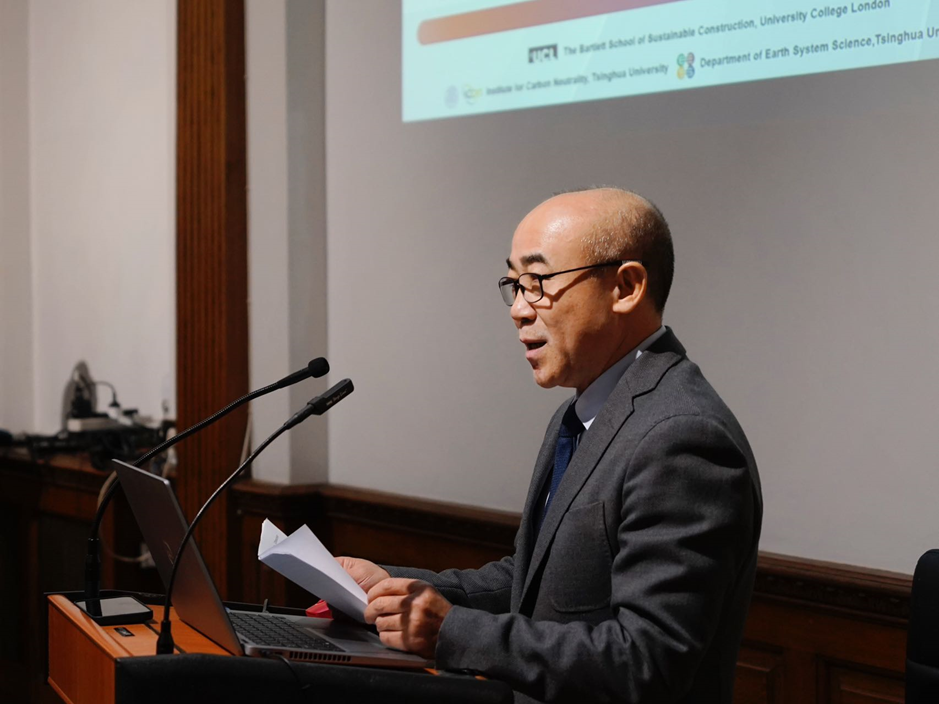
Mr. Ding Mingqin, Science and Technology Counsellor at the Chinese Embassy in the UK, introduced China's achievements in fields such as wind power, solar energy, and new energy vehicles, noting the significance of China-UK technological innovation cooperation in accelerating the low-carbon transition.
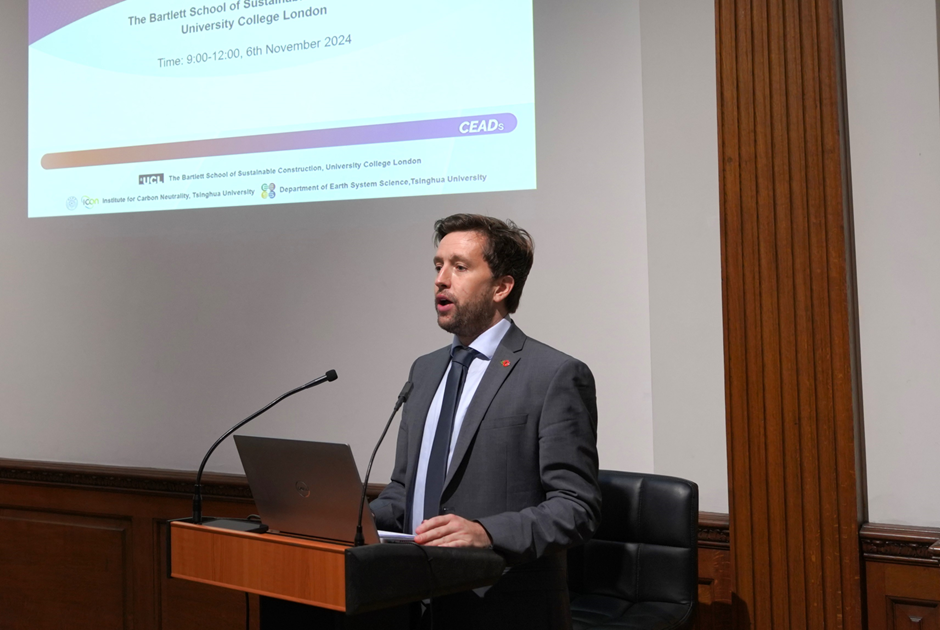
Daniel Brook, Director of UK Research and Innovation at the British Embassy in China, reviewed the successful history of China-UK research cooperation and expressed his expectation for further collaboration.
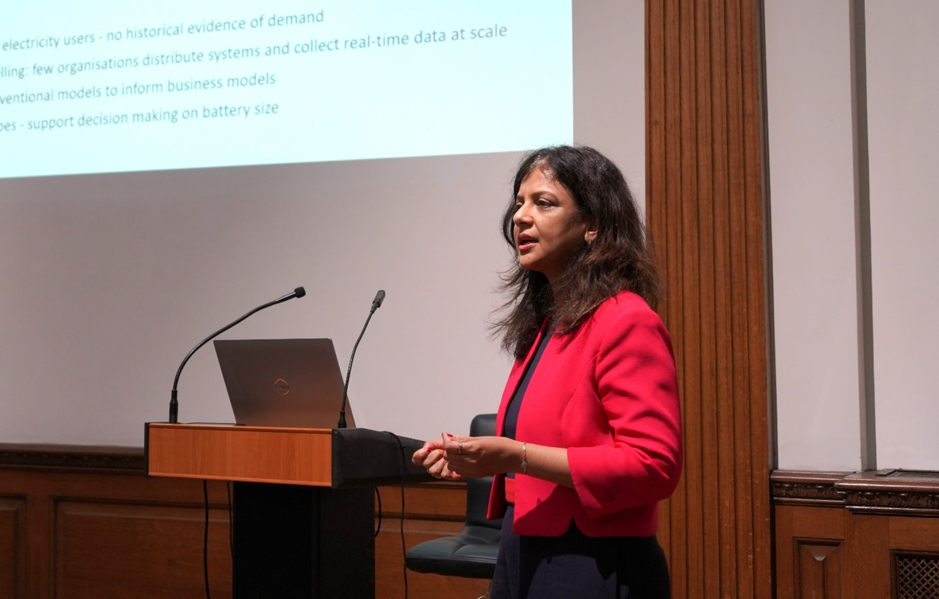
Professor Priti Parikh of UCL delivered a keynote speech on energy and infrastructure challenges in South Africa, emphasizing the potential of solar power in rural areas and the value of interdisciplinary research. She shared research findings on using machine learning to improve solar management and pointed out the challenges of circular economy practices in renewable energy, especially the end-of-life handling of solar panels and batteries.
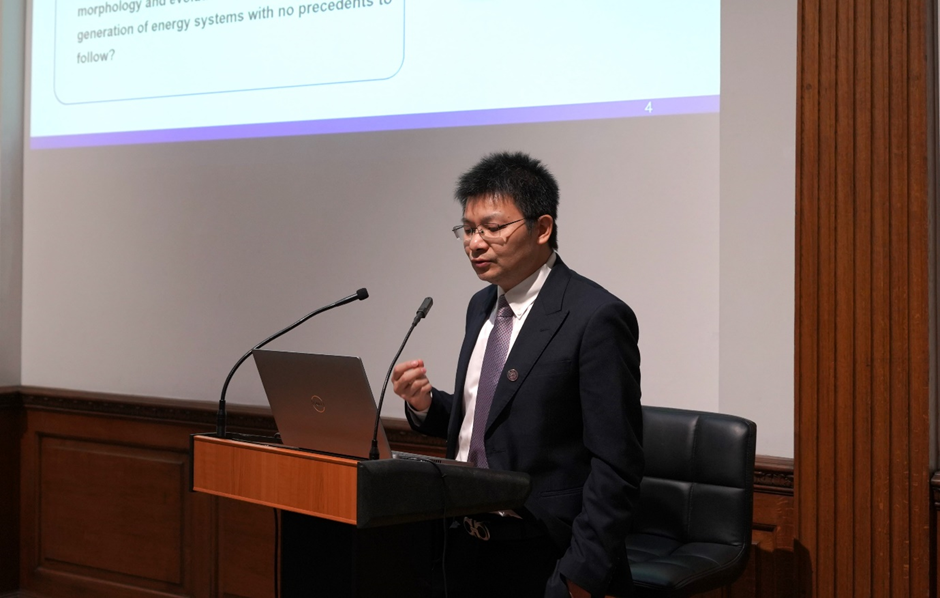
Professor Wang Zhe of Tsinghua University discussed the complexity of achieving carbon neutrality and stressed the urgent need to build a next-generation energy system. He introduced the International Multilateral Cooperation Program on Carbon Neutrality and Energy Smart Integration (CNEST), led and organized by Tsinghua University, and its significance for China-UK cooperation on international technical standards.
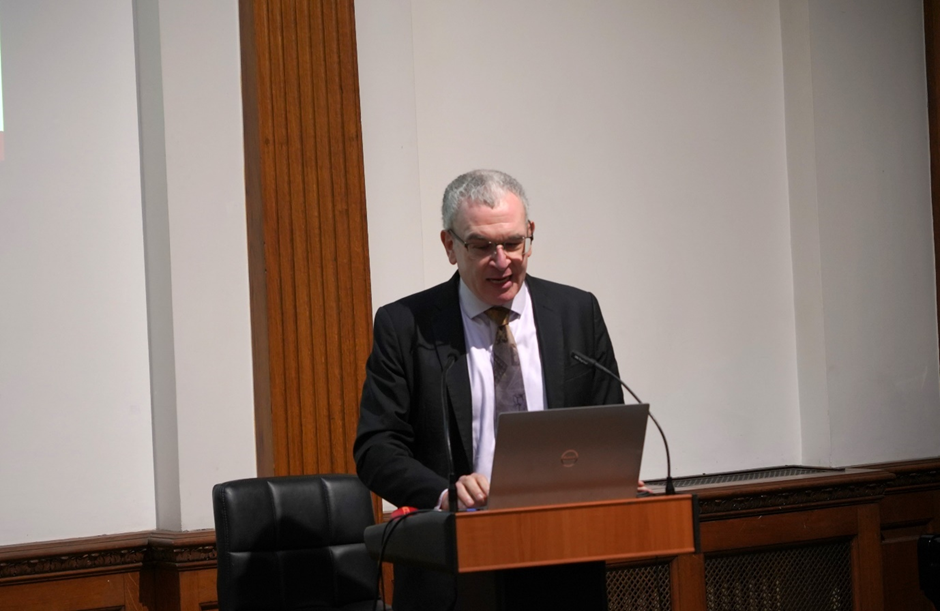
Professor David Reiner of the University of Cambridge shared insights on carbon removal technologies, discussed the public awareness gap around carbon capture and storage (CCS), and called for stronger public education in climate science. He emphasized the value of China-UK collaboration in CCS research and shared the positive outcomes of related projects.
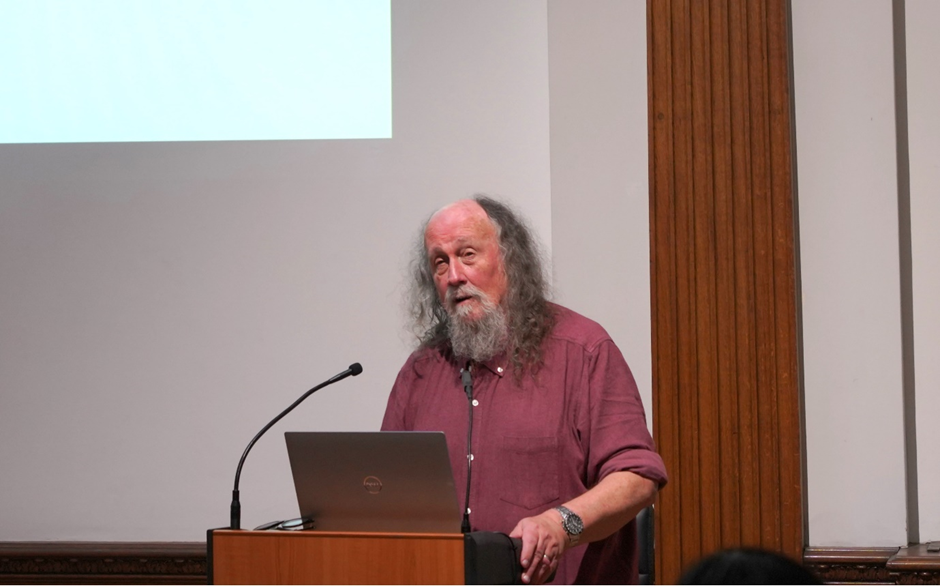
Professor Colin Prentice of Imperial College London explored uncertainties in carbon cycle models, pointing out gaps between current models and real-world observations, and emphasized the need for cross-national research. He suggested that Chinese and British scientists could work together to address model inconsistencies.
Professor Lu Xi of Tsinghua University reviewed the rapid development of China's solar photovoltaic technology and noted that traditional energy systems struggle to satisfy the three goals of security and reliability, economic viability, and green low-carbon performance at the same time, the so-called energy impossible trinity. He introduced the role of energy storage systems in stabilizing the power grid and underscored the potential for cooperation with the United Kingdom in renewable energy technologies.
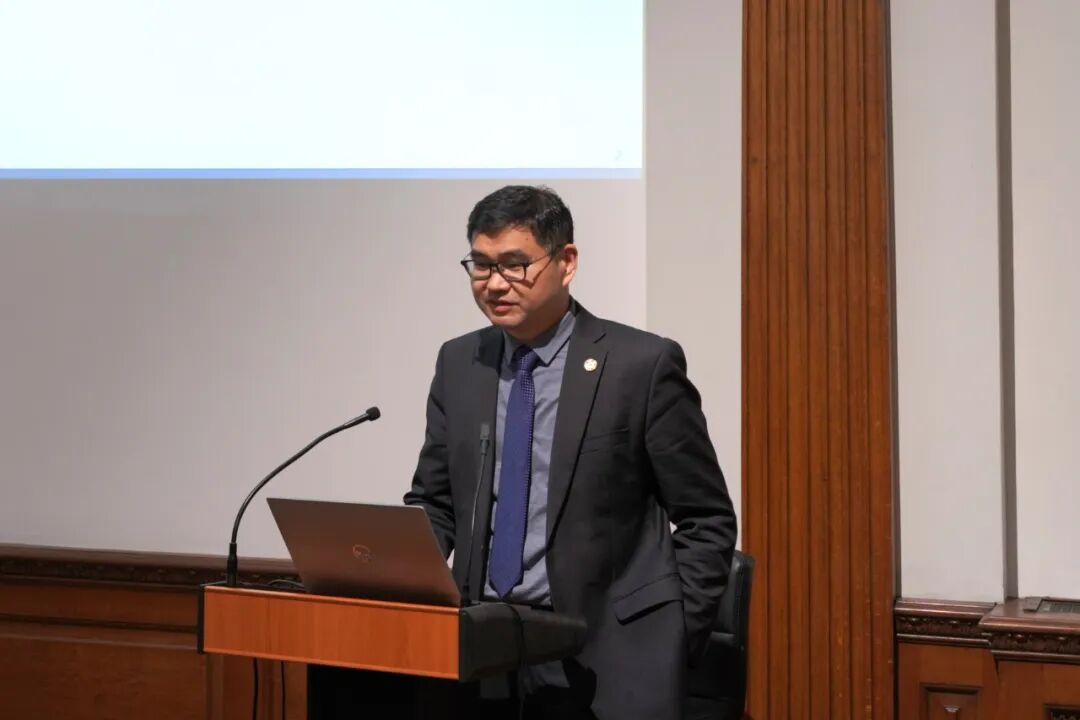
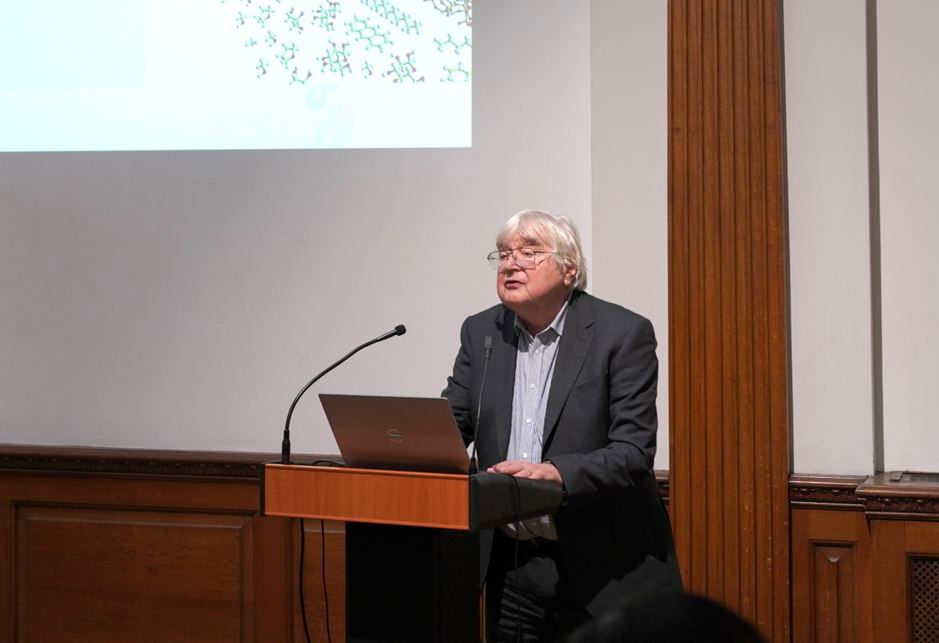
Professor Richard Catlow of UCL highlighted the key role of green chemistry in achieving net-zero emissions and called for stronger China-UK cooperation in chemical sciences to accelerate the transition toward a circular economy and sustainable manufacturing practices.
The roundtable discussion was moderated by Professor Meng Jing of UCL. Participants included Professor Teng Fei of Tsinghua University, Professor Sandy Harrison of the University of Reading, Professor Wang Xiaonan of Tsinghua University, Professor Eduard Romulus Goean of the University of Surrey, Professor Xiong Yu of the University of Surrey, and Dr. Yu Le of Tsinghua University.
The experts discussed China-UK cooperation in climate modeling, data sharing, youth and talent exchange, and financial and policy support. They emphasized the need to integrate field data from China into UK climate models and noted that China's diverse ecosystems provide unique opportunities to validate and improve global models. During the discussion, the experts agreed that corporate investment in research and development is crucial for accelerating the development of green technologies. Cooperation between businesses and universities was seen as key to funding innovative solutions, including advanced climate modeling and renewable energy systems.
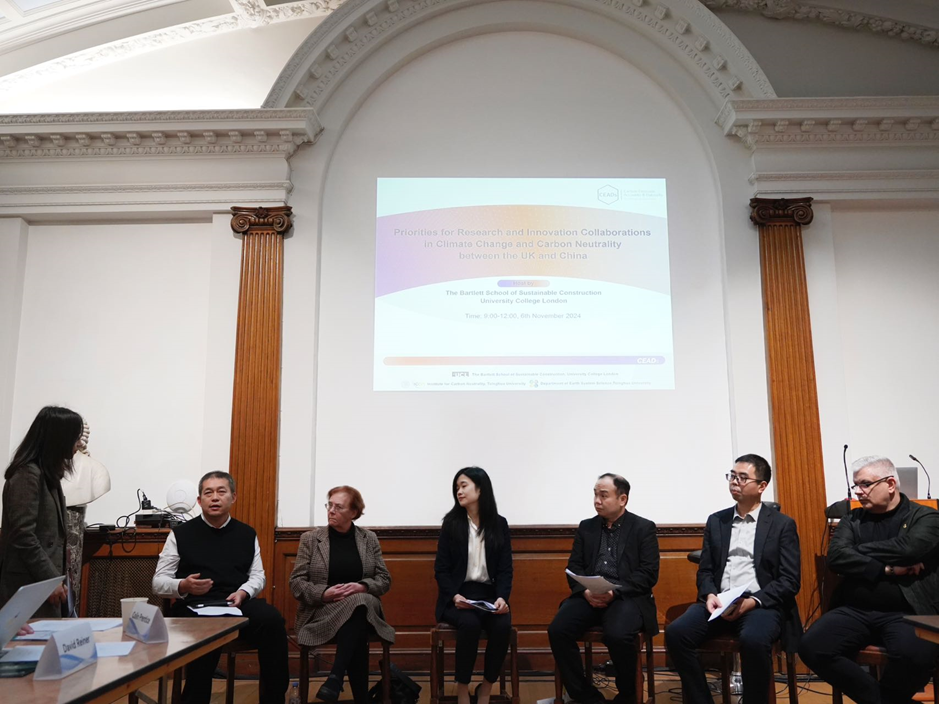
They also discussed the challenges and opportunities of open data access, stressing the need to improve research transparency and reproducibility while also noting ongoing concerns about data access and sharing policies across countries. The experts advocated creating more opportunities for young scientists and researchers and promoting cooperation between China and UK institutions, especially in climate science and applications of artificial intelligence.
At the close of the meeting, Professor Mark Maslin delivered the closing remarks. He noted that although global economic indicators are moving toward low-carbon transition, the progress is complex and requires sustained, long-term cooperation among countries. Professor Maslin also specifically pointed to the potential of artificial intelligence in climate solutions and stressed the impact of data quality on AI effectiveness. He called for partnerships to advance AI applications and ensure that data can support climate models. He also emphasized the importance of stable funding for research and collaboration, noting that climate initiatives require sustained financial support so that researchers can effectively develop and share solutions. Finally, Professor Maslin thanked all participants for their collective efforts and expressed his confidence that, through cooperation between China and the United Kingdom, there is hope of overcoming the immense challenges posed by climate change and moving toward a more sustainable future.
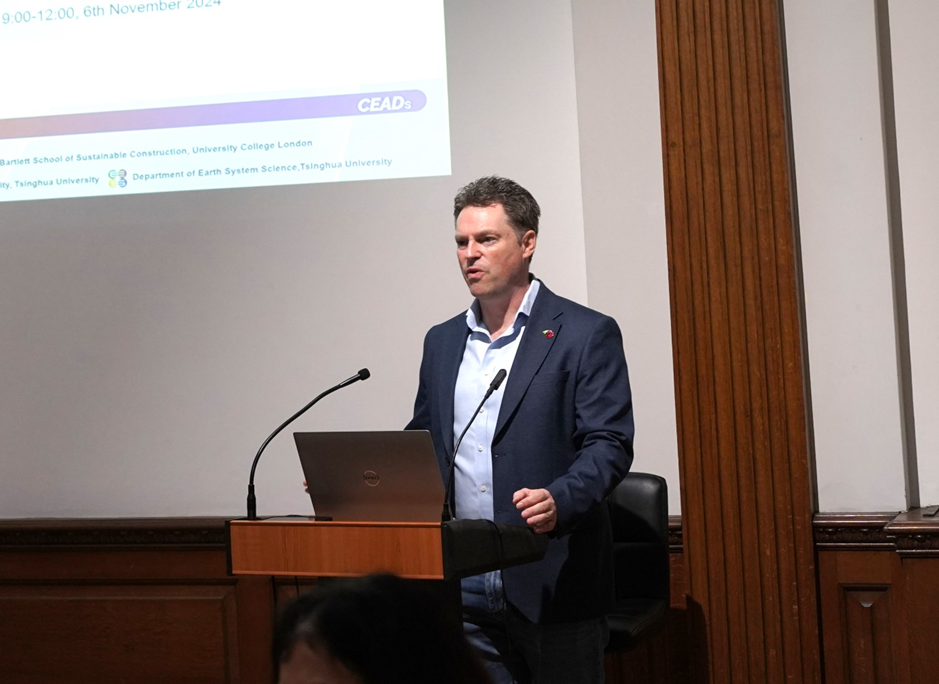
The China-UK workshop on climate change and carbon neutrality held in London further strengthened cooperation between the two countries in addressing the global climate crisis and advancing carbon neutrality goals. Through interdisciplinary exchange, participants examined the complexity of climate science from multiple perspectives, especially the technical challenges and innovation opportunities in key areas such as carbon capture and storage, renewable energy, and green chemistry. At the meeting, the two sides also reached consensus on a series of forward-looking policy recommendations, emphasizing the importance of research collaboration and talent exchange in accelerating the low-carbon transition. China and the UK will work together to deepen technological innovation in carbon neutrality and contribute jointly to a cleaner, greener, and more sustainable global future.
Copywriting | Li Jiaoyan, Yang Chunran, Chen Yuxin
Photography | Ma Shijun
Editing | Zhang Wenjing
Review | Guan Dabo, Zhang Han