
University of Birmingham-Nanjing University Workshop on Environment-Health-Economic Impacts of Net-Zero Pathways in China and the UK Successfully Held
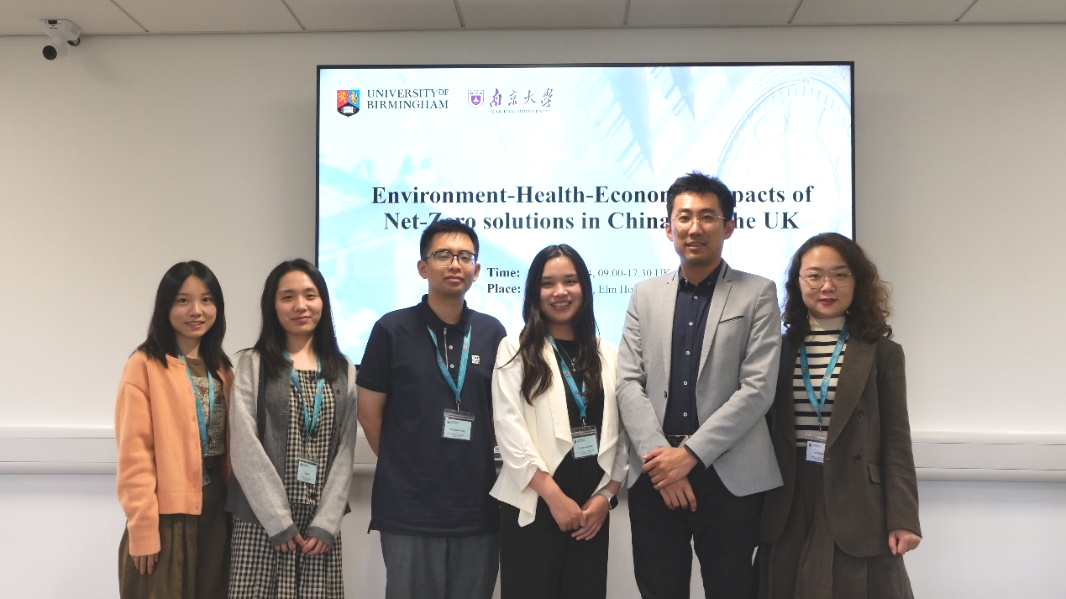
On July 12, 2024, the University of Birmingham-Nanjing University workshop on the environment-health-economic impacts of net-zero pathways in China and the UK was successfully held at the Birmingham Institute for Sustainability and Climate Action (BISCA), University of Birmingham.
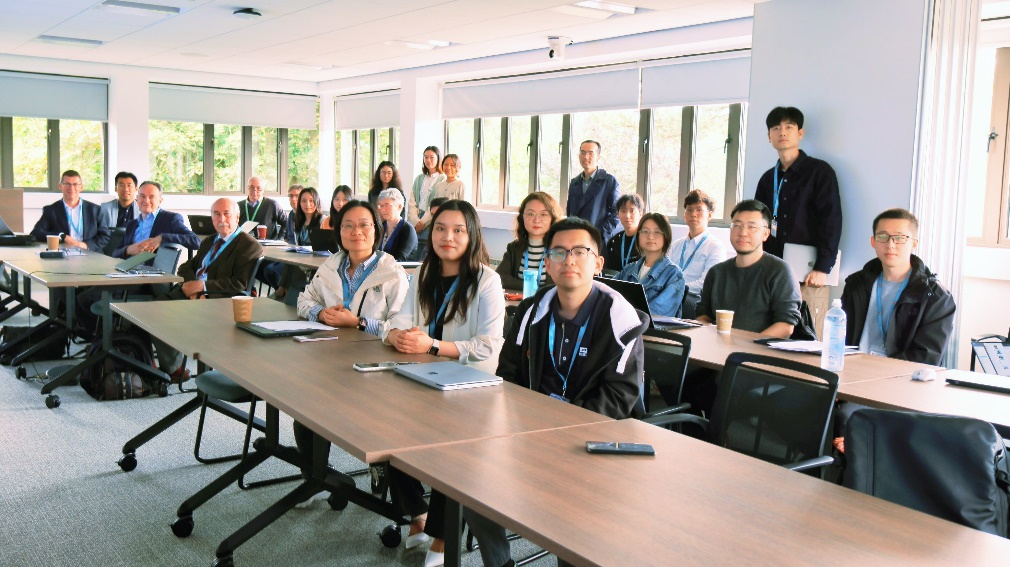
The workshop was convened and chaired by the research group of Dr. Yuli Shan from the CEADs team. More than 40 experts and scholars from the University of Birmingham, Nanjing University, and their partner institutions attended the event. Participants included Professor William Bloss, Head of the College of Life and Environmental Sciences at the University of Birmingham; Professor Nick Kettridge, Head of the School of Geography, Earth and Environmental Sciences at the University of Birmingham; Professor Matthew Cole, Deputy Dean of Birmingham Business School; Professor Roy Harrison, Fellow of the Royal Society; Professor Gregor Leckebusch, Met Office Joint Chair; Associate Professor Miaomiao Liu, Assistant Dean of the School of the Environment at Nanjing University; Associate Professor Kangkang Tong from the China-UK Low Carbon College at Shanghai Jiao Tong University; and Assistant Professor Jianxun Yang from the Institute for Environment and Health at Nanjing University. Professor Jun Bi, Professor at the School of the Environment and Executive Dean of the Institute for Environment and Health at Nanjing University, and Professor Jonathan Oldfield, former Head of the School of Geography, Earth and Environmental Sciences at the University of Birmingham, joined the workshop online.
The workshop was supported by the NSFC-Royal Society exchange project co-led by Associate Professor Yuli Shan of the University of Birmingham and Associate Professor Miaomiao Liu of Nanjing University, titled optimization of pollution and carbon reduction pathways and health risk assessment from a net-zero perspective. It aimed to share the latest research outcomes produced by the collaborative team under the project on the environment-health-economic impacts of net-zero pathways in China and the UK, and to explore opportunities for deeper and more diversified cooperation between the two sides and their partners.
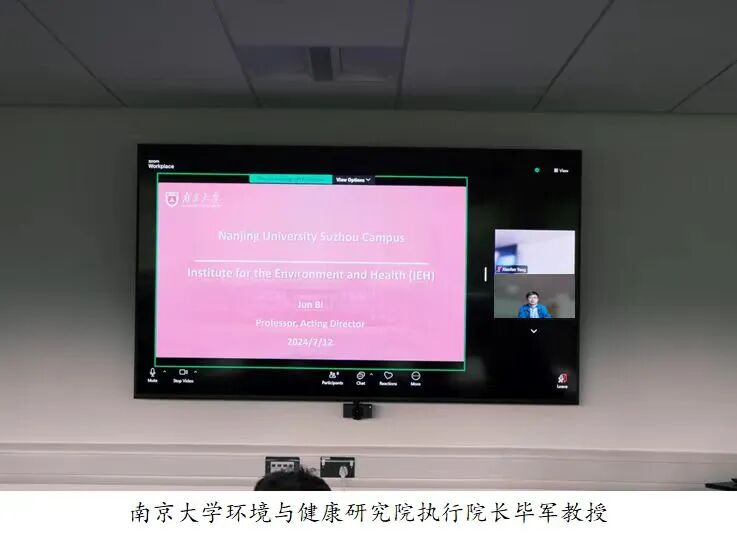
At the opening session, Associate Professor Yuli Shan of the University of Birmingham delivered welcoming remarks, introducing the background and agenda of the workshop and extending a warm welcome to the guests and visiting scholars from Nanjing University. Professor William Bloss then introduced the College of Life and Environmental Sciences and its main research directions. Professor Jun Bi, Executive Dean of the Institute for Environment and Health at Nanjing University, introduced the development history and disciplinary priorities of the School of the Environment and the Institute for Environment and Health at Nanjing University. Both sides noted that university-to-university exchange and cooperation provide important opportunities for humanity to address the shared challenge of climate change, and expressed the hope that the two universities will continue to join strengths and deepen exchanges and cooperation in climate change, sustainable development, and related fields.
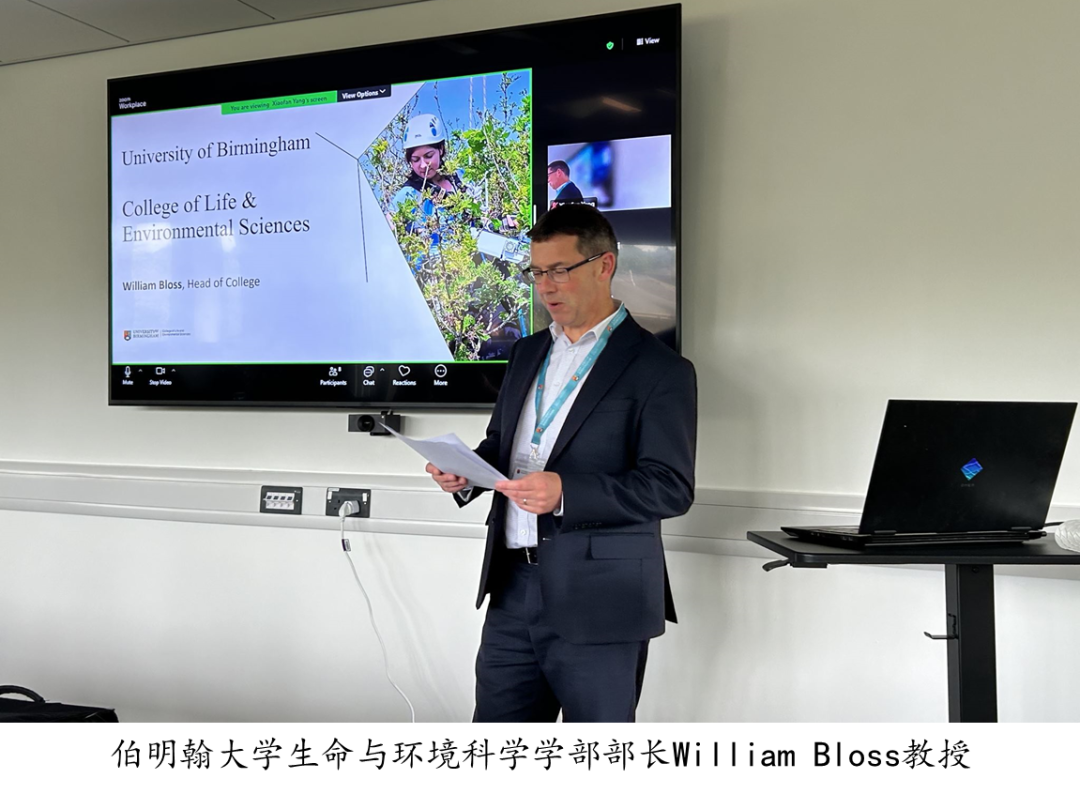
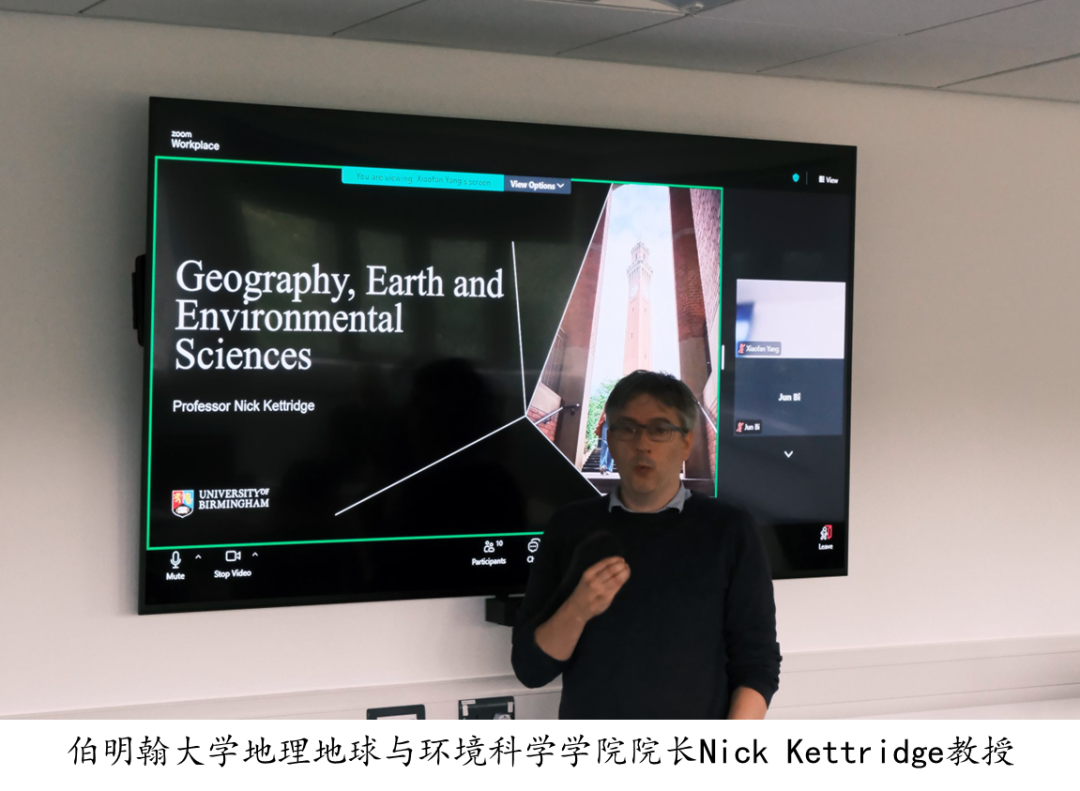
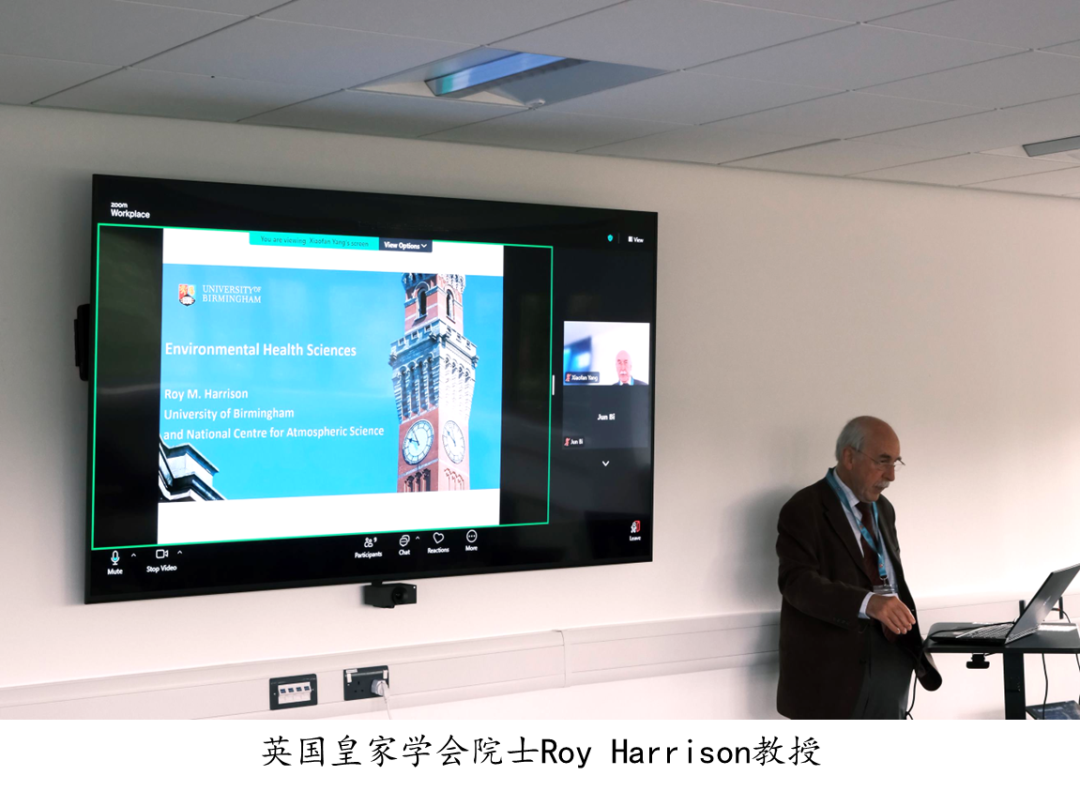
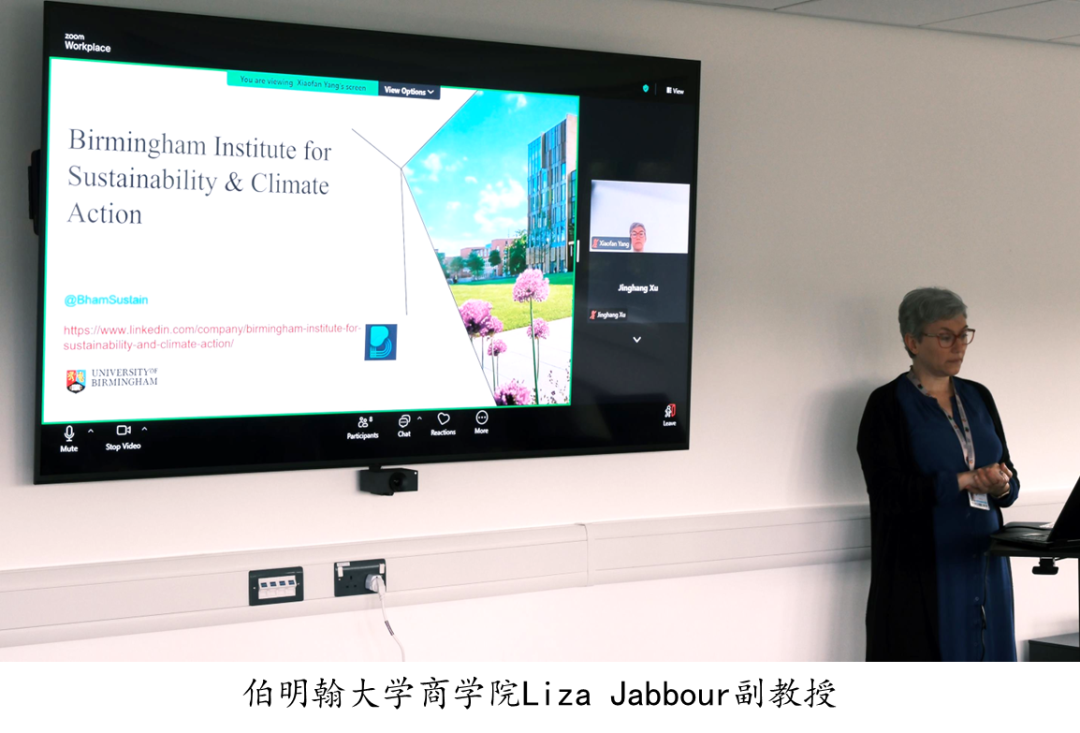
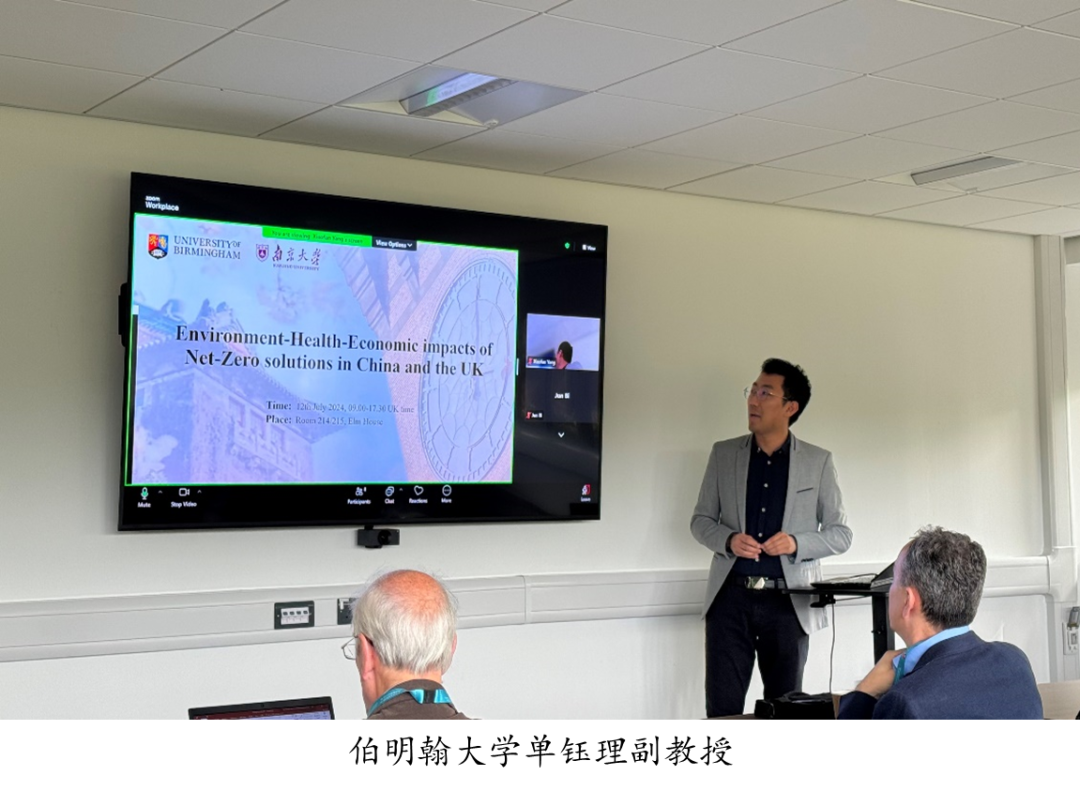
Afterwards, as the host institution, experts and scholars from different schools at the University of Birmingham introduced the research strengths and representative achievements of the UK team from multiple perspectives and in increasing depth. Professor Nick Kettridge, Head of the School of Geography, Earth and Environmental Sciences at the University of Birmingham, reviewed the long-standing ties and history of cooperation between the school and Nanjing University, and gave a detailed introduction to the school research profile and major achievements in geography, earth sciences, and environmental sciences. Associate Professor Liza Jabbour from Birmingham Business School introduced research topics related to the Birmingham Institute for Sustainability and Climate Action (BISCA). Professor Roy Harrison, Fellow of the Royal Society, presented the main research teams and representative achievements in environmental health at the school from four perspectives: air pollution and atmospheric chemistry, applied meteorology and climate, environmental nanoscience, and persistent organic pollutants.
Keynote Reports by Chinese and UK Experts

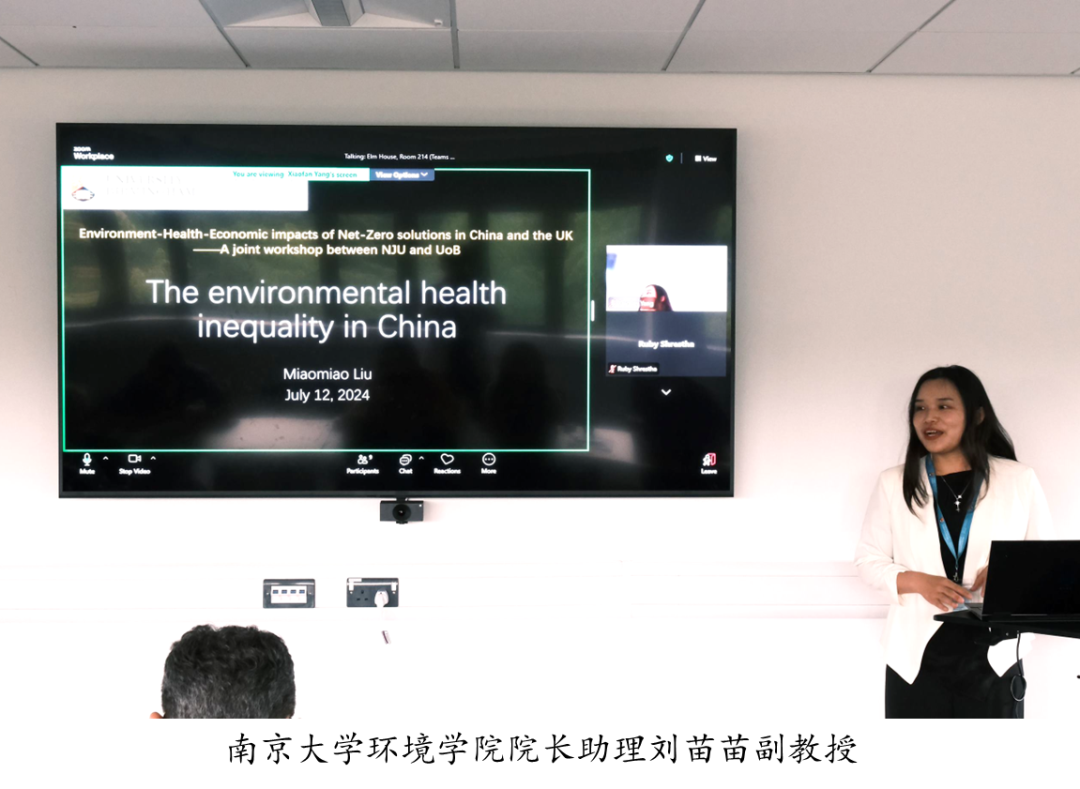
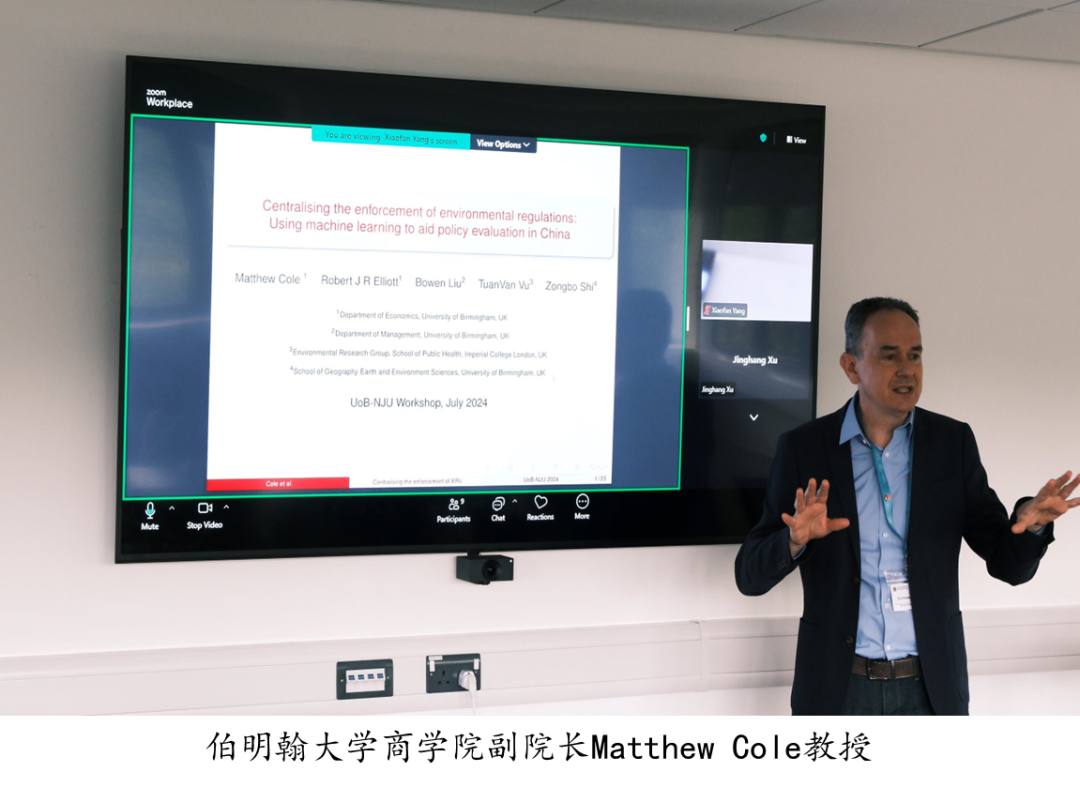
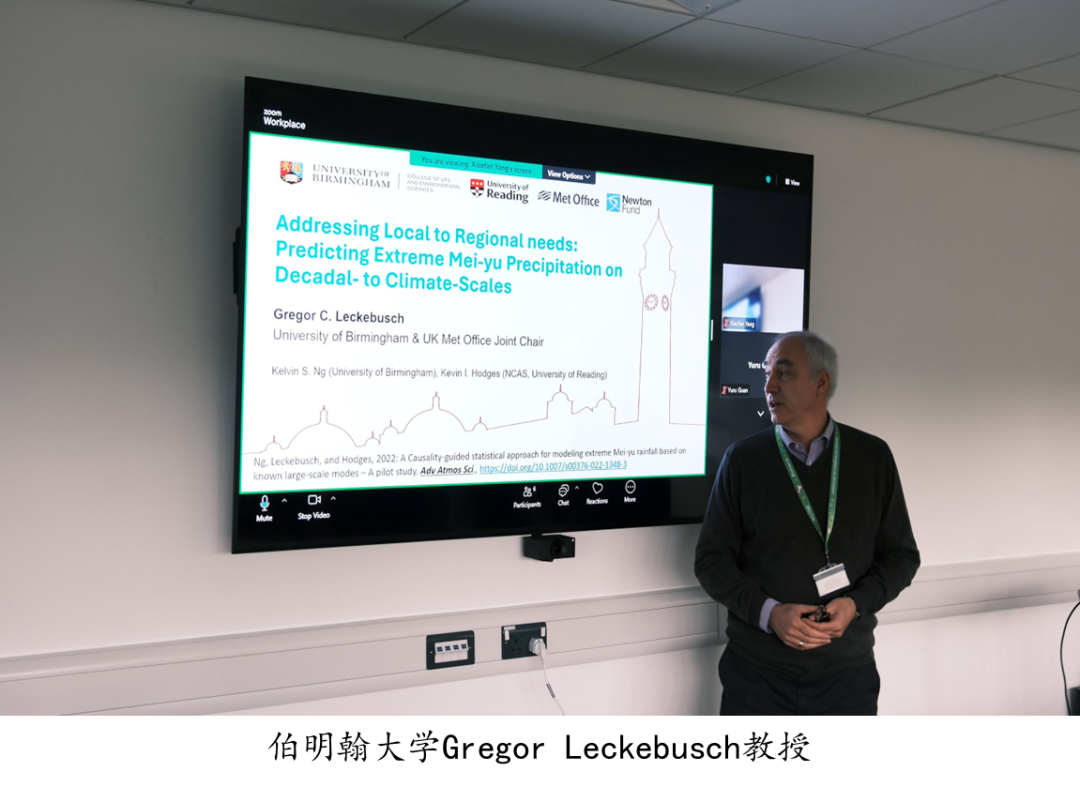
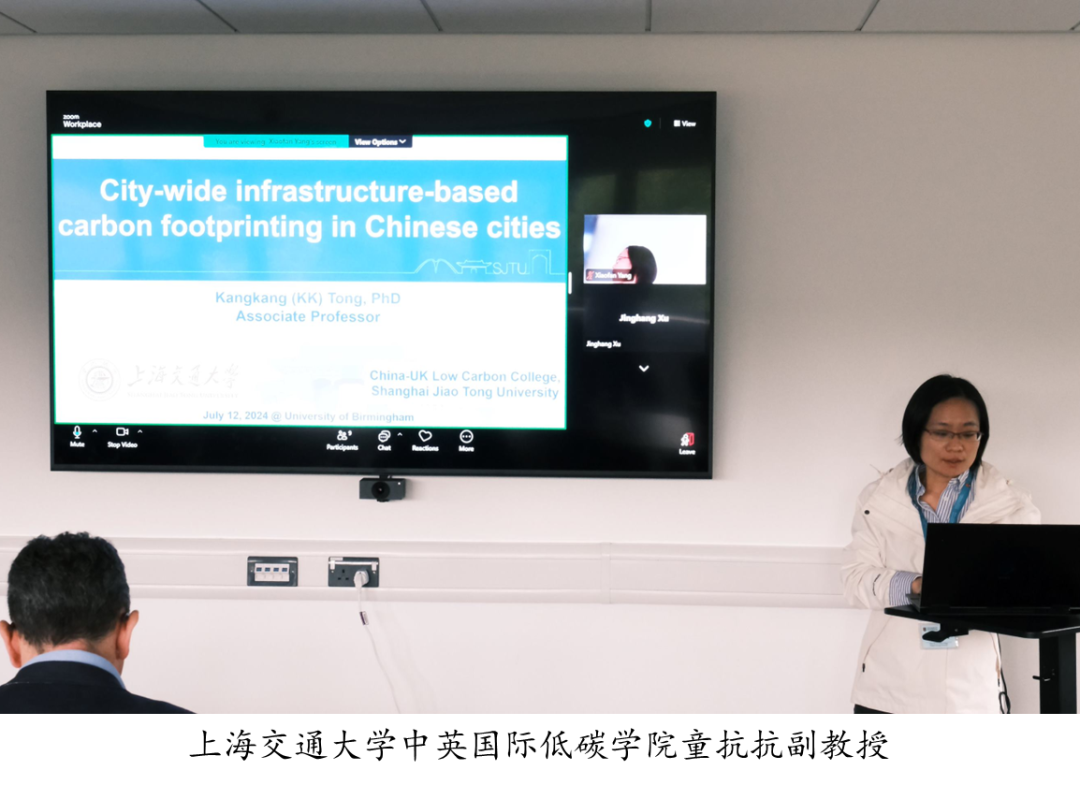
In the next session, experts and scholars from China and the UK delivered four keynote reports. Professor Gregor Leckebusch of the University of Birmingham spoke on addressing adaptation needs from local to regional scales: predicting extreme Meiyu rainfall from decadal to climate timescales, emphasizing the importance of accurate extreme weather prediction for reducing negative socioeconomic impacts. Associate Professor Miaomiao Liu, Assistant Dean of the School of the Environment at Nanjing University, examined inequality in environmental health through five interconnected dimensions: consumption behavior, production and emissions, environmental quality, environmental exposure, and environmental risk. Professor Matthew Cole, Deputy Dean of Birmingham Business School, introduced a research case applying machine learning methods to evaluate the performance of environmental regulation policies for air pollution in China. Associate Professor Kangkang Tong from the China-UK Low Carbon College at Shanghai Jiao Tong University presented research on infrastructure-based carbon footprint accounting for Chinese cities.
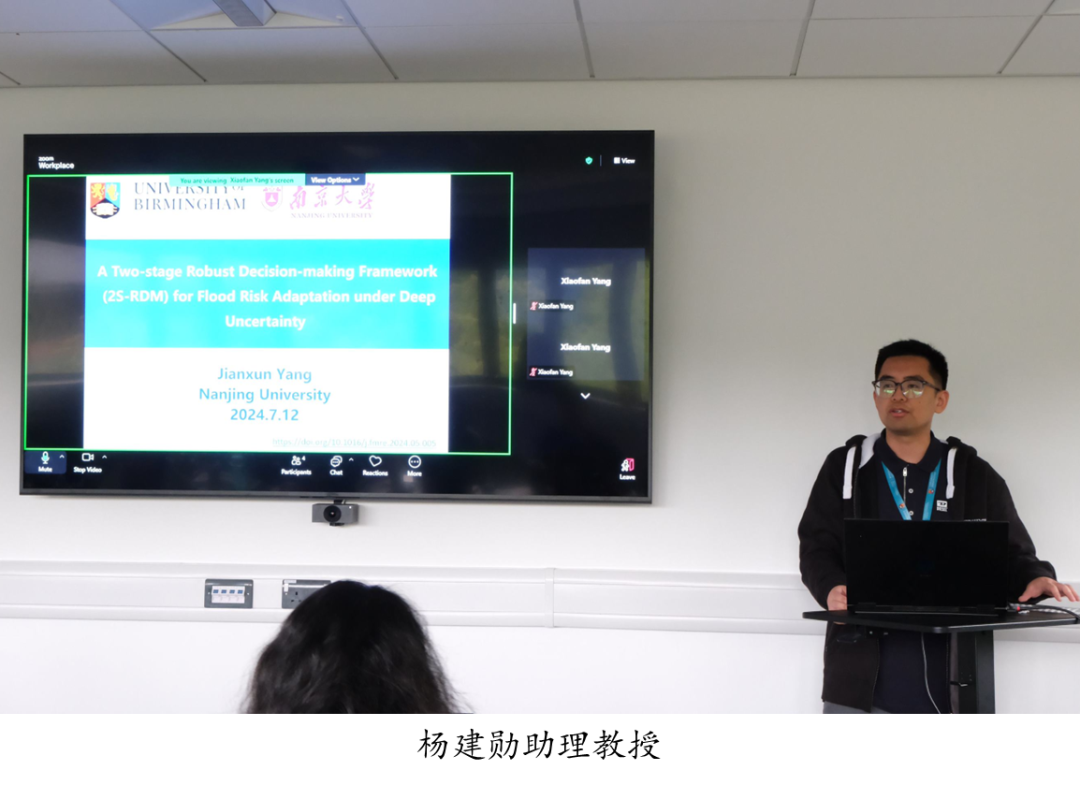
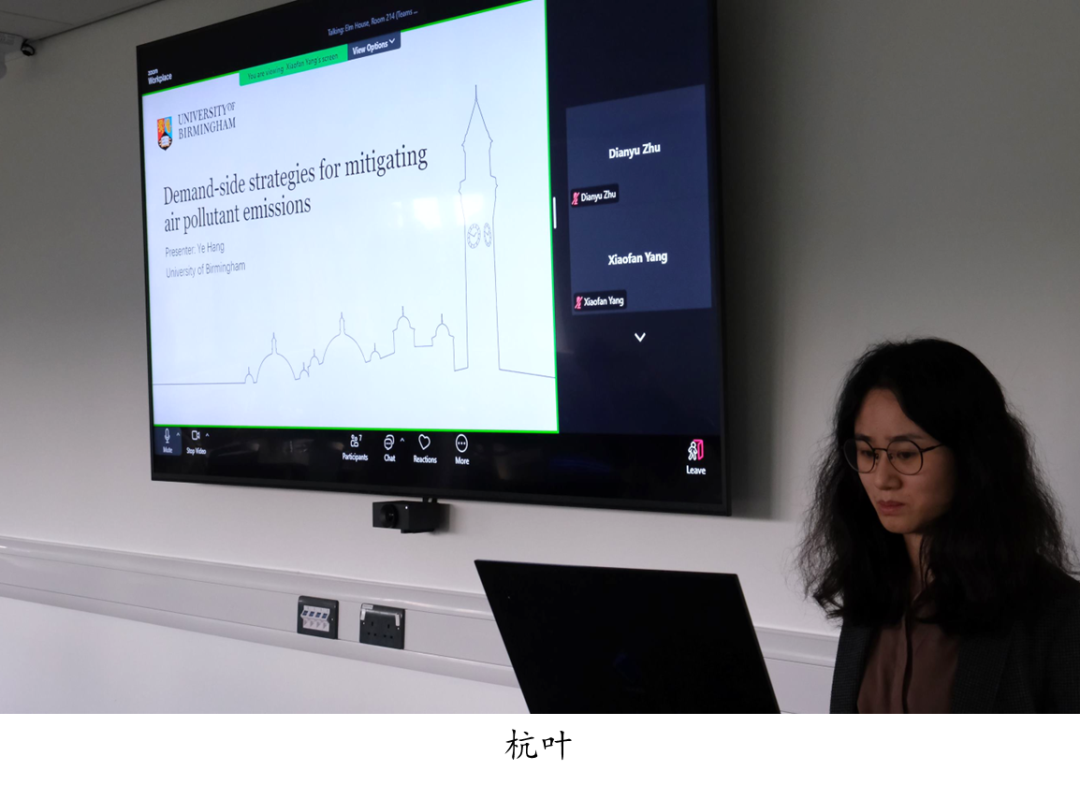
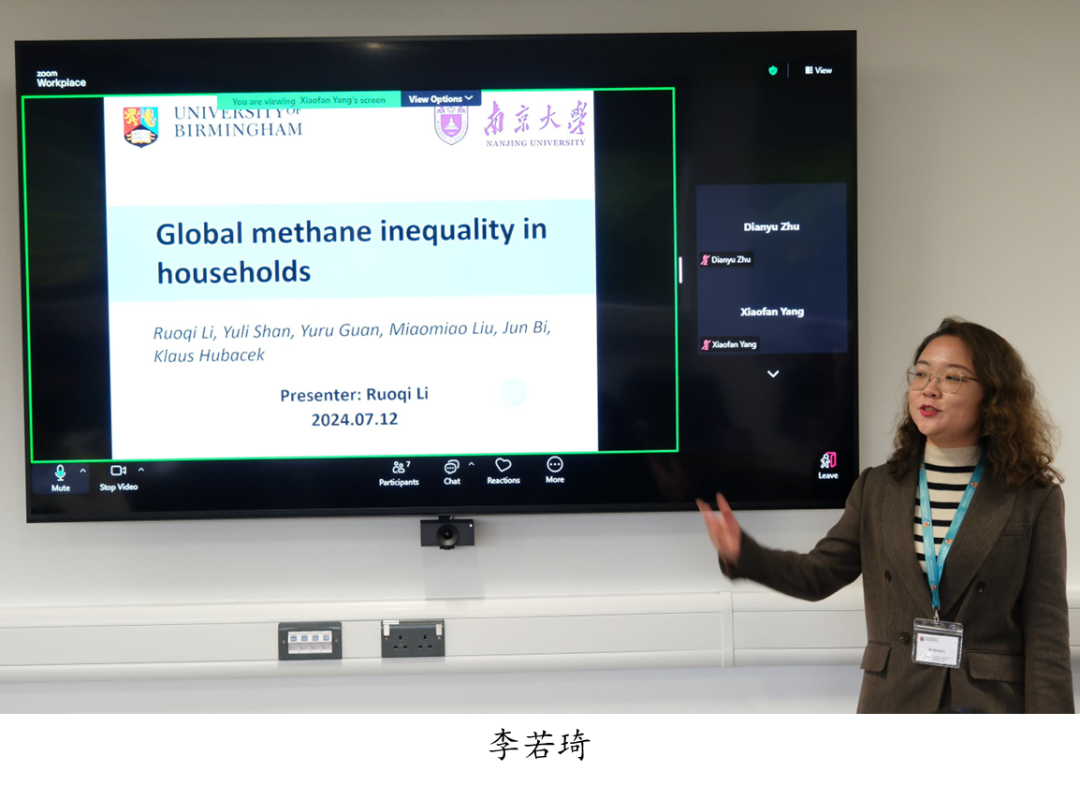
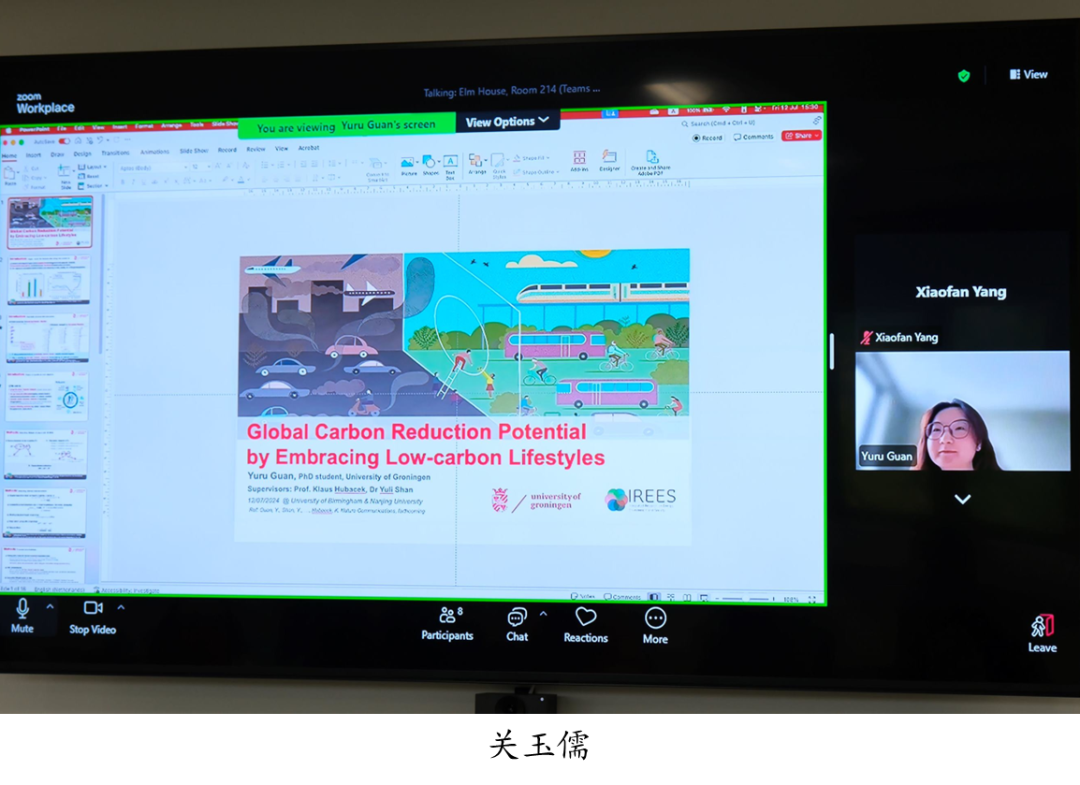
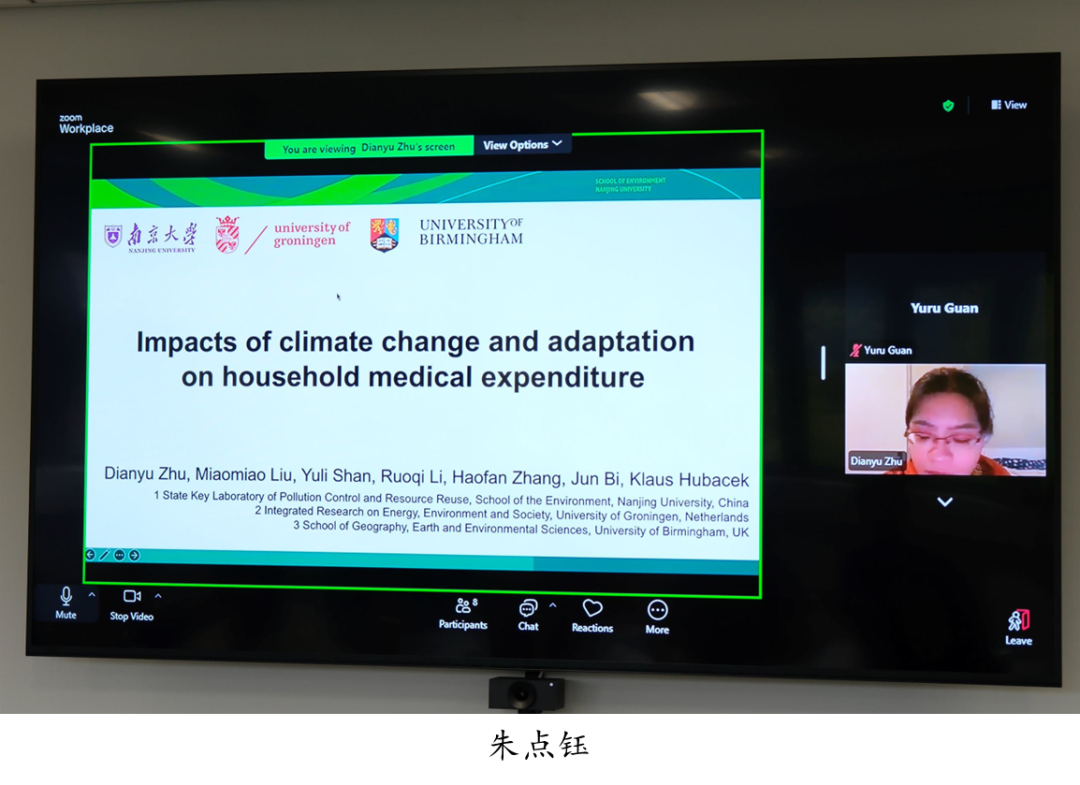
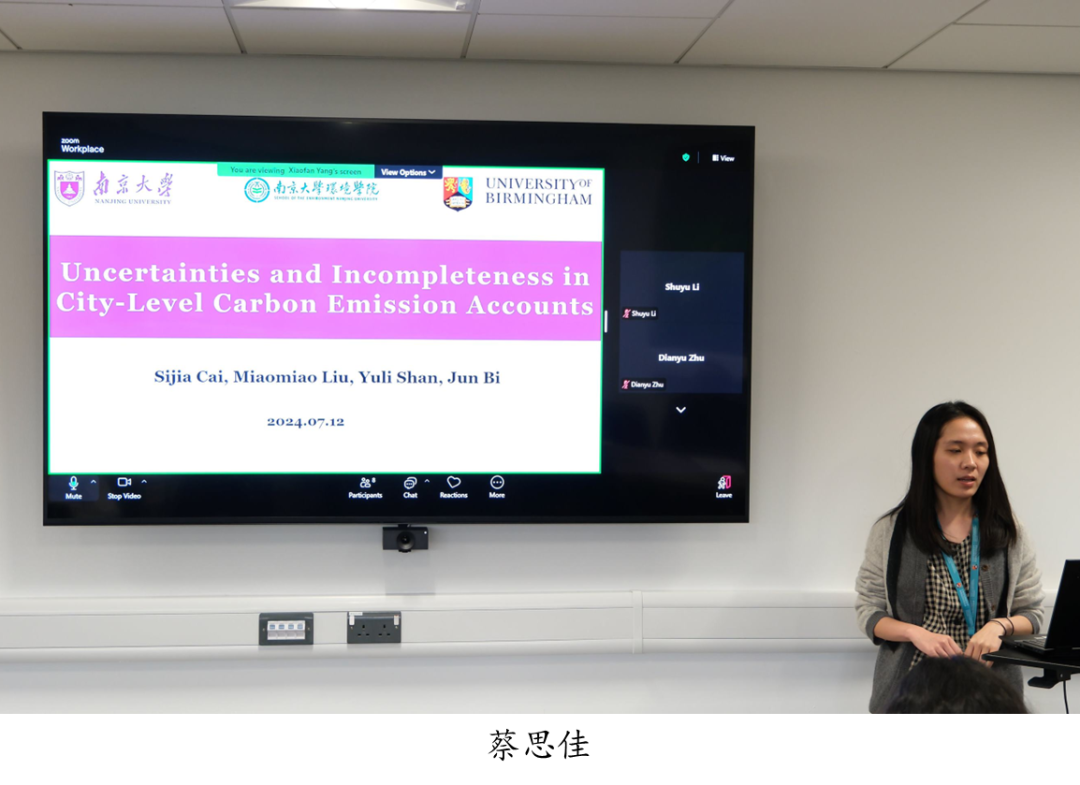
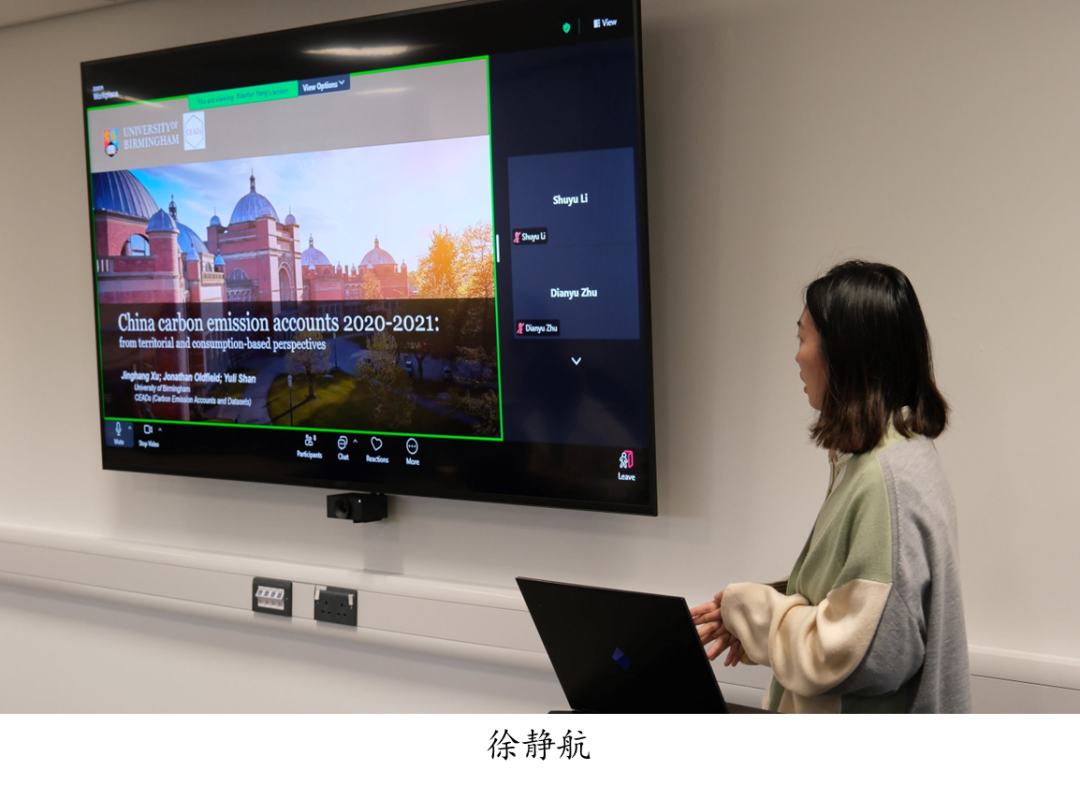
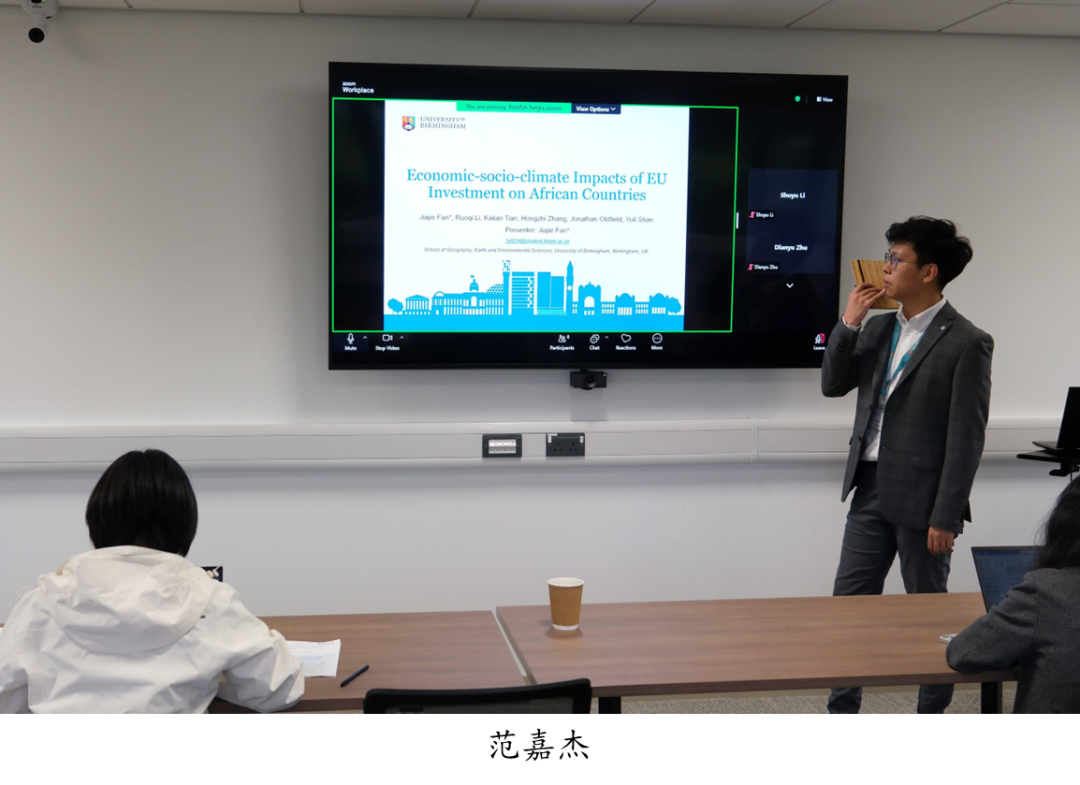
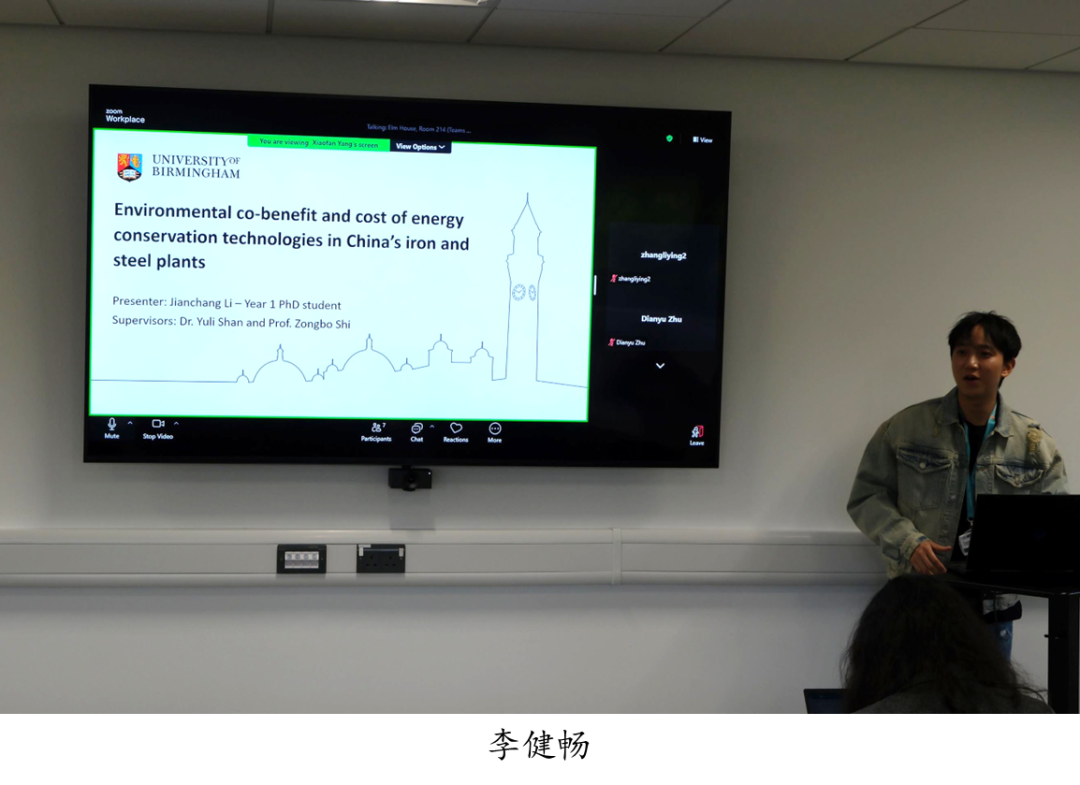
Subsequently, Assistant Professor Jianxun Yang from the Institute for Environment and Health at Nanjing University and eight other young scholars and doctoral students from China and the UK presented their latest research progress on the environment-health-economic impacts of net-zero pathways, followed by in-depth academic exchanges with participants on site.
Teacher-Student Seminar
It is reported that, supported by a series of academic and exchange activities represented by this China-UK workshop on the environment-health-economic impacts of net-zero pathways, the University of Birmingham and Nanjing University have established diversified channels and partnerships for cooperation, including joint doctoral training, collaborative research projects, and multi-level mutual visits.
Editor: Yixu He
Reviewers: Yuli Shan and Yuxin Chen