
Forum on Science and Technology Cooperation and Sustainable Development in the Global South Held in Addis Ababa, Ethiopia
Forum on Science & Technology Cooperation and Sustainable Development in the Global South
On the morning of November 25, the Forum on Science and Technology Cooperation and Sustainable Development in the Global South was held in Addis Ababa. The forum was hosted by the Department of Earth System Science and the Institute of Carbon Neutrality at Tsinghua University, and co-organized by Tsinghua University Africa Center, the Office of International Cooperation and Exchanges, and the China New Urbanization Research Institute. Qiu Yong, Party Secretary of Tsinghua University; Kindeya Gebrehiwot, State Minister of Education of Ethiopia; Lelise Neme, Director of the Ethiopian Environment Protection Authority; and Getachew Engida, former Deputy Director-General of UNESCO and co-chair of Tsinghua University Africa Center, delivered remarks at the opening ceremony. More than 100 experts and scholars from universities, research institutes, and industry in China and Ethiopia attended the forum. The opening ceremony was hosted by Guan Dabo, deputy director of the Institute of Carbon Neutrality, Tsinghua University.
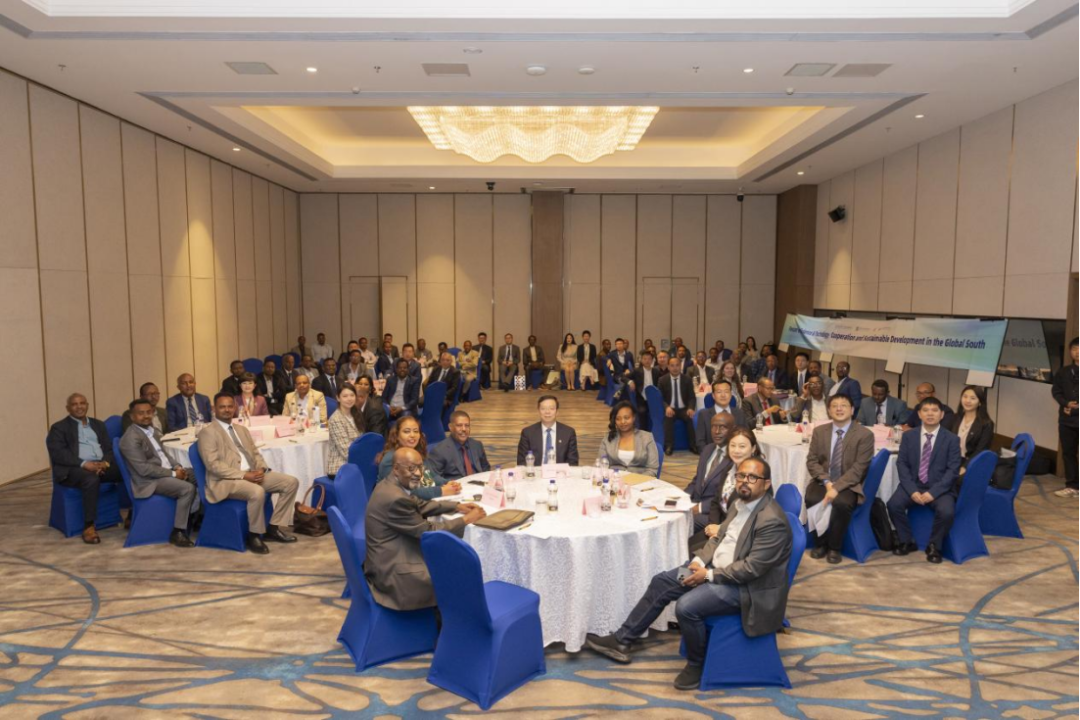
Guest Remarks
Qiu Yong noted that 2025 marks the 55th anniversary of diplomatic relations between China and Ethiopia. As important countries of the Global South, the two nations have a solid foundation for cooperation and broad prospects. Tsinghua University has always attached great importance to exchanges with African countries and has continually promoted new achievements in cooperation in academic research, talent cultivation, and people-to-people exchanges. Looking ahead, the university is willing to join hands with Ethiopia and other African countries to seize the historic opportunities presented by the development of artificial intelligence, further strengthen joint research, increase exchanges between teachers and students, and continue deepening cooperation in public health, clean energy, climate change, sustainable development, and other fields, working together to address common challenges facing humanity and better benefit the two countries and their peoples.
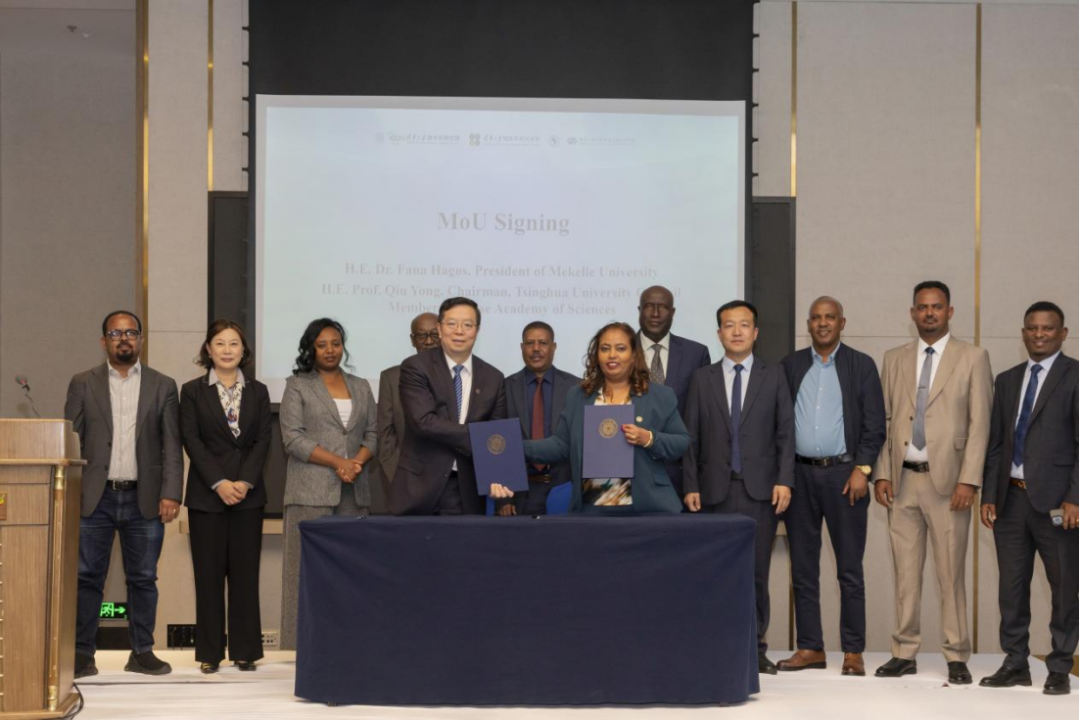
The foreign guests said that China-Africa cooperation is of great significance. They believe that mutually beneficial and win-win cooperation with Tsinghua University and other Chinese universities will strongly promote technological innovation and green energy development in Ethiopia and other Global South countries, support sustainable development, and help build a community of life between humanity and nature. At the forum, Qiu Yong signed a memorandum of cooperation with Fana Hagos, president of Mekelle University, and the two sides will strengthen cooperation in talent cultivation, joint research, and other areas.
Keynote Presentations
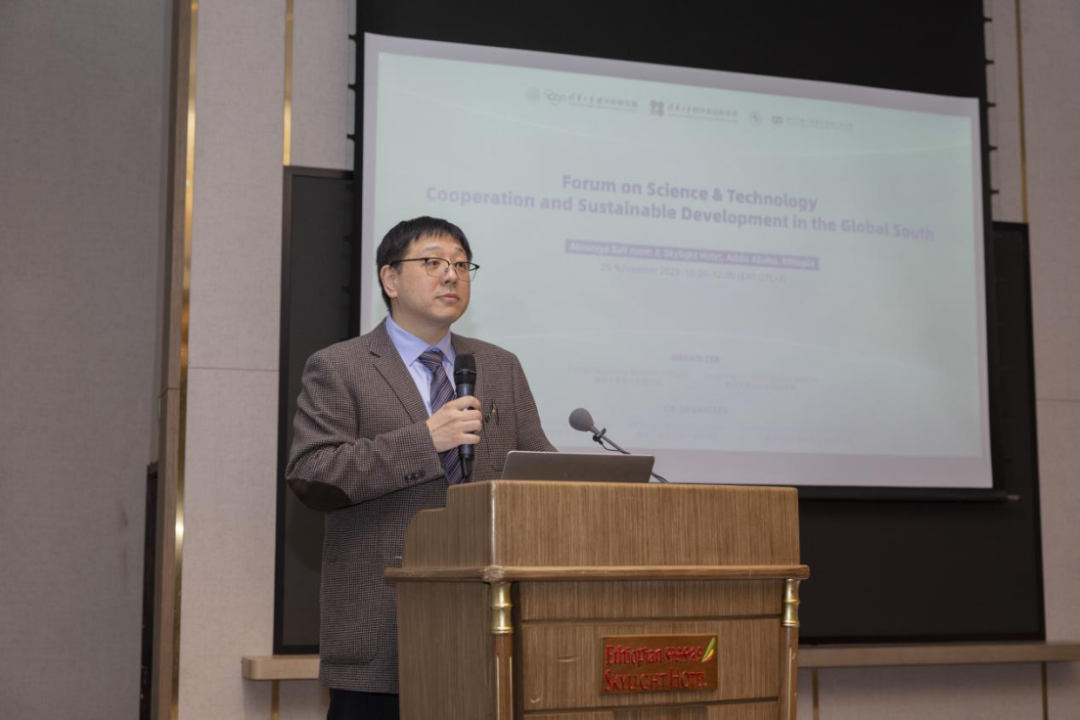
Chair Professor of Basic Science at Tsinghua University and Deputy Director of the Institute of Carbon Neutrality
Focusing on how Global South cooperation can drive green energy transition and carbon neutrality, Guan Dabo introduced the exploration and practice of the Tsinghua Institute of Carbon Neutrality since its establishment in 2021. He stressed that for developing countries, the goal of carbon neutrality cannot be understood simply as reducing emissions; it must advance in tandem with increases in wealth, well-being, and gross output. This is a highly complex challenge that requires interdisciplinary technologies and support from South-South cooperation.
Feleke Zewge proposed establishing a joint education and research agenda for climate adaptation and urban water security, arguing that although Ethiopia is rich in water resources, urban access to safe drinking water still faces problems such as uneven distribution, inadequate infrastructure, and inefficient governance. He said Africa can draw on China's experience in sponge cities, smart water networks, and recycling to improve governance capacity for urban water security through international cooperation.
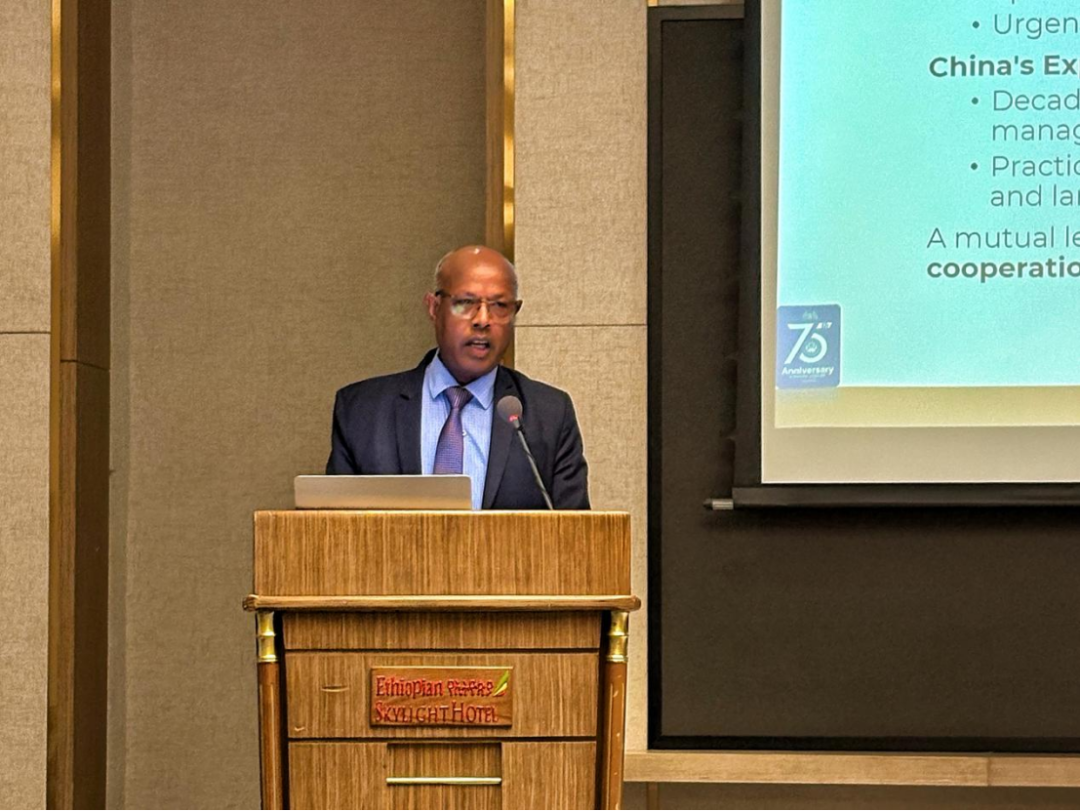
Chair of the Ethiopia Climate Change Working Group
Executive Director of the African Water Management Centre of Excellence at Addis Ababa University
Haddush Goitom explained the potential of using South-South cooperation, artificial intelligence, and emerging technologies to assess the impacts of climate change in Africa and promote sustainable development. He also outlined applications of AI, big data, and open-source networks in African contexts for improving agricultural efficiency, food security, water resource management, and the construction of sustainable energy systems.
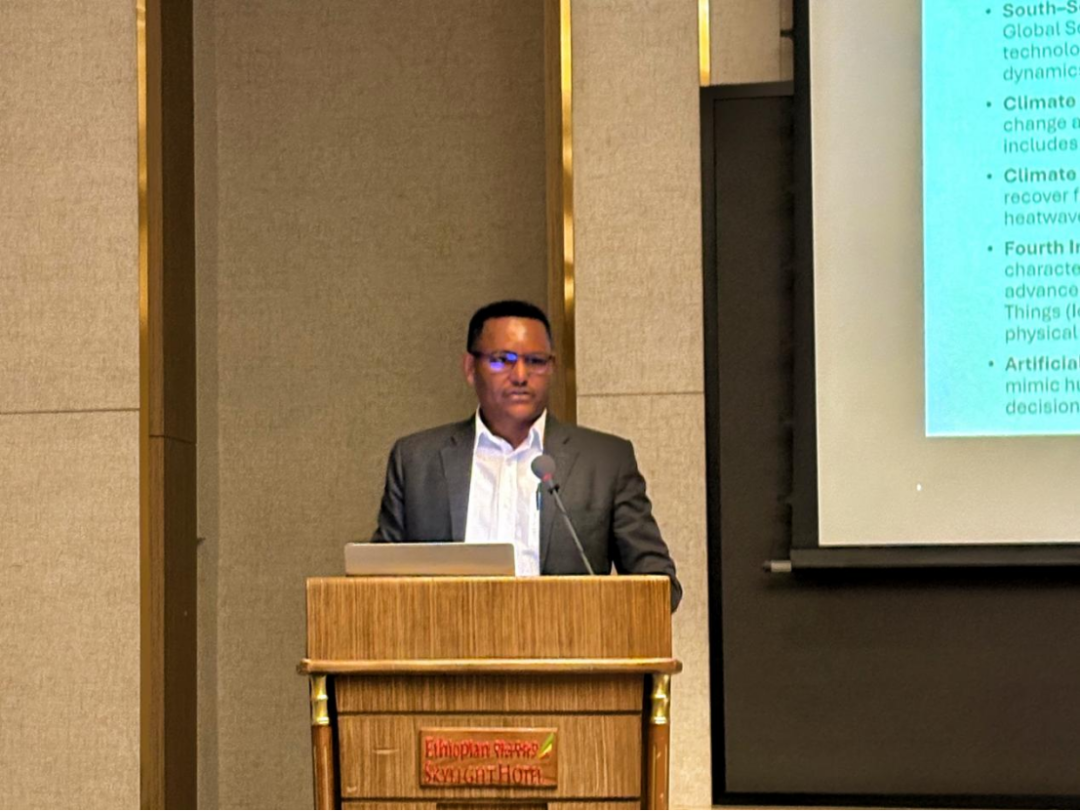
Holder of the UNESCO Chair in Water Resources Planning and Environmental Engineering, former dean of the School of Technology at Mekelle University
Tang Kun delivered a speech titled “Building a Healthy Community: Tsinghua's Vision and Actions in Africa”, highlighting a range of public health projects carried out by Tsinghua in Africa and showing how practices such as AI-assisted prenatal examinations, cutting-edge tuberculosis testing, and malaria control can enhance public health service capacity through technology empowerment and multi-stakeholder collaboration.
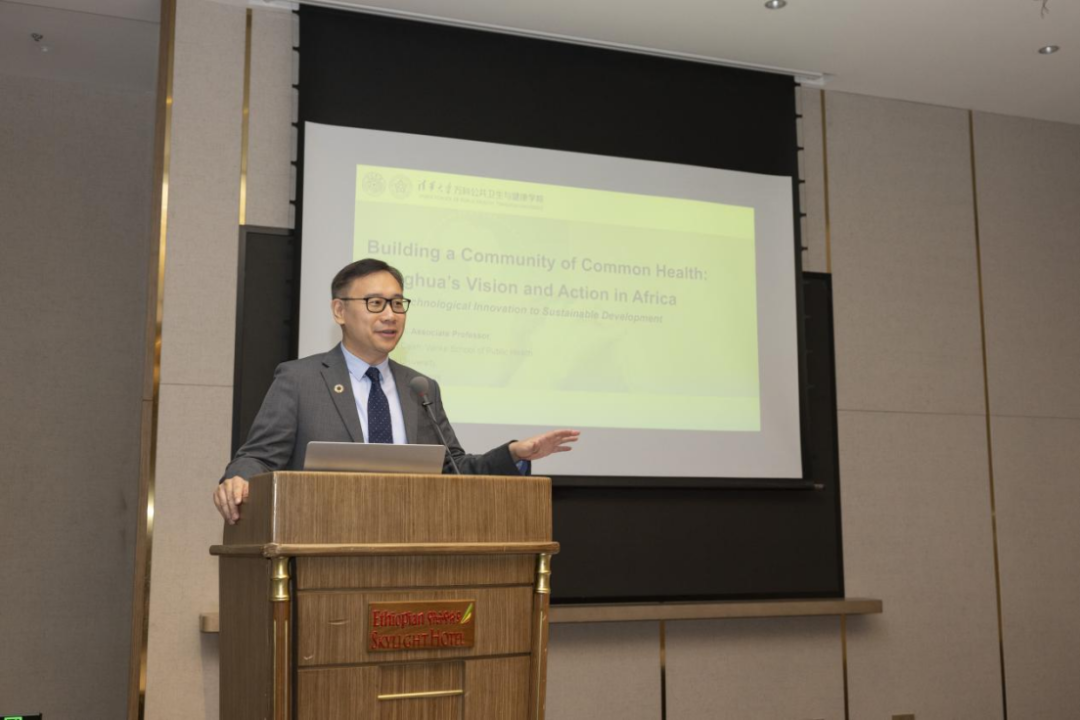
Assistant Dean and Tenured Associate Professor, Vanke School of Public Health, Tsinghua University; Executive Director, Tsinghua University Africa Center
Habtamu Abera shared Ethiopia's experience in implementing its national science and technology policy and the STISA-2034 strategy, emphasizing the key role of policy support, community participation, research investment, and transnational technological innovation in advancing sustainable development. He also stressed that increasing research investment, cultivating local talent, and boosting women's participation in science and technology will be key factors in the technological transformation in Africa.
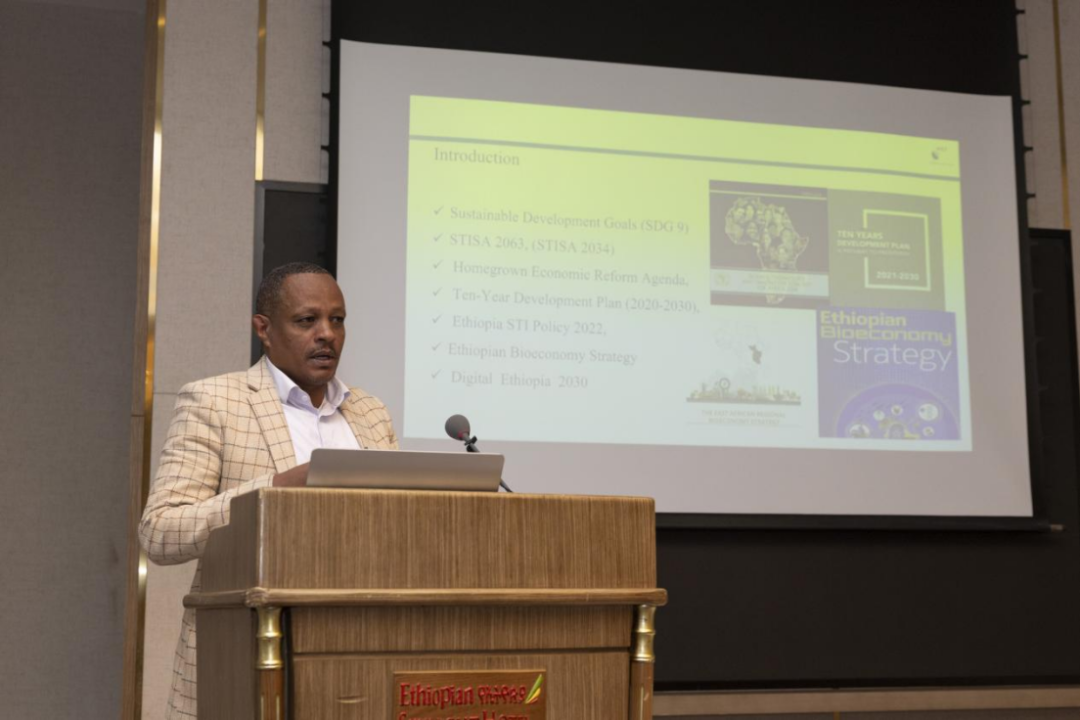
Director of the National Research Directorate, Ministry of Innovation and Technology of Ethiopia
Conclusion
November 24 marked the 55th anniversary of diplomatic relations between China and Ethiopia. Over the past 55 years, bilateral relations have advanced from a “comprehensive cooperative partnership” to a “comprehensive strategic cooperative partnership” and then to an “all-weather strategic partnership”. Each step forward has stemmed from the two sides' shared aspirations and has reflected China's principle of sincerity, real results, affinity, and good faith in its Africa policy, setting an example for China-Africa friendship and cooperation. Held at this moment, the forum showcased the cooperation potential between China and Ethiopia, China and Africa, and the Global South in technological innovation, climate governance, and public health development.
The participants unanimously agreed that South-South cooperation, represented by China-Africa cooperation, has entered a phase of pragmatic advancement. In the future, they will continue to walk the path of modernization together through joint education and research projects, integration of industry, academia, and research, and long-term strategic collaboration. Amid lively discussion and active interaction, the forum came to a successful close, contributing Tsinghua's strength to China-Africa and South-South cooperation.
CGTV English Channel report
CGTV French Channel report
The CGTN English and French channels also featured special reports on the forum.