
CEADs Release: Latest 2007-2015 Japan Prefectural Carbon Emission Inventory
Against the backdrop of global climate change, developing carbon emission inventories is a cornerstone for implementing effective emission reduction plans. Compared with national-level accounting, regional emission accounting is important for identifying emission priorities and targeting key areas for mitigation. CEADs has long been committed to building an open, transparent, comparable, verifiable, and free carbon emission accounting database. Building on the preliminary establishment of China carbon accounting framework and using mature methods, the CEADs team has attempted to conduct accurate carbon emission accounting for Asian and neighboring countries.
On July 13, a paper led by Dr. Yin Long of the CEADs team on prefectural-scale emission accounting for Japan from 2007 to 2015 was published in Scientific Data. This study systematically accounts for regional carbon emissions across Japan 47 prefectures. The data can be used to explore the drivers of interannual changes in Japan emissions, and to understand regional responses in the energy structure to the impact of earthquakes and related countermeasures.
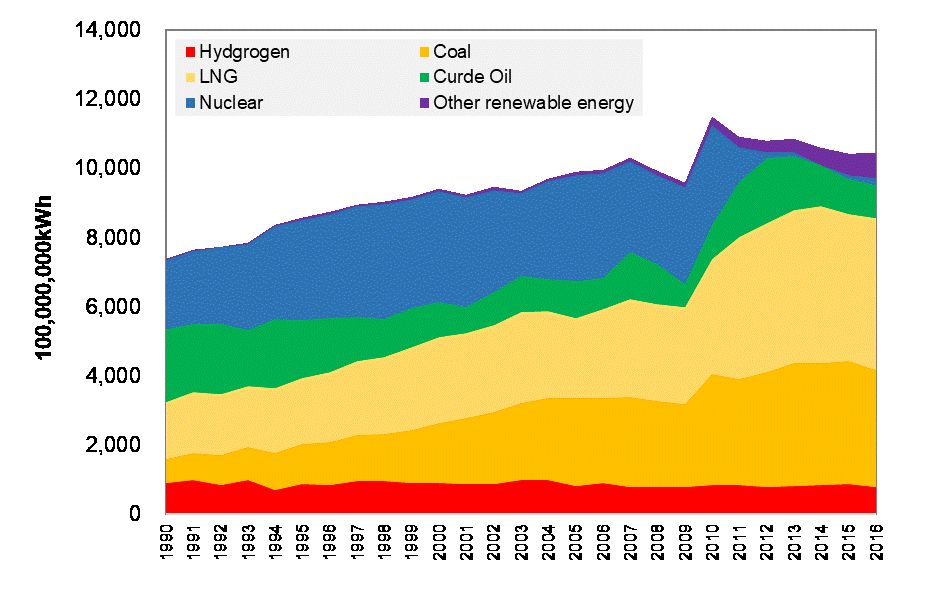
As greenhouse gas emissions continue to rise, fossil energy has become one of the main contributors to global warming because of its large share. Over the past few decades, the international community has also continued to seek cooperation and explore new pathways for emission reduction. Especially after the 2015 Paris Agreement, nationally determined mitigation targets have become a focus for all parties. In this context, Japan set its nationally determined mitigation target at 26% (base year: fiscal year 2013; target year: fiscal year 2030). Achieving this target, however, requires overcoming multiple challenges. One is how to respond to changes in the national energy structure after the Fukushima nuclear power plant accident in 2011. With the sudden loss of nuclear power support, Japan had to increase the share of fossil-fuel power generation after the earthquake, disrupting its planned emission reduction pathway. In fiscal year 2013, Japan national carbon dioxide emissions reached 1,410 Mt, 2% higher than in fiscal year 2005. It is undeniable that before public trust in nuclear energy is restored, Japan is in a difficult period of determining how to adjust its energy structure in a reasonable way.
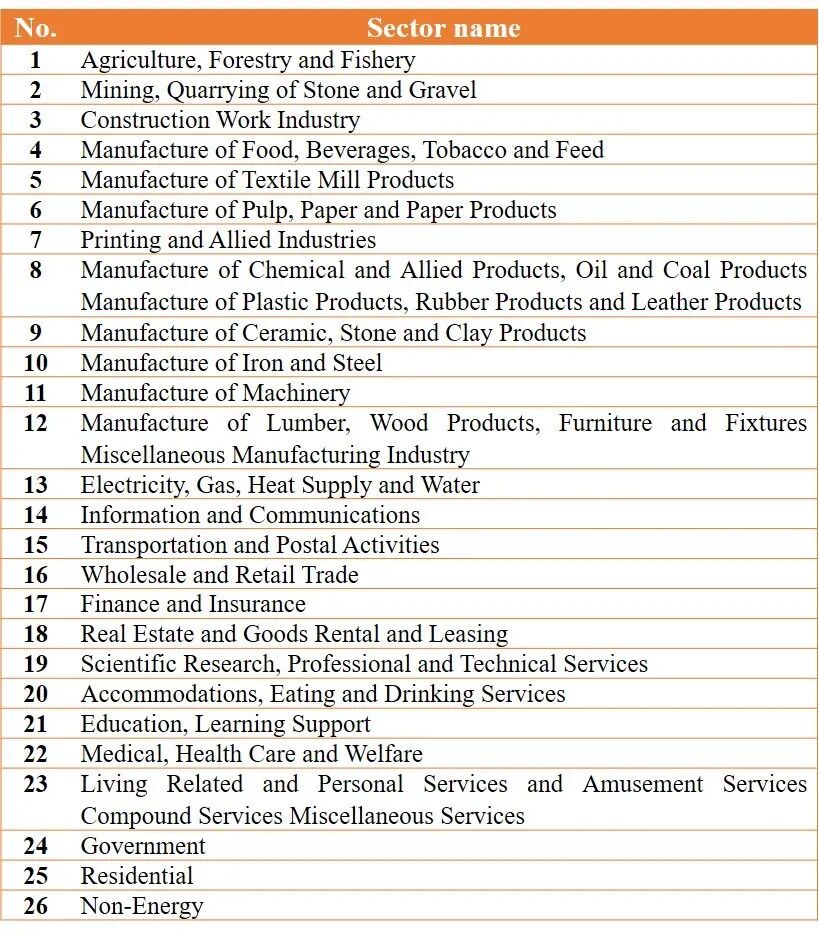
This dataset uses sectoral energy consumption data, separately adjusts the power sector, and combines data from electric power companies and power plants to organize prefectural-sectoral energy consumption and emissions in Japan. The electricity data come from fossil-fuel power generation data by Japan ten major electric power companies. Because fossil-fuel power generation data cannot be matched to sectors in each region, this database separately extracts electricity energy consumption and allocates the calculated emissions to the regional power sector. Therefore, regional power-sector emissions consist of two parts: energy consumption for non-power-generation purposes and energy consumption for power generation. Sector details are as follows:
The inventory includes two datasets:
1: Prefectural-scale emissions for Japan (47 prefectures) across 26 sectors (2007-2015).
2: Prefectural population, GDP, and per capita disposable income data for the corresponding emission years.
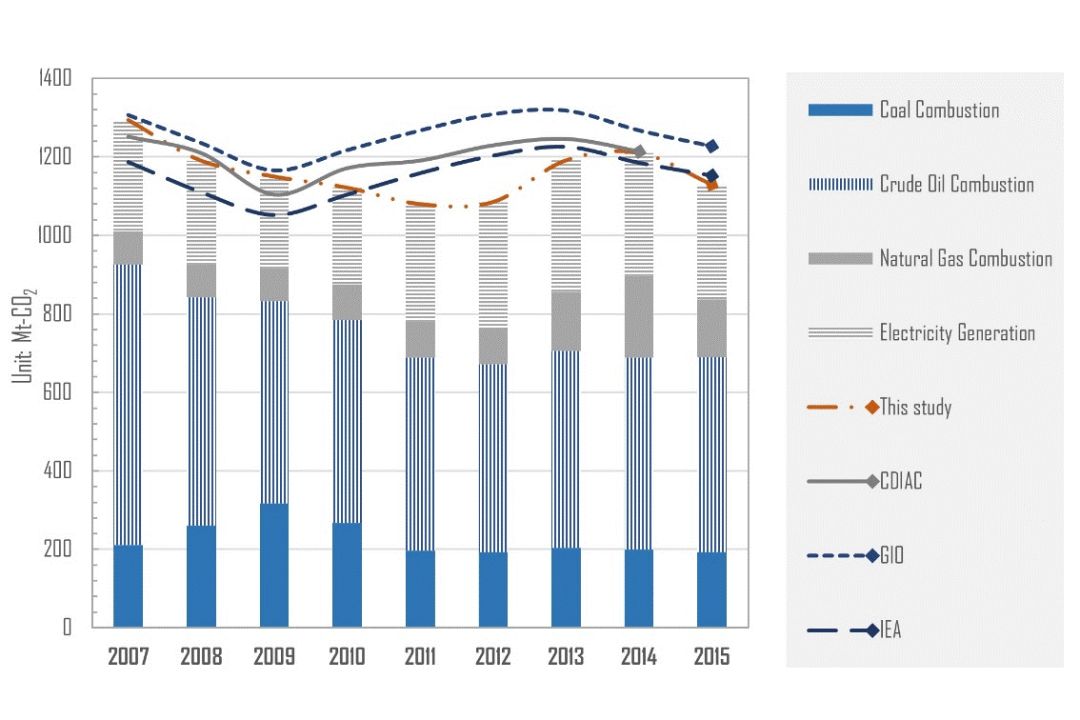
Compared with other databases that provide national-level accounting, this database matches the overall emission trend while also showing a lower estimate in one year (2012). This is because privately owned power generation equipment temporarily activated after the March 11 earthquake in Japan could not be included in regional statistics. In addition, because Japan currently lacks actual prefectural power-generation energy consumption data, this accounting uses energy consumption data from electric power companies in each region as the basis for calculation. With future data development, the accuracy of this dataset is expected to improve. At this stage, this database is the only database that includes all-sector prefectural carbon dioxide emissions for Japan. It covers 23 industrial sectors, as well as households, government, and other non-fossil energy sectors, and uses interannual emission factors for accounting. Because the accounting period spans the years before and after the Great East Japan Earthquake, the dataset is important for revealing the impact of the earthquake on the energy structure and its regional heterogeneity.
Data Download
The data can be downloaded for free by clicking Read More below or by visiting https://www.nature.com/articles/s41597-020-0571-y.
Please cite the paper when using the data: Long, Y., Yoshida, Y., Zhang, H. Zheng, H., Shan, Y.*, & Guan, D.* Japan prefectural emission accounts and socioeconomic data 2007 to 2015. Sci Data 7, 233 (2020).