
AEss 2019 Day 10: Gathering Bright Minds to Sing the Song of Scholarship and Write the Poem of Youth
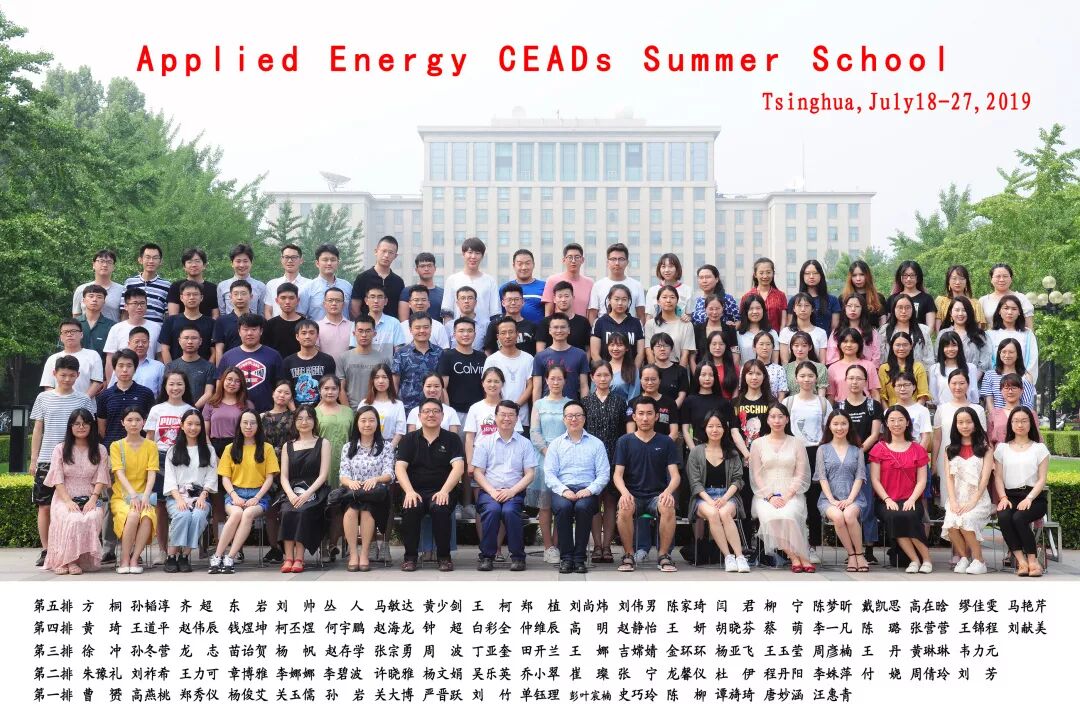
From July 18 to July 27, CEADs brought together academic talents from across the country and beyond for the ten-day Applied Energy-CEADs Summer School at Tsinghua University. More than 90 selected participants joined with great enthusiasm, beginning their journey of exploration in the heat of July, gathering bright minds and sounding the song of CEADs.
The summer school invited many academicians, scholars, and experts from leading universities in China and abroad. The high-level lecture series, with its academic depth and breadth, greatly benefited the participants and added particular brilliance to this program.
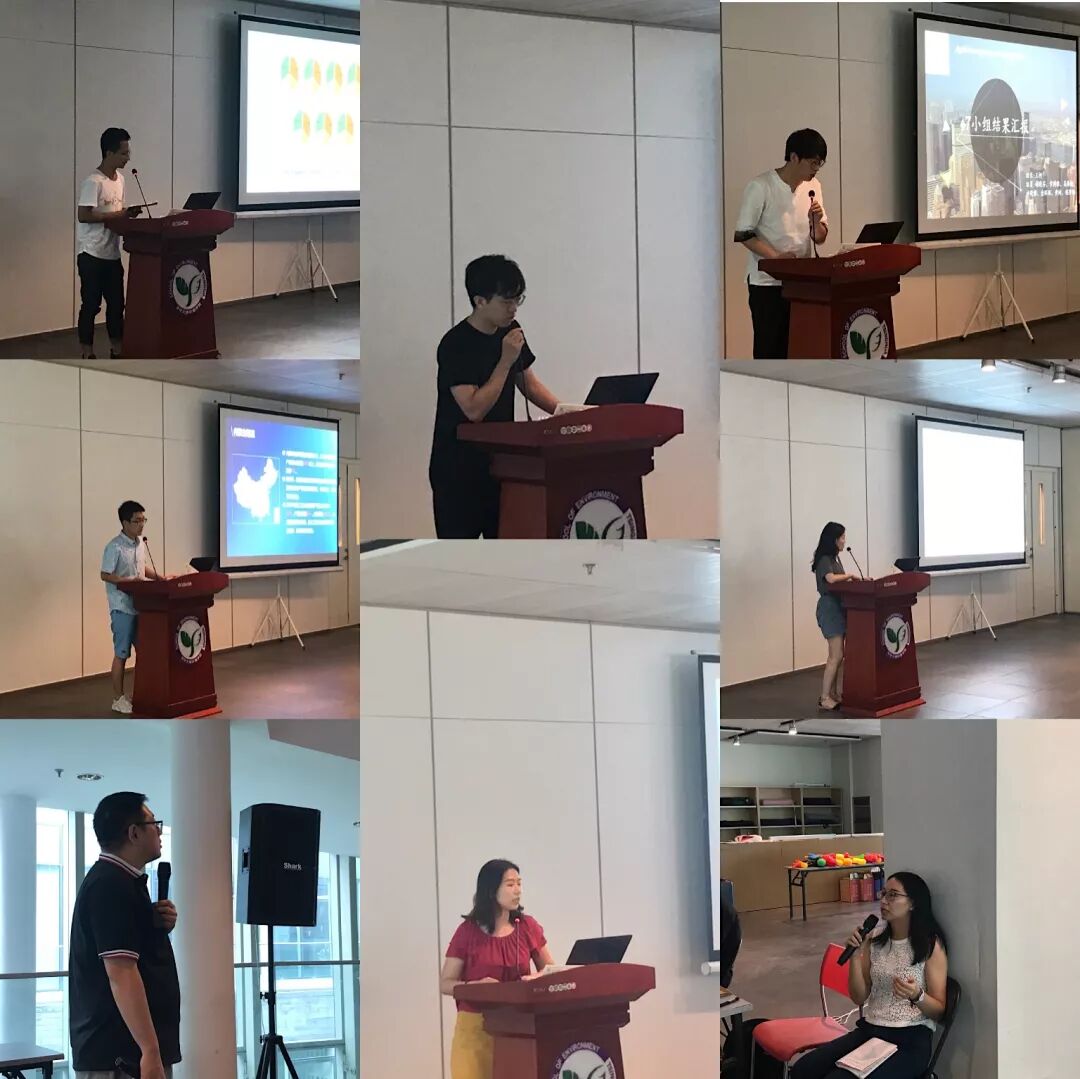
Beyond the lectures, participants also devoted themselves fully to group work. Students from different disciplines contributed ideas to shared research topics, working together through brainstorming, intellectual exchange, and interdisciplinary collaboration. On the final day, each group presented its work, showing a wide range of talents and approaches.
Group Presentations and Results
Hearts 2 Group
The Hearts 2 Group calculated carbon emissions for cities in Heilongjiang Province, calculated HDI for 2010, and also calculated carbon emissions for Croatia from 2011 to 2017. Based on the results, the group conducted deeper analysis and discussion. Professor Guan suggested further research directions, including how shrinking cities such as Harbin can achieve development under low-carbon scenarios.
Hearts 3 Group
The Hearts 3 Group calculated city-level carbon emissions and the Human Development Index for Hebei Province, and discussed factors affecting total-factor carbon emission performance as well as the decoupling relationship between HDI and carbon emissions. For international carbon accounting, the group introduced and analyzed carbon emissions in Israel.
Hearts J Group
The Hearts J Group calculated city-level carbon emissions and the Human Development Index for Guangdong Province, analyzing the uneven distribution of HDI within the province and the influence of factors such as education on carbon emissions. For international carbon accounting, the group looked forward to deeper future research by sector and in other directions.
Spades 6 Group
Based on city-level carbon emissions and HDI results for Jiangsu Province, the Spades 6 Group analyzed and explained different development patterns in southern and northern Jiangsu. The group also used time-series analysis to examine the impact of the economic crisis, political regulation, and other factors on energy consumption and carbon emissions in Ukraine.
Hearts A Group
The Hearts A Group analyzed overall HDI in northern, central, and southern Anhui, and summarized its findings in an interesting and creative poem. For international carbon emissions, the group analyzed the influence of international politics on Azerbaijan, Georgia, and Armenia. Professor Guan emphasized how the different political orientations of the three countries affect their energy exports.
Spades 4 Group
The Spades 4 Group calculated HDI and carbon emissions for Henan Province, as well as carbon emissions for Russia. Ma Minda and other students raised questions and suggestions regarding the accounting work, and all groups actively communicated during the question-and-answer session.
Spades 7 Group
The Spades 7 Group calculated HDI and carbon emissions for Shanxi, a major coal-producing province, and analyzed possible correlations between the two indicators, providing ideas for future research. In international carbon accounting, the group selected Austria as its case and compared its results with data from the IEA, the World Bank, and other international organizations.
Hearts 5 Group
The Hearts 5 Group analyzed HDI and carbon emissions in Sichuan Province, and, based on literature review, raised thoughts on cluster analysis, environmental accounts, and related topics. In its carbon accounting for Sri Lanka, the group proposed a new idea for studying the impact of climate change on tea trade. Professor Guan recognized the group for its strong performance and offered guidance for future work.
Spades 9 Group
The Spades 9 Group calculated HDI and carbon emissions for Shaanxi Province, as well as carbon emissions for the Czech Republic. Given the relatively complete statistical system in the Czech Republic, the group looked forward to future carbon accounting at the state or city scale there.
Spades 8 Group
The Spades 8 Group calculated HDI and carbon emissions for Inner Mongolia, and studied and analyzed the diffusion effect and spatial heterogeneity shown in the Human Development Index. Its carbon accounting results for Bulgaria also offered students new ideas and perspectives.
Hearts 10 Group
The Hearts 10 Group calculated HDI and carbon emissions for Liaoning Province, and introduced issues that remain in data collection and analysis when studying carbon emissions in a developed country such as Poland. Professor Guan offered suggestions on carbon accounting for Eastern European countries and on including non-fossil energy.
Certificates and Group Photos
Two months ago, through recommendations from senior students or online media promotion, we first saw the call for the summer school.
One month ago, after competing with nearly 200 applicants, we stood out and received the offer email for the summer school.
Ten days ago, we came from across China and gathered at Tsinghua University. Some of us had read SCI papers by well-known scholars, while others had met briefly at conferences.
During these ten days of training, participants benefited not only from dedicated lectures by professors from renowned universities in China and abroad, but also from the full commitment shown by students in group work.
More than ten lectures, discussions in groups of eight or nine, six or seven team-building activities, several rounds of checking and revision, late-night work until two or three oclock, and wholehearted engagement in study all brought students many new ideas and insights through repeated brainstorming and intellectual exchange.
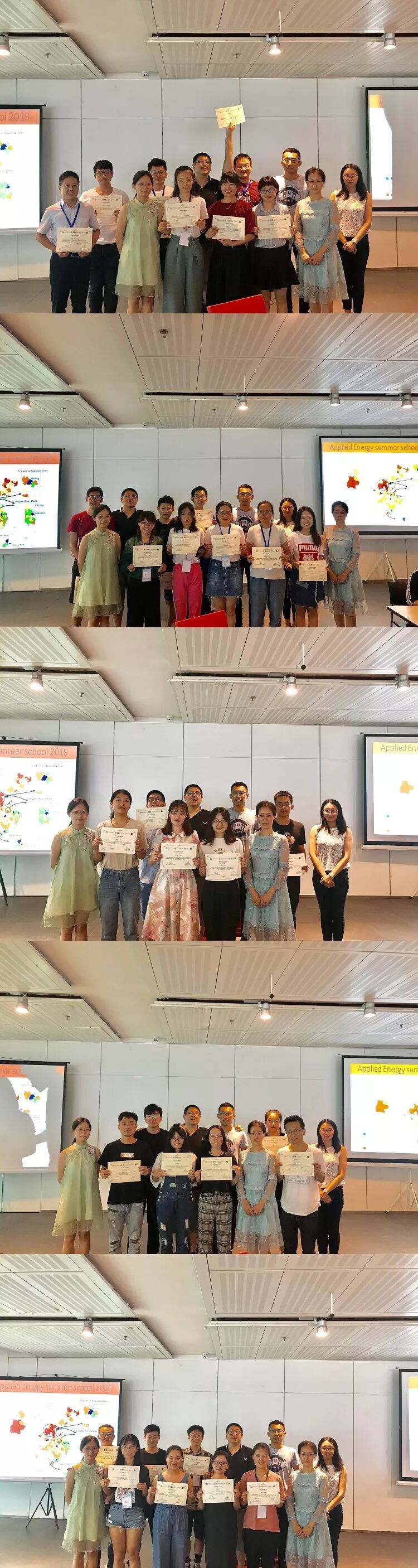
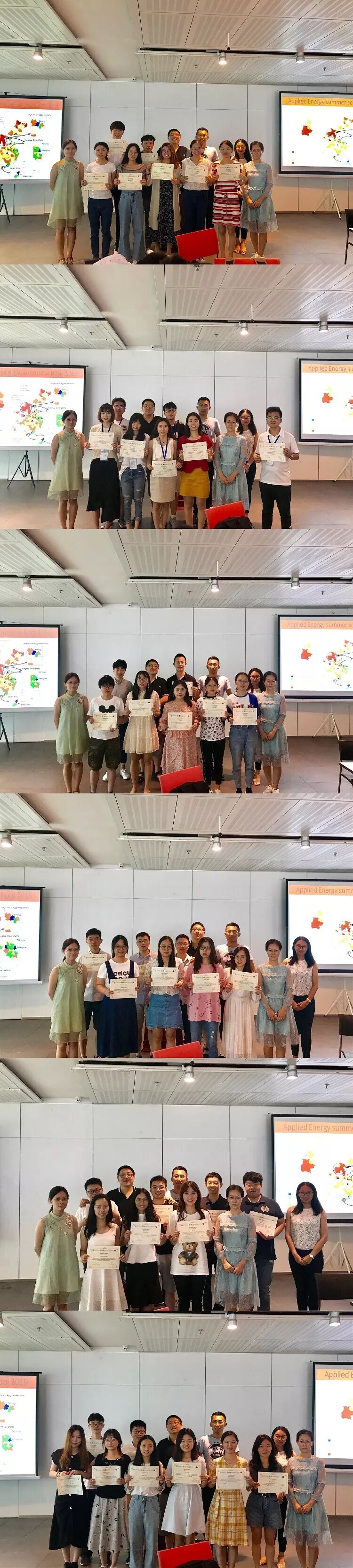
At the end, five mentors, Guan Dabo, Zhou Ya, Shan Yuli, Qiao Xiaocui, and Cui Can, expressed their expectations and appreciation for the students excellent performance during the summer school, presented completion certificates, and took group photos with the participants.
Looking Forward to Meeting Again
Messages from the Students
Du Yi, Hong Kong University of Science and Technology: Thank you to all the teachers, senior students, and organizers for your careful arrangements and hard work. The lectures were very rewarding. I will learn from all these outstanding predecessors. I wish everyone all the best. You are welcome to visit Hong Kong, and I can be your guide.
Zhong Weichen, Jilin University: It was a great honor to spend these ten days of study and life with all the teachers and students. Thank you to Professor Guan and the team for creating this platform for exchange. I hope we will stay in touch and communicate often. Everyone is welcome to visit Northeast China. Until we meet again.
Zhao Hailong, LCA: Thank you to the teachers for providing such a good platform, giving us the chance to meet one another and do meaningful work together. Over these ten days, we also built deep friendships. I hope we can all keep in touch and stay active in the group. We will help promote the CEADs database and the summer school. Let us keep working together.
Tan Yiqi, Sun Yat-sen University: Thank you to the teachers for your hard work over these ten days, for giving us such a wonderful learning platform, and for helping us meet so many like-minded friends. I sincerely hope AEss will continue to grow better and better.
Wei Liyuan, Wuhan University: Thank you to the teachers for your hard work. Your comments have greatly inspired our next steps. Thank you.
Memories from the Final Day

Selected Group Photos

Closing Words
One person may move fast, but a group can go far. We look forward to continued exchange and cooperation in the future, turning shared wisdom into high-quality research outcomes. We also hope everyone will keep lighting up youth with greater enthusiasm, take on the responsibilities of young people with greater effort, encourage one another, and move forward together.