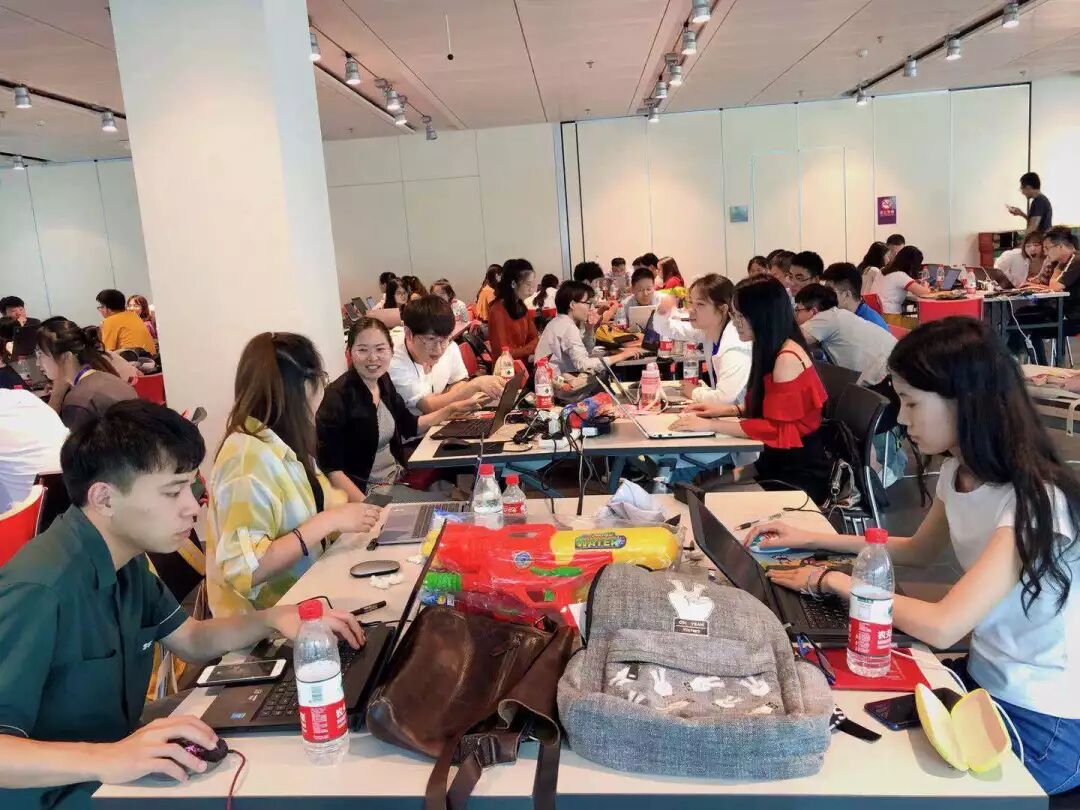
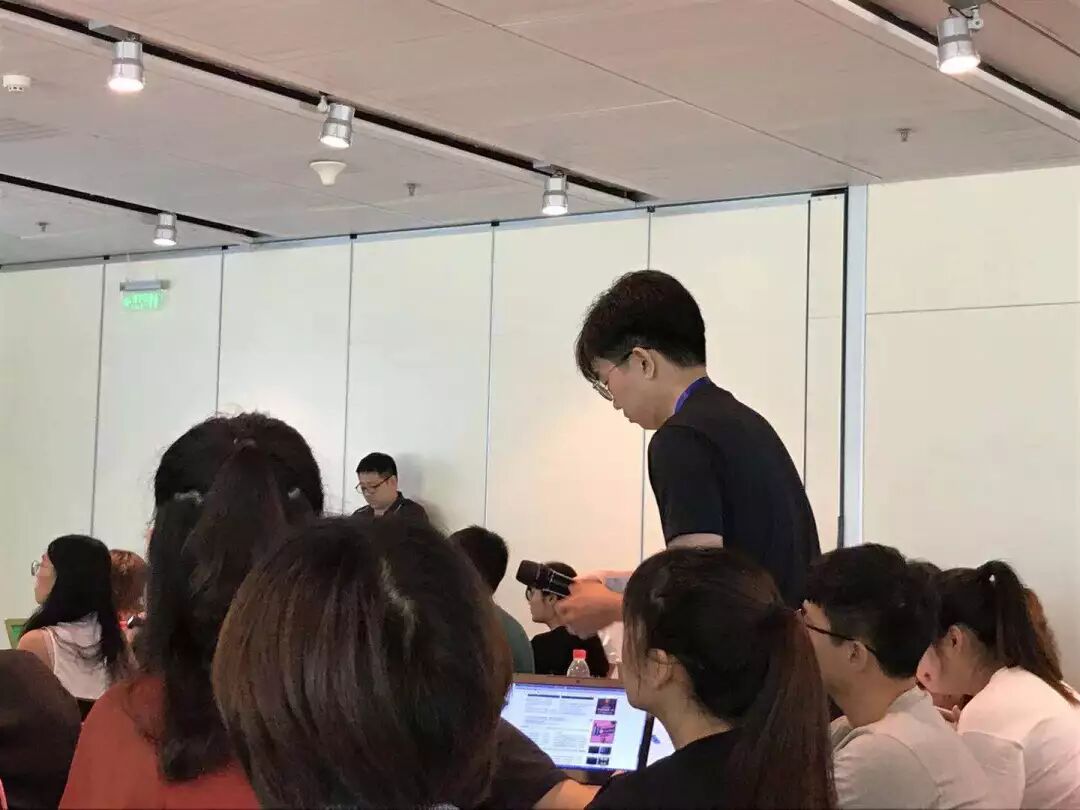
AEss2019 Day 4: Boundless Learning, Pressing On Through Challenges
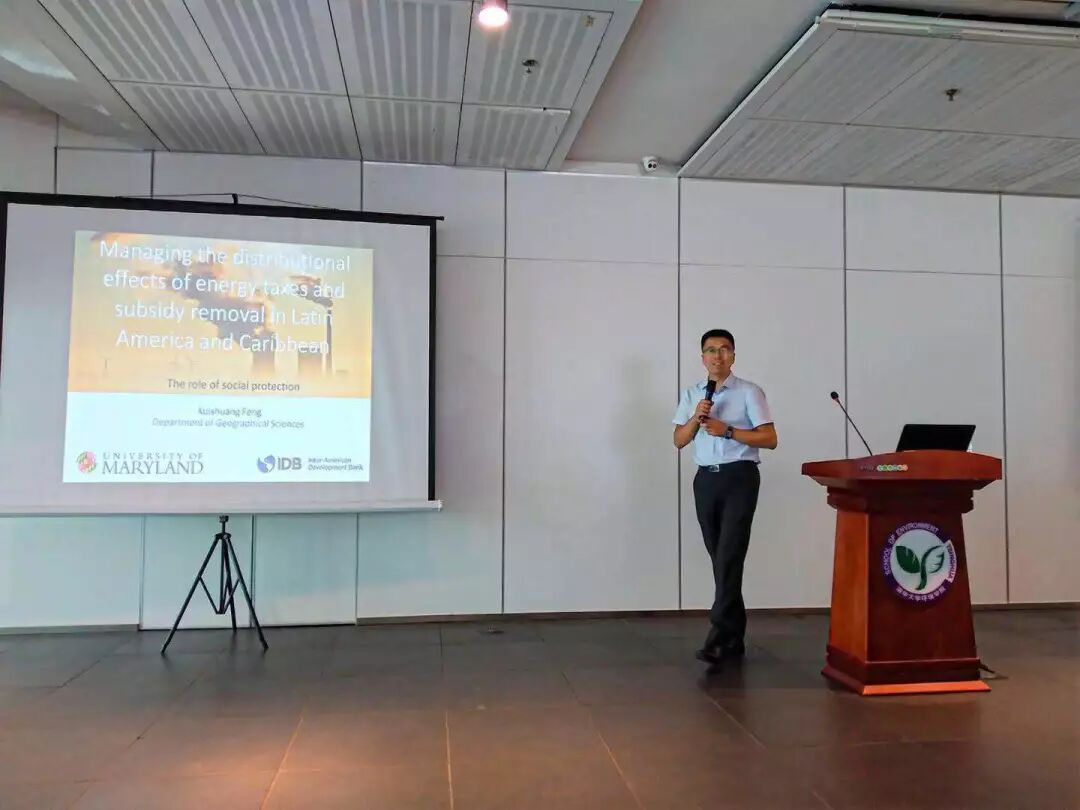
Dr. Kuishuang Feng is currently a professor at the University of Maryland. He graduated from the University of Leeds in the United Kingdom with a PhD in sustainable development research. His work focuses on conceptualizing and modeling interactions between human and environmental systems, as well as scenario simulation and analysis of future global change. His research areas include sustainable production and consumption, sustainable supply chains, life-cycle analysis, and spatial eco-economic models for scenario analysis, with emphasis on energy, carbon, water, and land accounting at different spatial scales.
Professor Feng gave an academic talk titled "Managing the Distributional Effects of Energy Taxes and Subsidy Removal in Latin America and Caribbean." He introduced how to manage the distributional effects of carbon taxes and energy subsidy removal in Latin America and the Caribbean. Although a carbon tax is an effective policy instrument, removing fuel subsidies and taxing carbon can raise energy prices and increase the burden on ordinary households. Professor Feng used an energy-extended input-output approach to analyze the impact of higher energy prices on different income groups. He pointed out that when tracing the direct and indirect effects of energy price changes, high-income groups benefit more from low energy prices than low-income groups. Energy subsidies are an expensive way to transfer income to poor households; by comparison, cash transfers to poor households and targeted subsidies for public transport or food are the most effective measures.
After Professor Feng concluded his presentation, the participants showed strong interest in the research and held a lively discussion on energy subsidy policy design and methods for evaluating policy impacts.
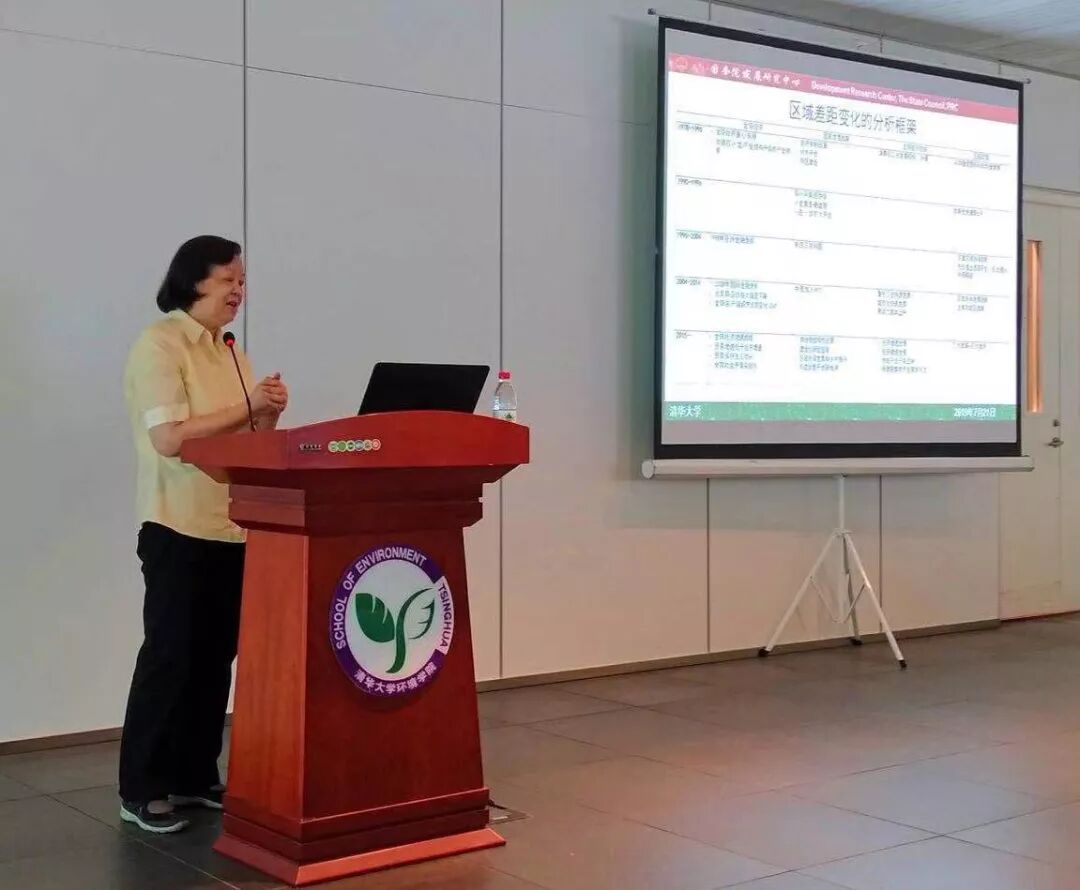
Professor Shantong Li is a former director and researcher of the Department of Development Strategy and Regional Economy at the Development Research Center of the State Council. She holds a master degree from the Department of Mathematics at Peking University. Her research mainly covers medium- and long-term development strategy and forecasting for China, macroeconomic analysis, regional economy and regional policy, industrial policy, and the development and application of macroeconomic models. She has published many articles and monographs. She has participated in multiple research projects, including projects on development strategies and policies for the Eleventh Five-Year Plan period and 2020, projects of the National Development and Reform Commission, trade liberalization, growth and income distribution, and Ford Foundation projects.
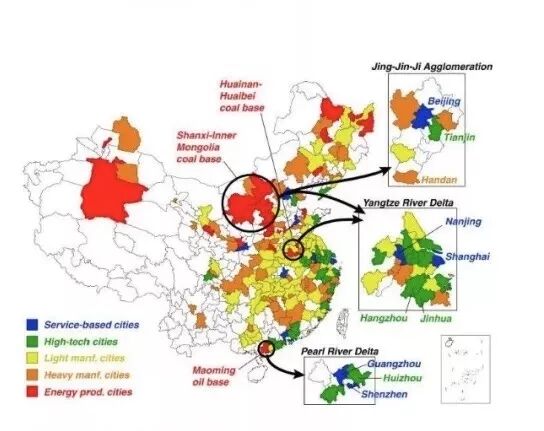
Professor Li gave an academic talk titled "Analyzing China Regional Economic Development from the Perspective of Global Value Chains." Research on value chains has become increasingly important. Since international organizations represented by the WTO launched the "Made in the World" initiative in 2010, organizations including the WTO, UNCTAD, and OECD have begun research on global value chains. A global value chain is a chain of division of labor, a chain of value added, and a chain of opportunities. She noted that Chinese provinces participate in value-chain division of labor through two main types of chains: first, export-driven global value chains led by coastal and nearby provinces, with the Pearl River Delta and Yangtze River Delta as major participants; second, investment-driven domestic value chains for heavy and chemical industries led by northern provinces, with parts of Northeast China, North China, and Northwest China as major participants. The widening north-south gap reflects the sharp weakening of the driving force from investment-led heavy and chemical industry value chains, leaving northern economies less resilient and less able to adapt quickly when the economic pattern changes. As the economy shifts from high-speed growth to high-quality development, investment demand will also show new characteristics, requiring further exploration of the potential of investment and national savings. In addition, addressing the widening north-south gap requires attention to cultivating mid- and high-end industries, accelerating the upgrading of heavy and chemical industry value chains, and building new value chains. For northern regions, efforts should focus on creating the conditions needed for transformation, upgrading, and reconstruction of heavy and chemical industry value chains.
Q&A
How can China provincial multi-regional input-output tables be embedded into the WIOT framework?
First, it is necessary to consider that China provincial multi-regional input-output tables and WIOT use different industry classifications, so the industrial classifications of the two systems must be matched and adjusted before embedding. Second, the missing intermediate product and final product block matrices in the embedded EWIOT need to be filled using constant coefficient matrices and provincial import and export data.
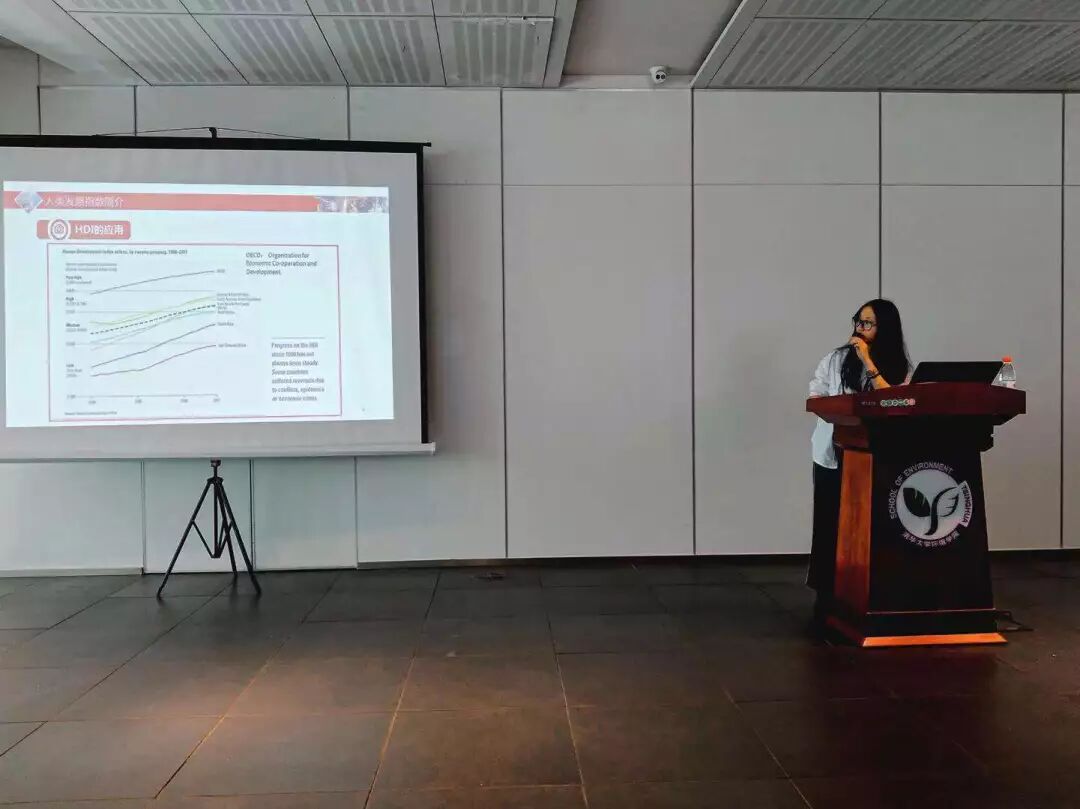
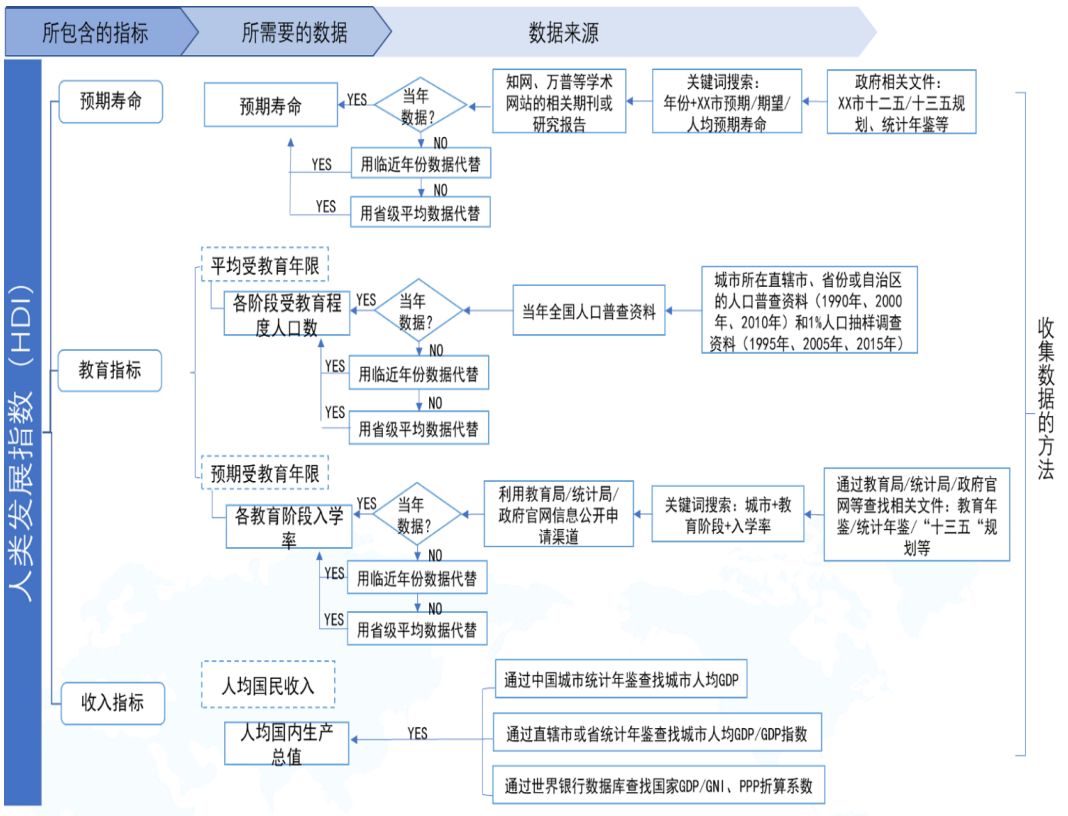
In the 1950s and 1960s, economic development became a central concern for governments and the public. People placed "development" at the center, and gross domestic product became the main indicator for measuring the development level of countries and regions. However, the wealth and prosperity created by economic development are distributed very unevenly, and human well-being should be the core concern. Development centered on people has gradually become a global consensus. Since 1990, the United Nations Development Programme (UNDP) has released the Human Development Index (HDI) through the Human Development Report as a standard for measuring the level of socioeconomic development of countries and regions around the world, revealing imbalances between economic growth and social development. Student Xiuyi Zheng explained to summer school participants how to calculate the Human Development Index (HDI) for Chinese cities. The Human Development Index is a composite indicator for measuring human economic and social development. It consists of three basic dimensions: life expectancy, education, and standard of living. By focusing on key indicators, it simplifies complex conditions so that the economic and social development levels of countries can be measured more effectively.
Are the students studying hard worth a pick?