CEADs 2022 Day 9-10: Gathering on Egret Island, Low-Carbon Stars, a Promising Future!
Gathering on Egret Island
Low-Carbon Stars, a Promising Future!

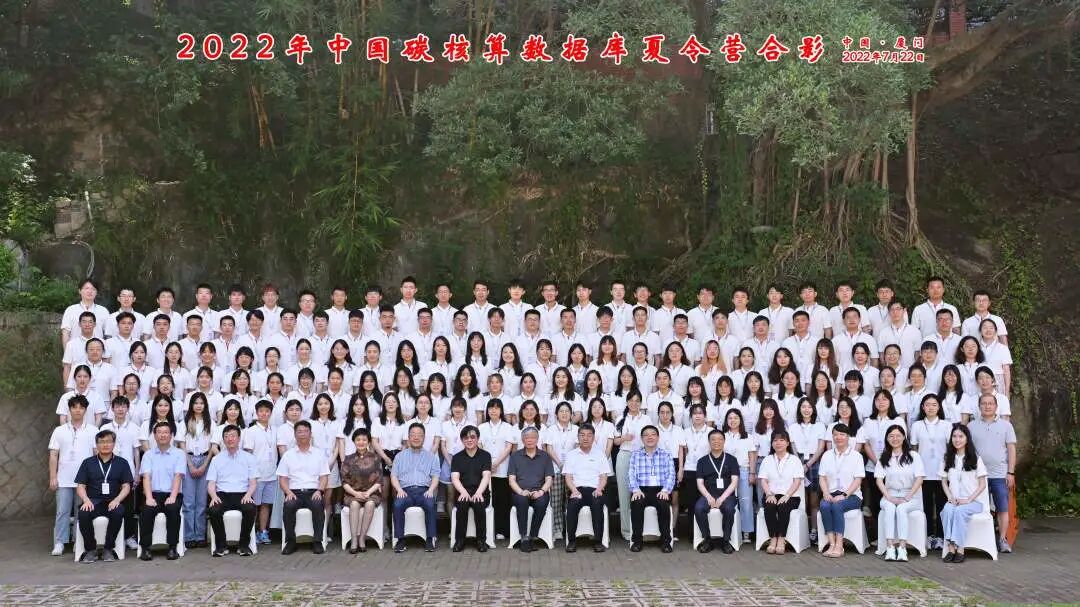
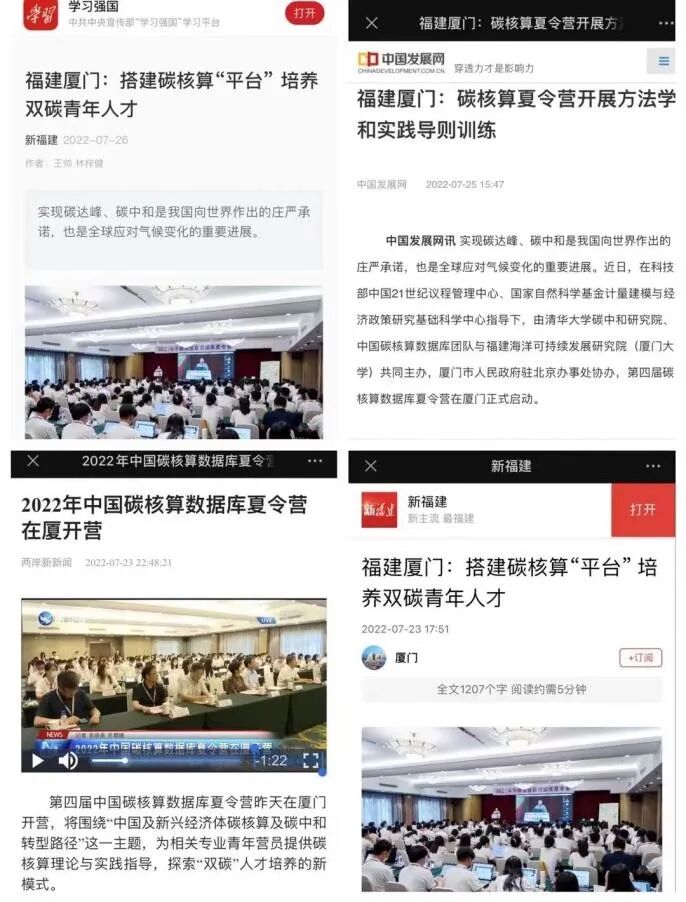
With joint support from the Ministry of Science and Technology of China, the Administrative Center for China Agenda 21, the National Natural Science Foundation of China, the Chinese Academy of Sciences, UK Research and Innovation, the Newton Fund, and many other organizations and research institutions, the ten-day CEADs Summer Camp of the China Emission Accounts and Datasets was successfully held in Xiamen, the Egret Island, from July 22 to July 31. The summer camp brought together outstanding students from more than one hundred universities in China and abroad, including Tsinghua University and Peking University, aiming to prepare carbon talent for global climate governance and for the national dual-carbon goals.
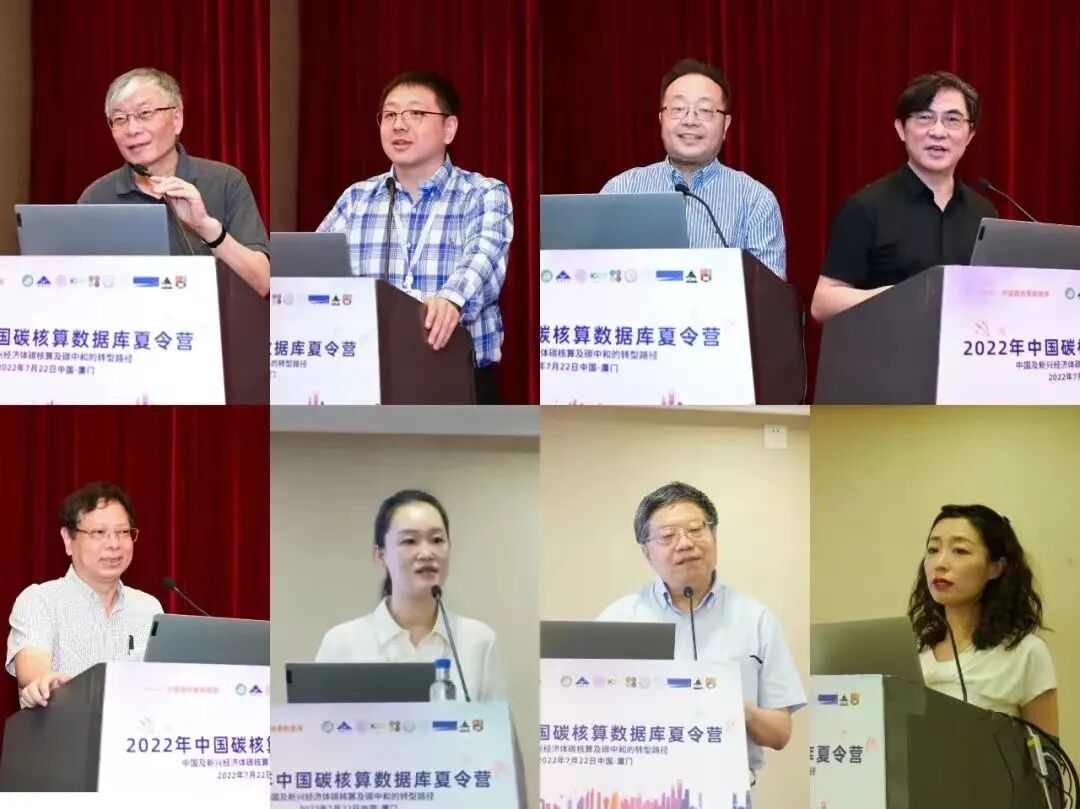
The summer camp invited academicians, scholars, and experts from many well-known universities in China and abroad as guest speakers, in teaching order: Professor Tao Shu, Academician of the Chinese Academy of Sciences and professor at the College of Urban and Environmental Sciences, Peking University; Professor Dabo Guan, Fellow of the Academy of Social Sciences in the UK and Distinguished Professor at the Department of Earth System Science, Tsinghua University; Professor He Kebin, Academician of the Chinese Academy of Engineering and Dean of the Institute for Carbon Neutrality, Tsinghua University; Professor Dai Minhan, Academician of the Chinese Academy of Sciences and Chief Scientist of the Fujian Ocean Innovation Institute; Professor Hong Yongmiao, Fellow of The World Academy of Sciences and Dean of the School of Economics and Management, University of Chinese Academy of Sciences; Yu Xiang, Deputy Director of the Climate Change Economics Research Office at the Research Institute for Eco-civilization, Chinese Academy of Social Sciences; Professor Wang Shouyang, Fellow of The World Academy of Sciences and Director of the Center for Forecasting Science, Chinese Academy of Sciences; and Dr. Xia Yang, Senior Editor at Nature. The lineup was exceptional. In the high-level lecture series, the academic depth and frontier perspectives of the lecturers greatly enlightened the campers and made the summer camp shine.


In addition to the gathering of leading scholars,
this summer camp introduced camper scholarships for the first time!
There were two team scholarships
and one individual scholarship.
All members of the winning teams received full coverage for round-trip travel and accommodation.
The individual scholarship winner received a prize of RMB 4,000.
With full enthusiasm,
the campers began their journey of carbon exploration in the heat of July.


The campers devoted themselves fully to their group work. Students from different disciplines contributed ideas to shared topics, pooling wisdom and effort. Through brainstorming, exchange of ideas, and collaborative learning across diverse backgrounds, they learned from one another day and night and worked together to play the song of CEADs.



1. The Closing Ceremony Begins

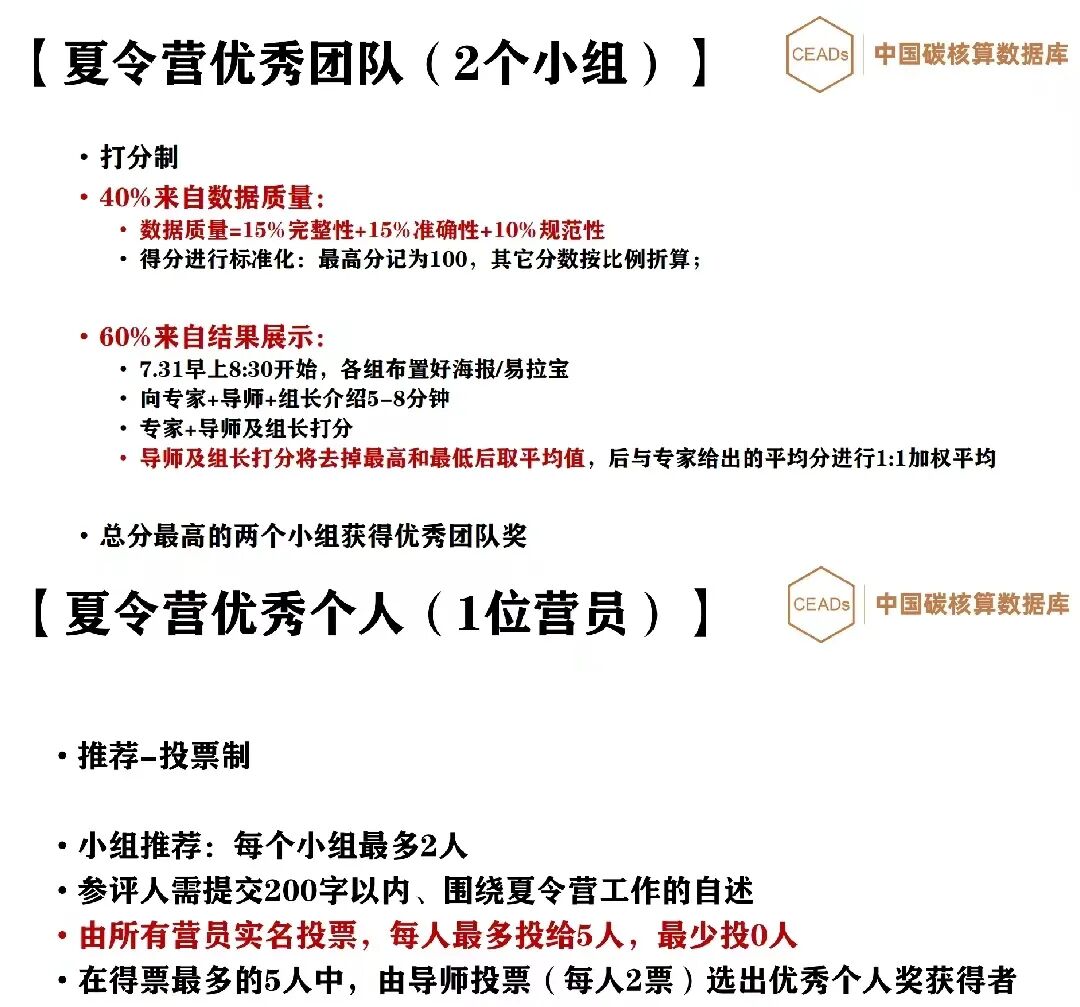
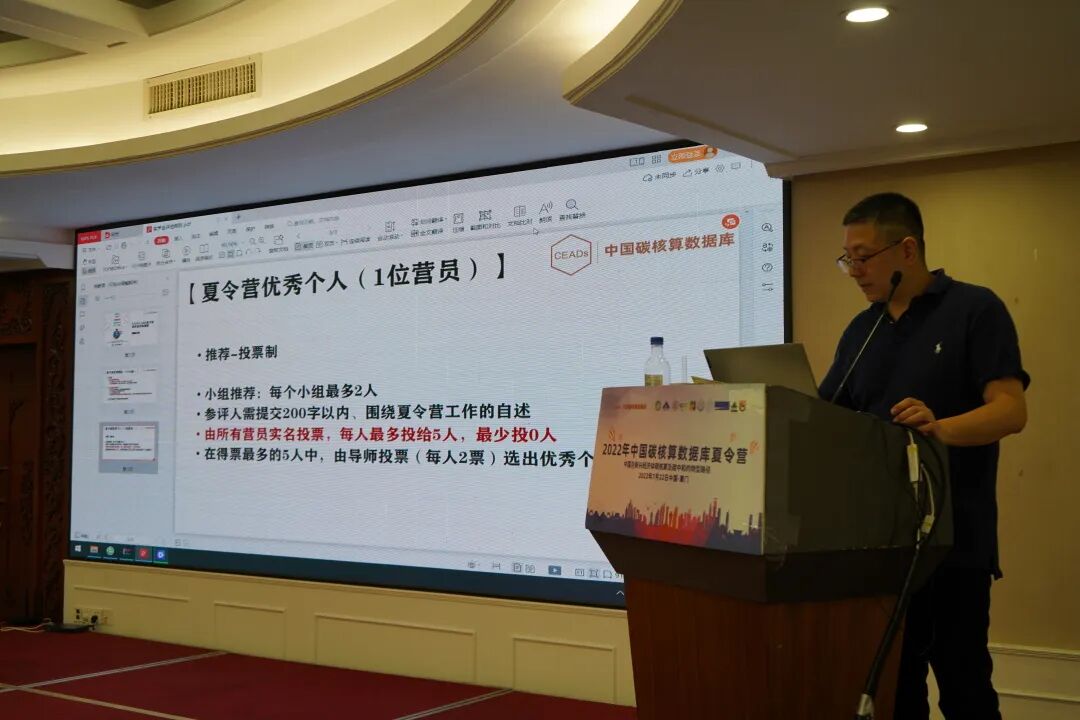
At 8:30 a.m. on July 31, 2022, the closing ceremony officially began. The session was chaired by Professor Dabo Guan. Xue Xiongzhi, Dean of the Fujian Ocean Institute for Sustainable Development at Xiamen University, Professor Zhang Zengkai of Xiamen University, Associate Professor Zhang Shaohui of Beihang University, Research Fellow Wang Daoping of the University of Cambridge, the mentor team, and all campers attended the ceremony. Professor Guan briefly reviewed the summer camp lecture series and congratulated the students on completing the learning program. He then introduced the selection rules for outstanding teams.

2. Group Presentations

1
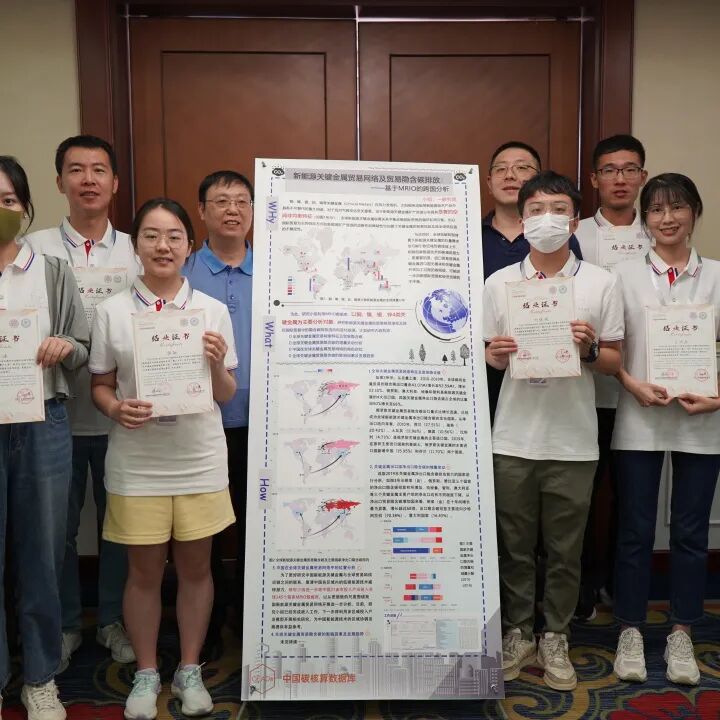
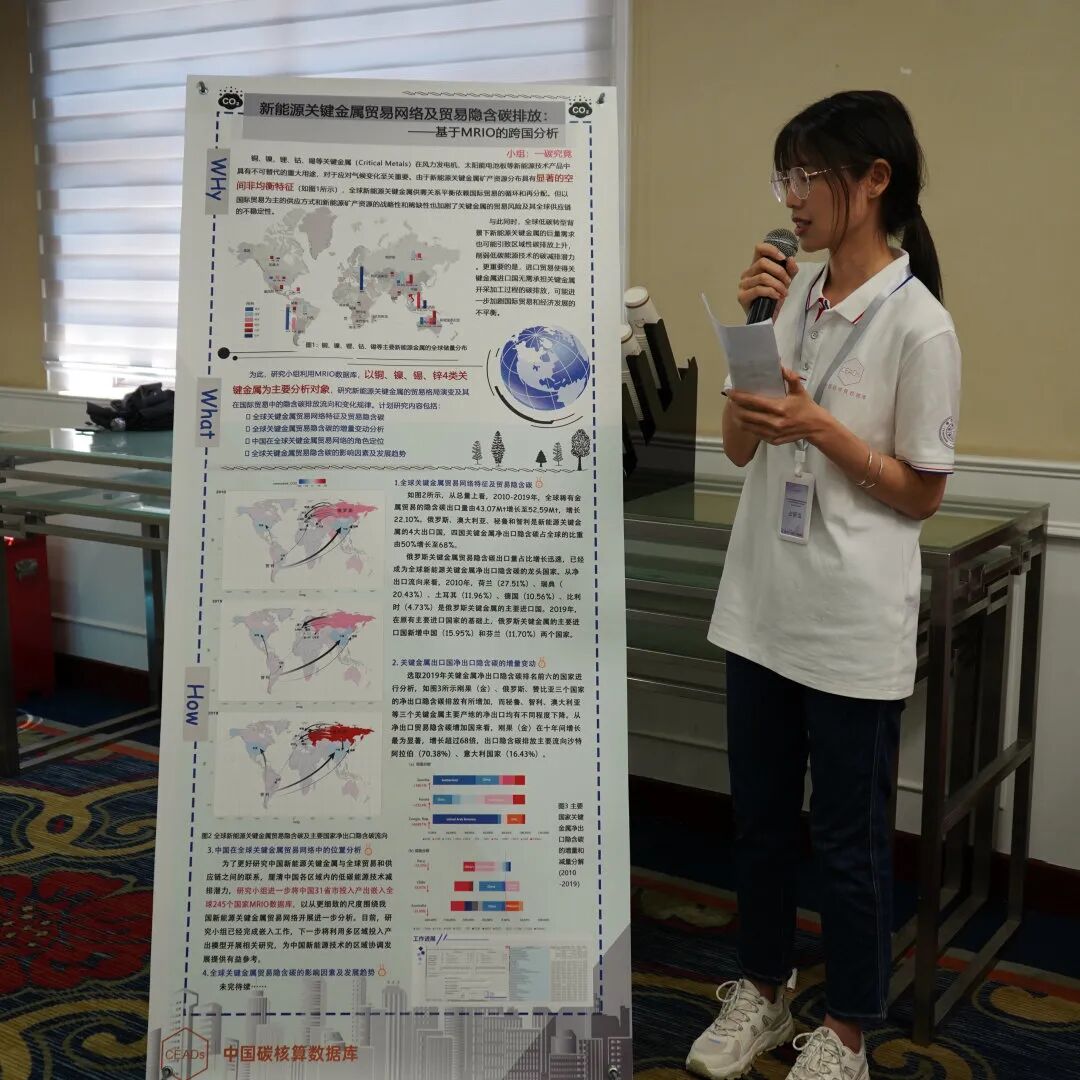
The Carbon Quest group completed a study on trade networks of key metals for new energy and trade-embodied carbon emissions based on a transnational MRIO analysis. The group focused on four key metals, copper, nickel, tin, and zinc, studying changes in trade patterns and the flows and trends of embodied carbon emissions in international trade. Their work covered the characteristics of global key-metal trade networks and embodied carbon, incremental changes in embodied carbon, the role of China in the global key-metal trade network, and the drivers and development trends of embodied carbon in global key-metal trade.
2
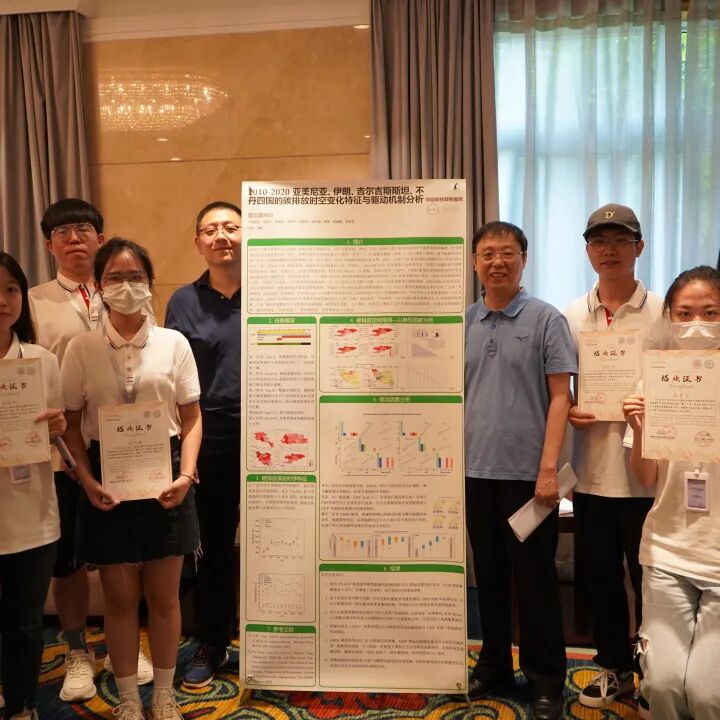
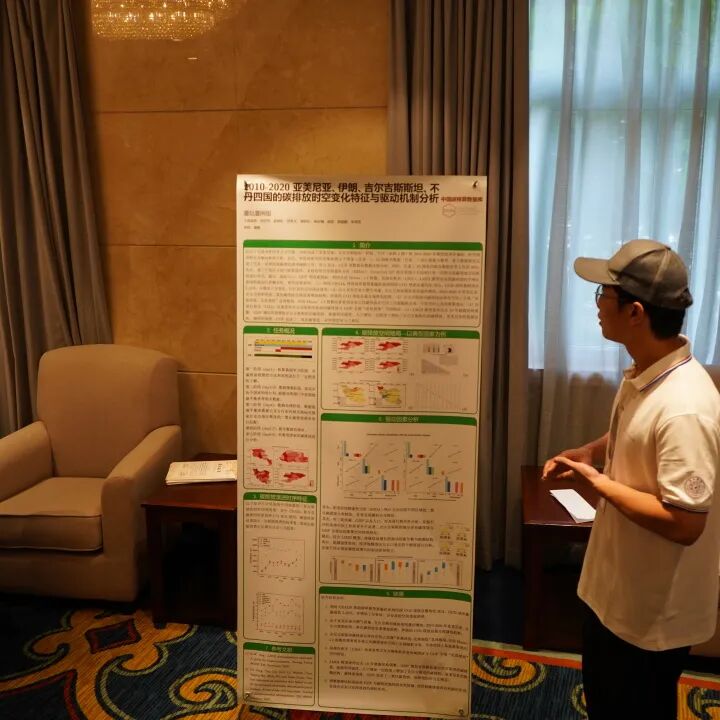
The Xiamen Fun group compiled carbon emission inventories for Armenia, Kyrgyzstan, Iran, and Bhutan from 2010 to 2020, and cross-checked them with databases including IEA and GCB. On this basis, they selected indicators such as population and GDP and used Moran's I, local autocorrelation, the LMDI model, and exploratory spatial analysis to decompose and analyze the spatiotemporal changes in carbon emission patterns across the four countries.
3
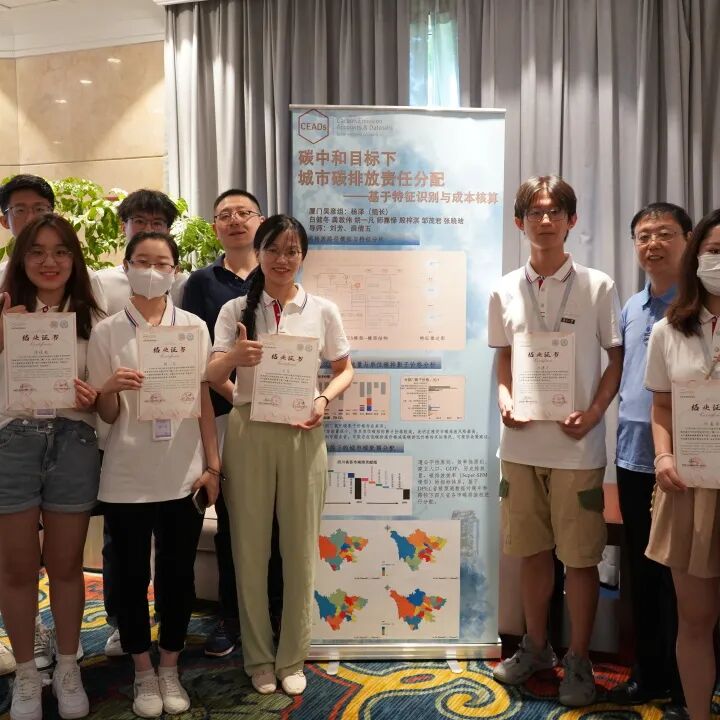
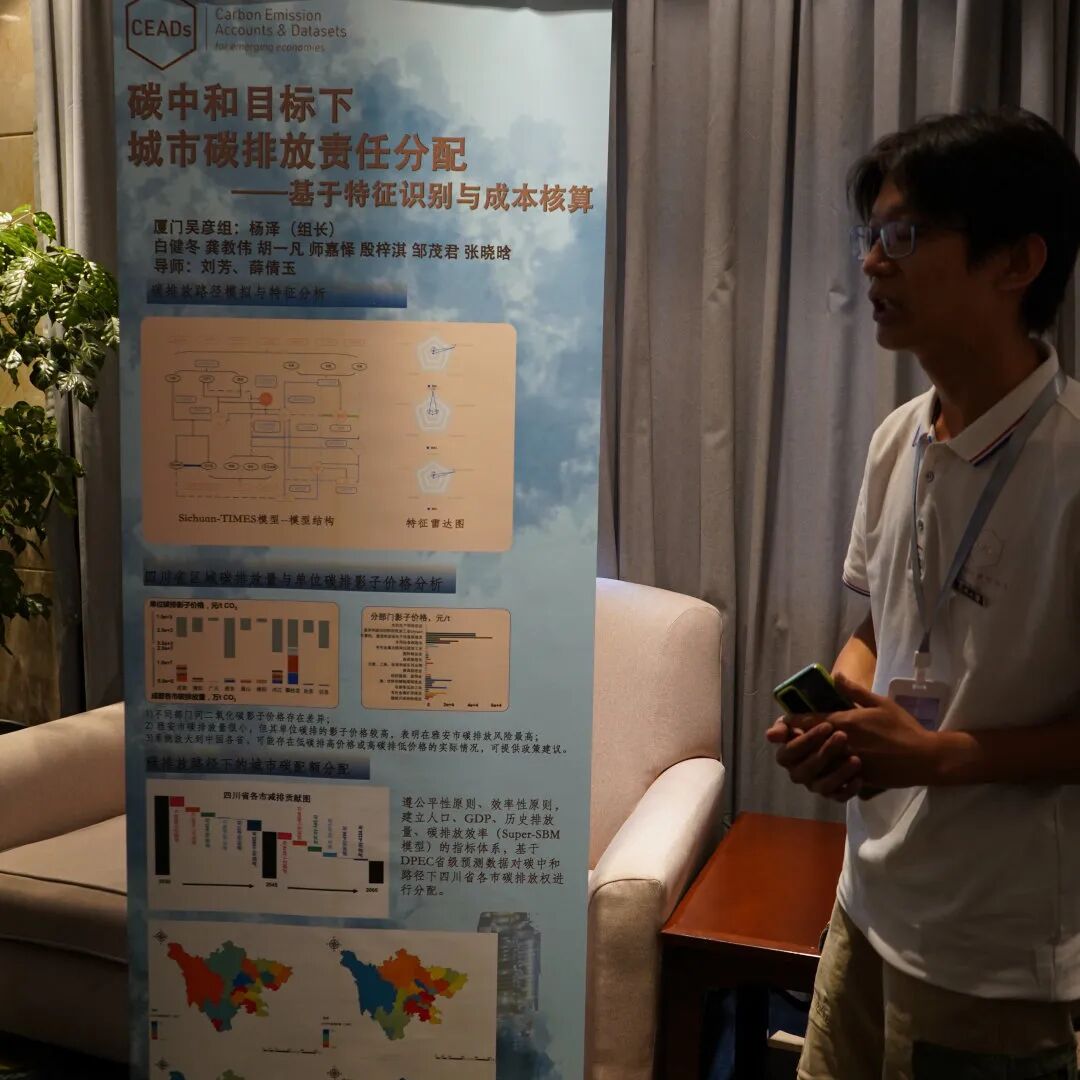
The Xiamen Wuyan group completed an accounting study on the allocation of urban carbon emission responsibilities under the carbon-neutrality target, based on feature identification and cost. Their work included carbon emission pathway simulation and feature analysis, analysis of regional carbon emissions and unit carbon shadow prices in Sichuan Province, and the allocation of urban carbon quotas under carbon emission pathways.
4
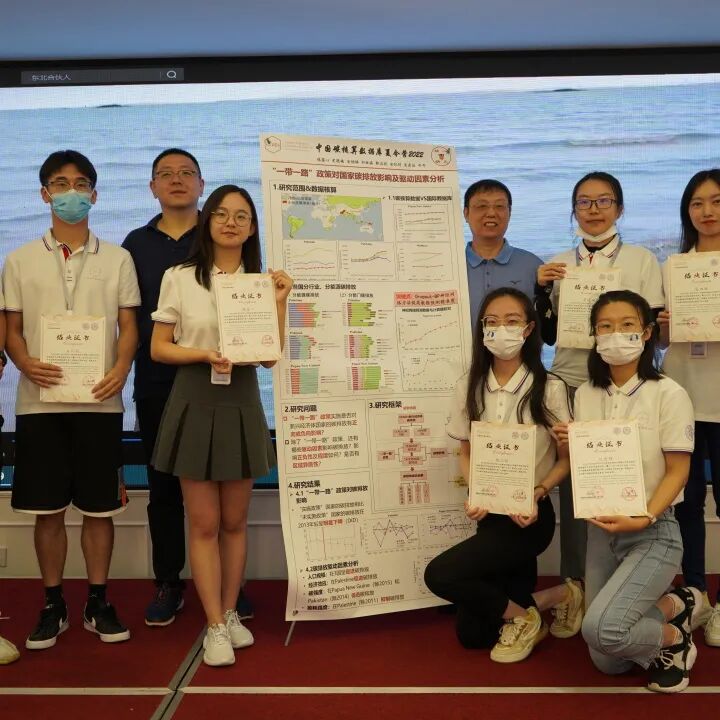
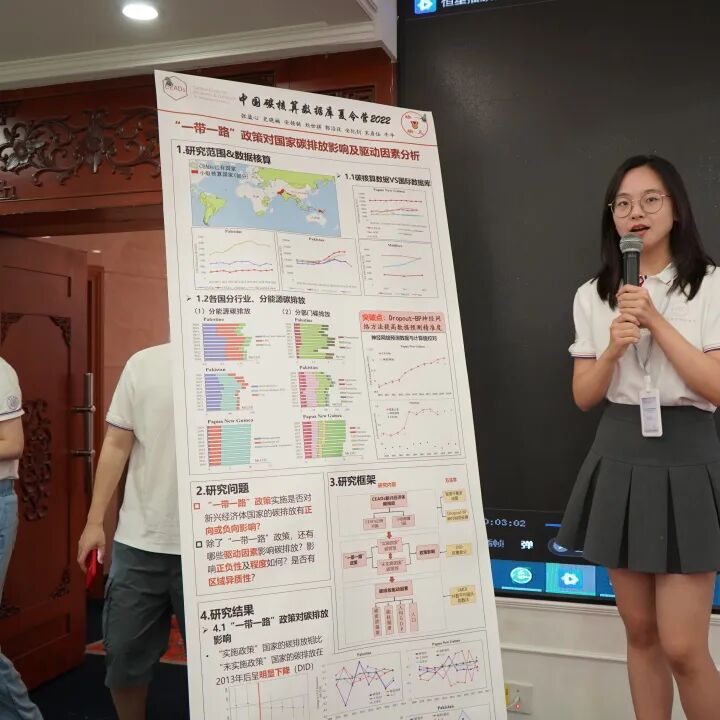
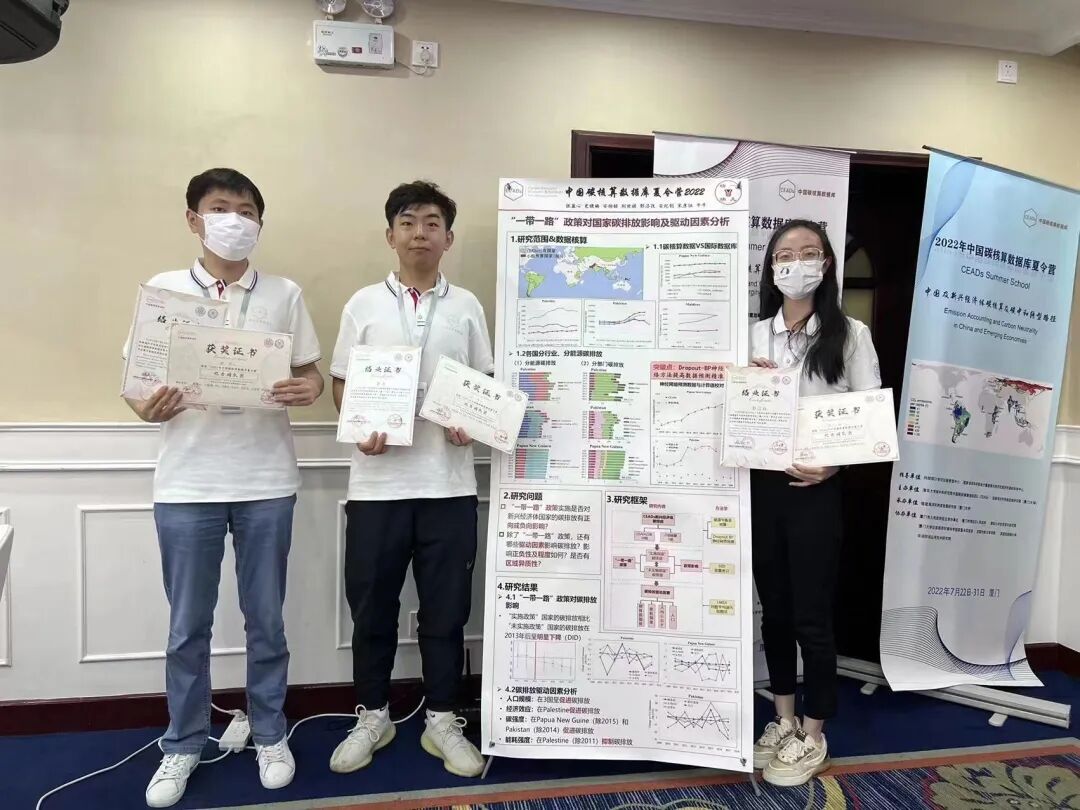
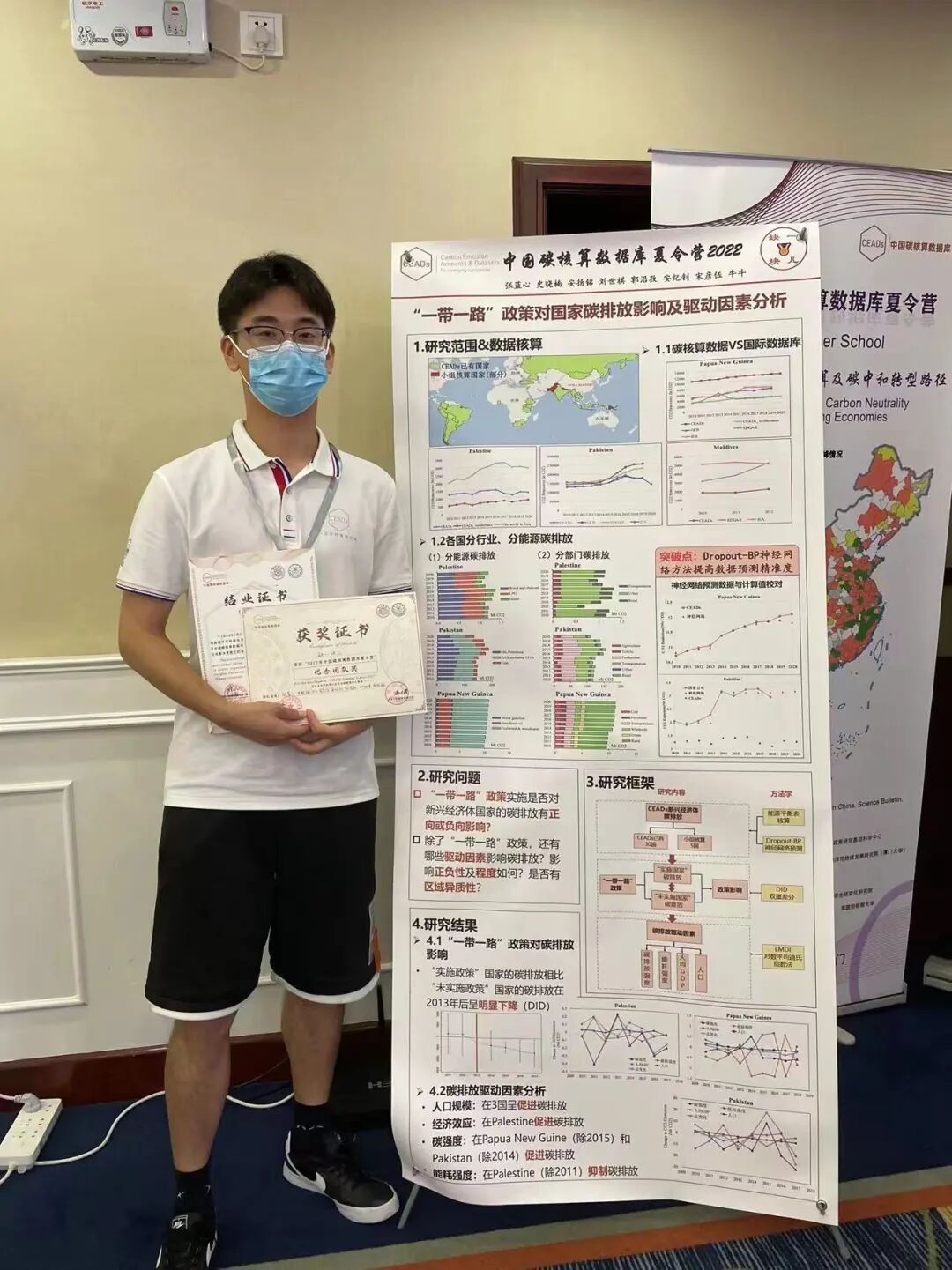
The One Piece Missing group analyzed the impact of the Belt and Road policy on national carbon emissions and its driving factors. They first used carbon accounting methods to derive sectoral and energy-specific carbon emissions for countries along the Belt and Road, and checked the data with a Dropout-BP neural network approach to ensure accuracy. Based on their own accounting results, they then studied the influence of the Belt and Road policy on carbon emissions in emerging economies, as well as other factors driving Belt and Road outcomes.
5
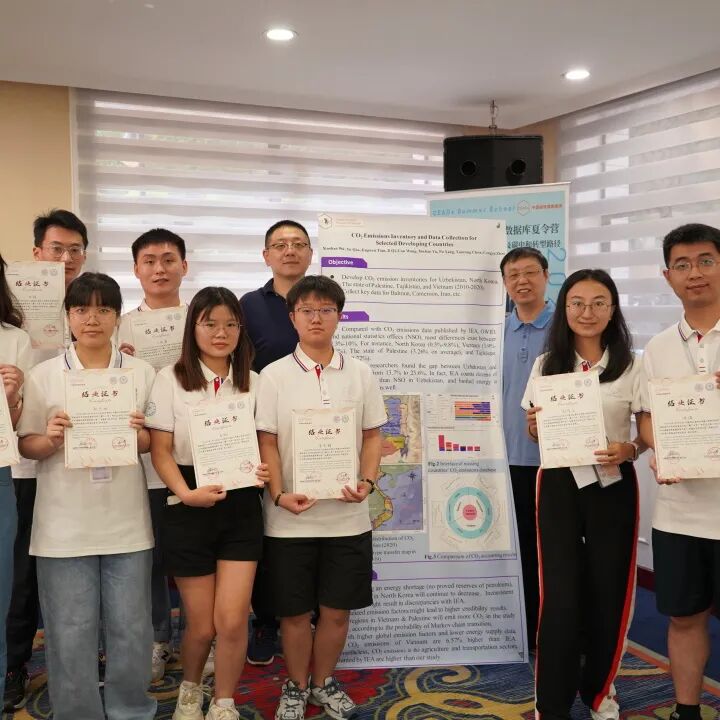
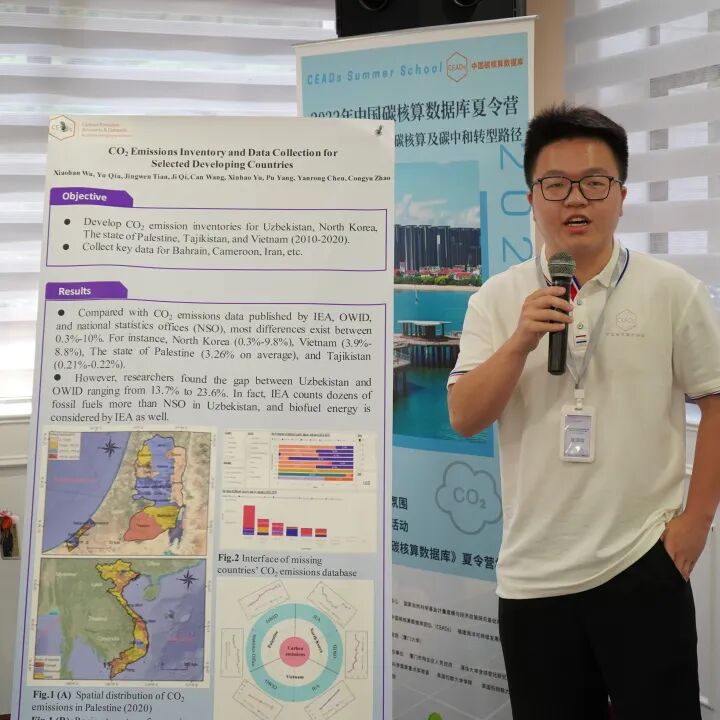
The Hope of the Village group compiled carbon emission inventories for North Korea, Palestine, Uzbekistan, and Vietnam from 2010 to 2020, comparing them with data from IEA, OWID, and official national agencies. On this basis, they selected countries with relatively accurate data to map regional carbon emissions and study emission trends during specific periods, while also discussing the reasons behind data differences. They also collected energy data for small countries such as Bahrain and Costa Rica and built an interactive data visualization interface.
6
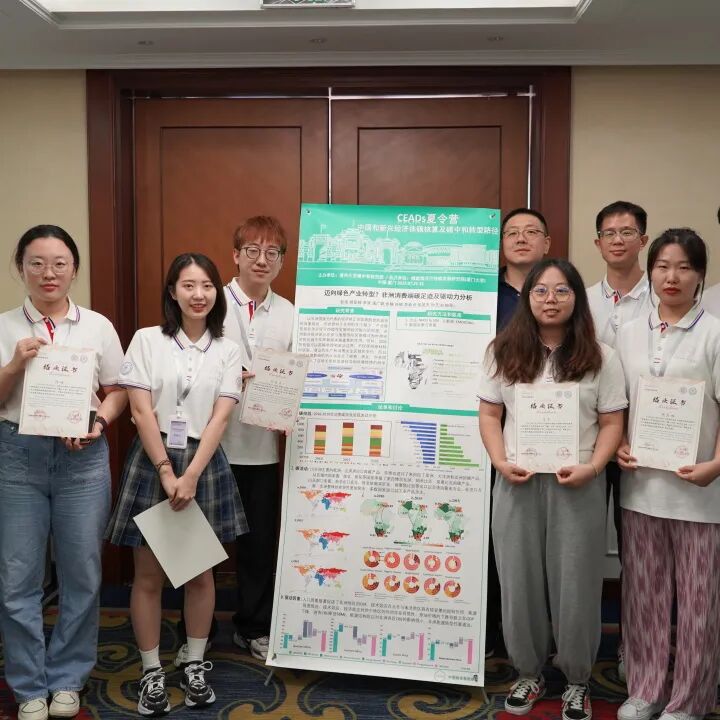
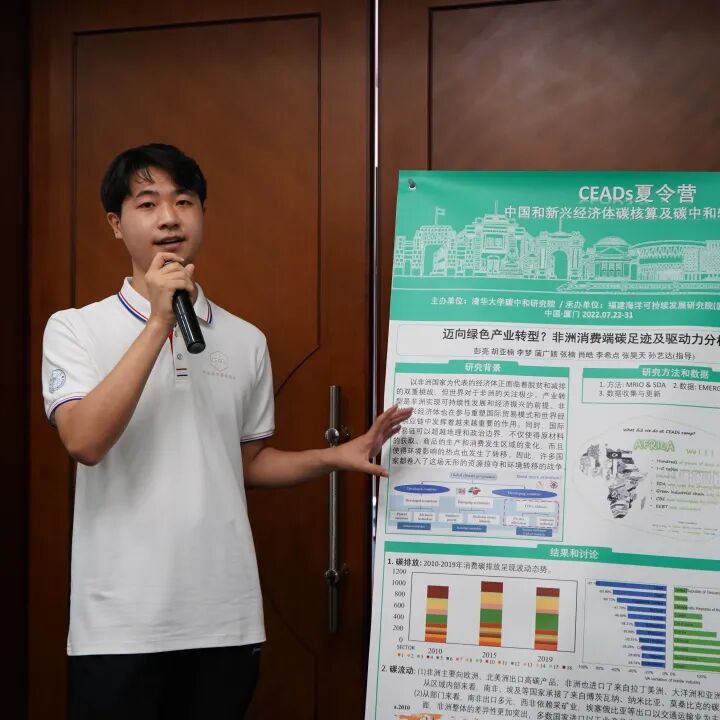
The final group worked on input-output analysis for Africa. Based on existing MRIO databases, they filled gaps and updated data, then used the MRIO database for consumption-based carbon emission accounting and further calculated embodied carbon emissions in international trade. They discussed responsibility allocation and emission transfer in African carbon emissions, and used SDA methods to examine the drivers of carbon emissions across Southern, Northern, Eastern, Central, and Western Africa, with particular attention to population, consumption, and energy structure.
7
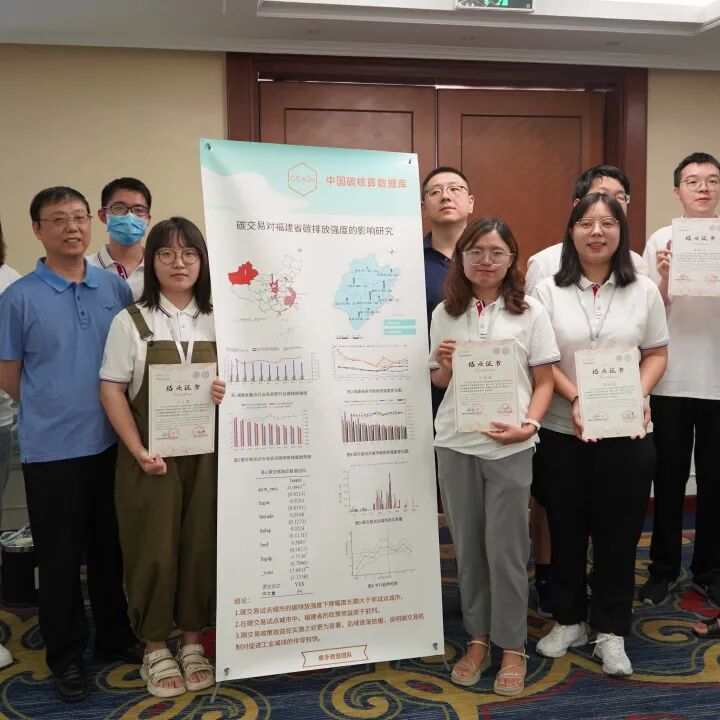
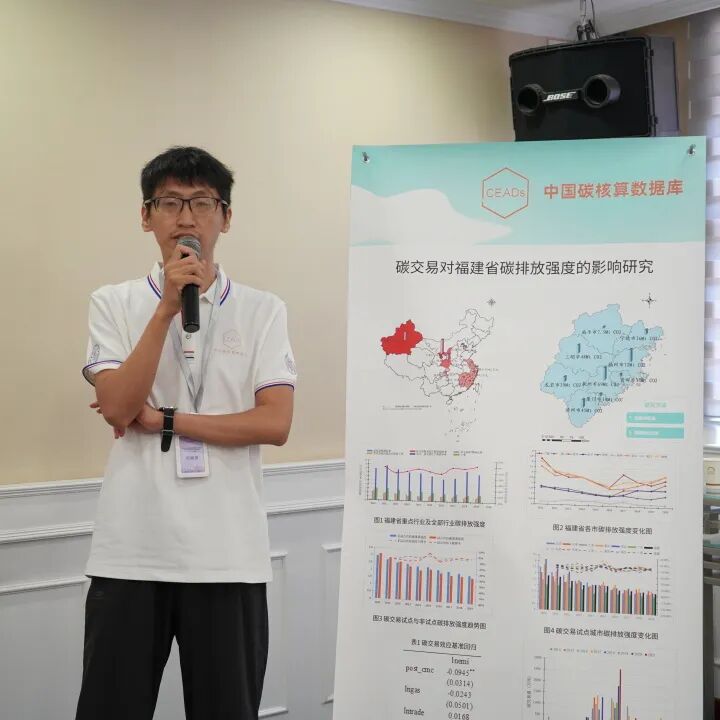
The Hand in Hand with Guanyin group explored the impact of carbon trading policy on carbon emission intensity in Fujian Province. Using a staggered DID method, they focused on a comparative analysis of carbon emission intensity trends between carbon-trading pilot areas and non-pilot areas.
8
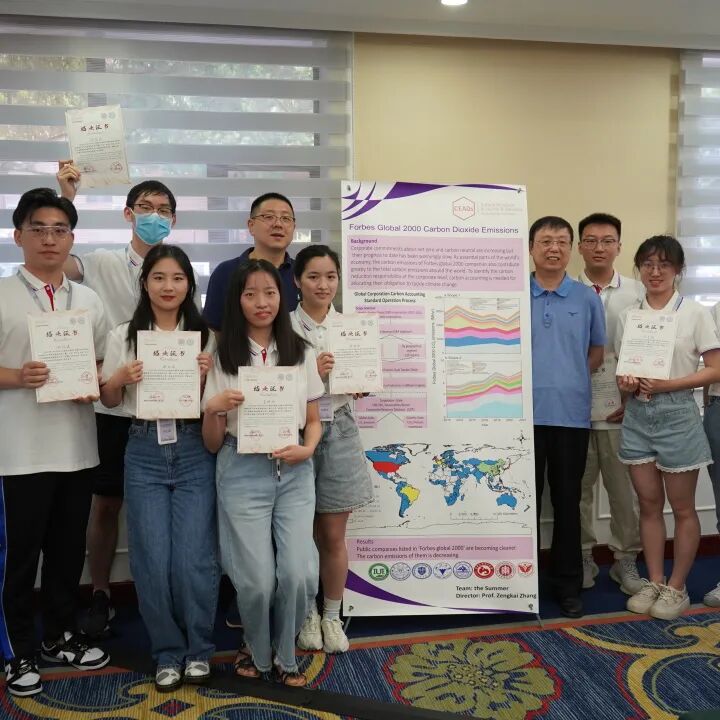
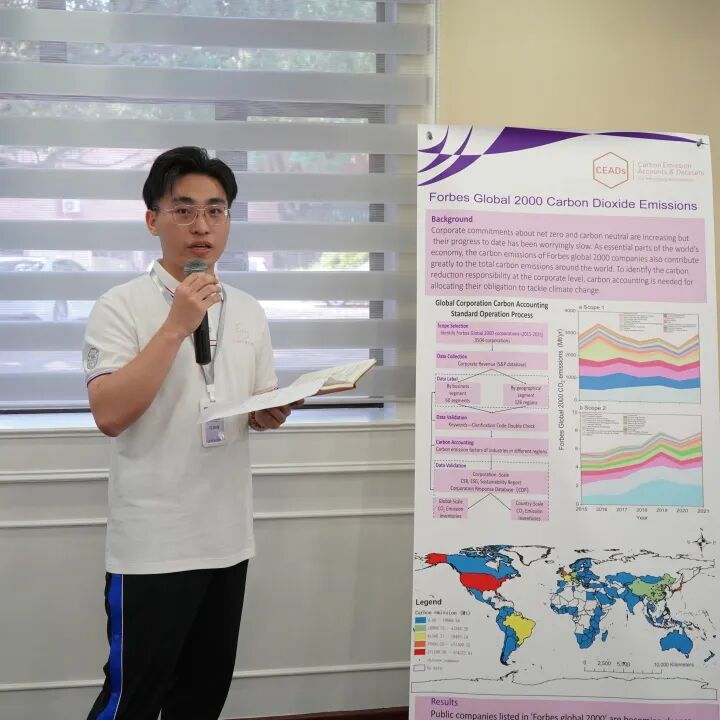
The That Summer group worked on enterprise carbon emission accounting. They proposed and implemented a framework for accounting enterprise carbon emissions. Drawing on data from S&P and Capital IQ, they obtained industry and regional revenue data for more than 4,000 companies from 2015 to 2021, whose total revenue was about 45 percent of global GDP. With supplementary information from annual reports and other public disclosures, they stored enterprise information in regional and industry matrices, and further used international input-output tables to obtain company revenue tables, Scope 1 emission tables, Scope 2 emission tables, and Scope 3 emission tables across 60 sectors and 126 regions. They planned further checks using company-disclosed carbon emission information, sustainability reports, CDP data, and other sources.
9
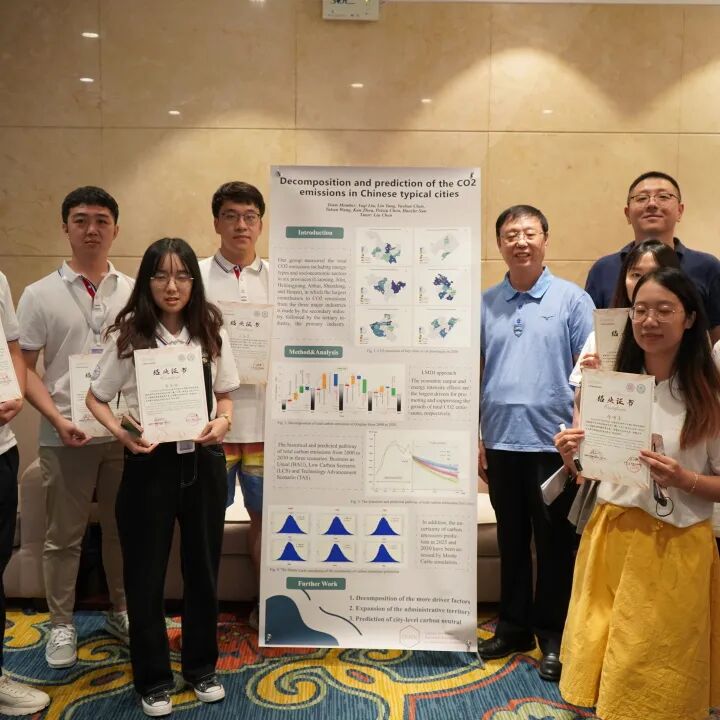
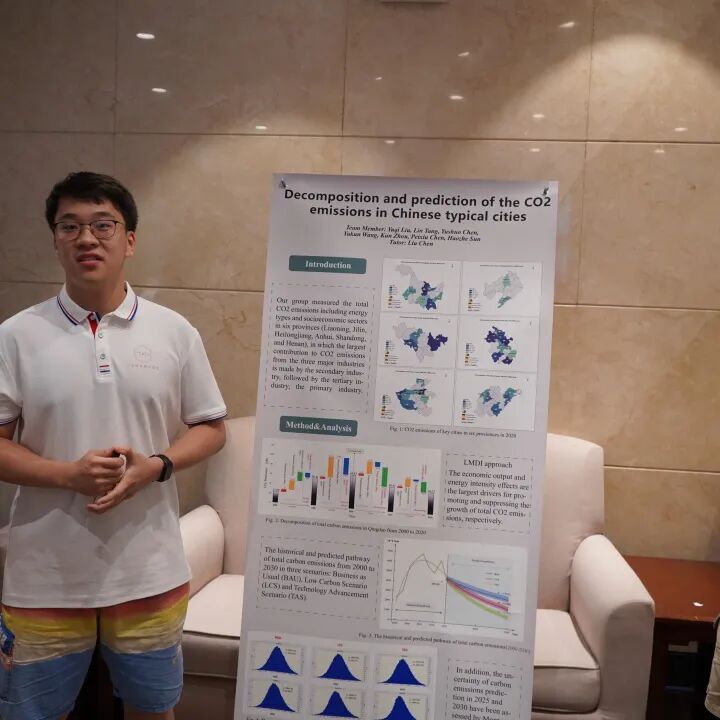
The Keep Our Hair group accounted for CO2 emissions in typical cities across six Chinese provinces, including Heilongjiang and Jilin. Using the LMDI method, they analyzed the driving effects of factors such as economic output and energy intensity on carbon emissions. They then built three scenarios to forecast urban carbon emissions and used Monte Carlo simulation to analyze uncertainty in the forecasts.
10
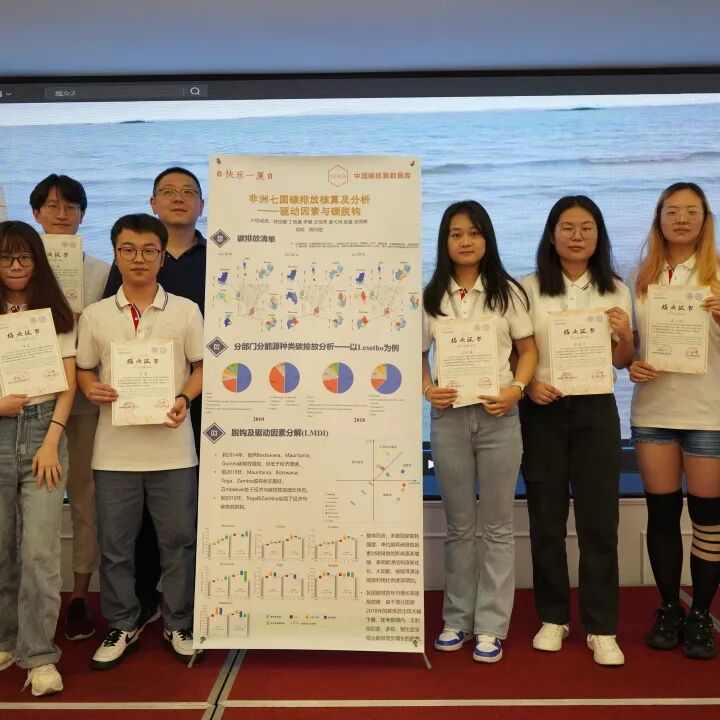
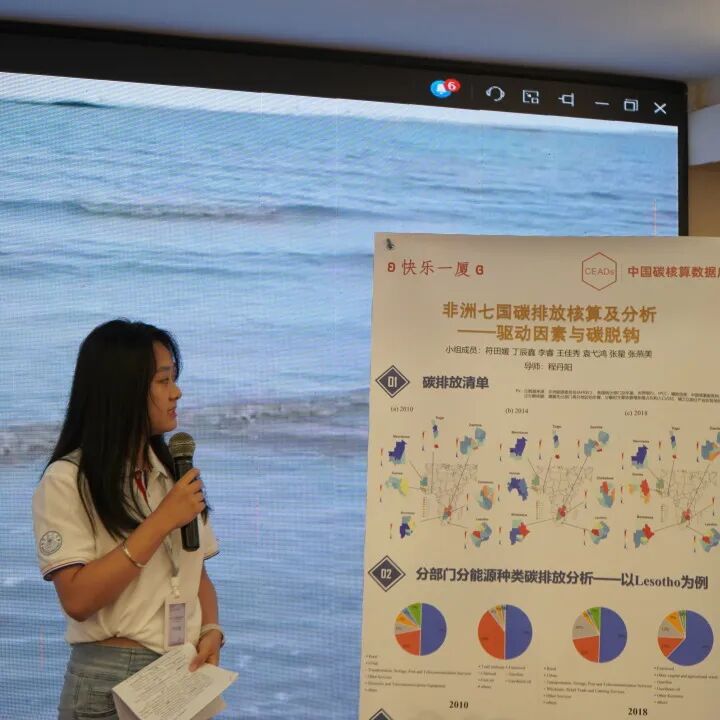
The Happy Xiamen group calculated carbon emission inventories for seven African countries, with a focus on sectoral and energy-specific carbon emissions in Lesotho, South Africa. On this basis, they conducted carbon decoupling analysis and LMDI decomposition of driving factors.
11
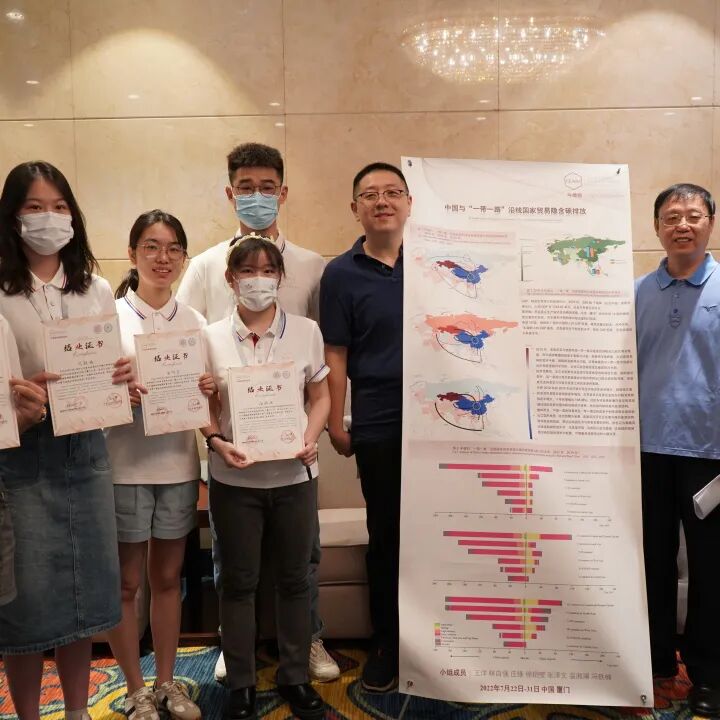
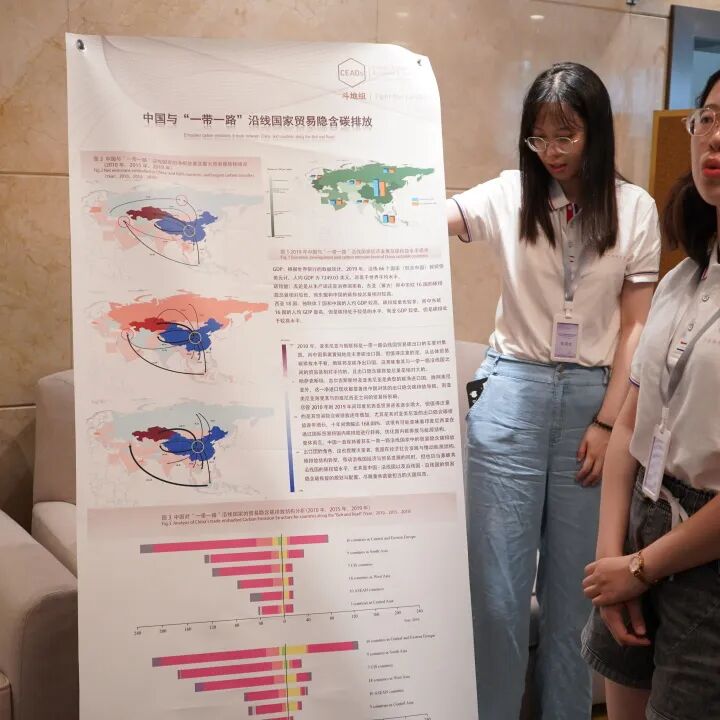
The Fight the Landlord group presented on embodied carbon emissions in trade between China and countries along the Belt and Road. First, they analyzed the 2019 status of economic development and carbon emissions in China and Belt and Road countries. Second, they analyzed net emissions and the largest trade-related carbon transfers between China and Belt and Road countries in 2010, 2015, and 2019. Finally, the group conducted in-depth analysis and discussion of the embodied carbon structure of trade between China and Belt and Road countries in those three years.
12
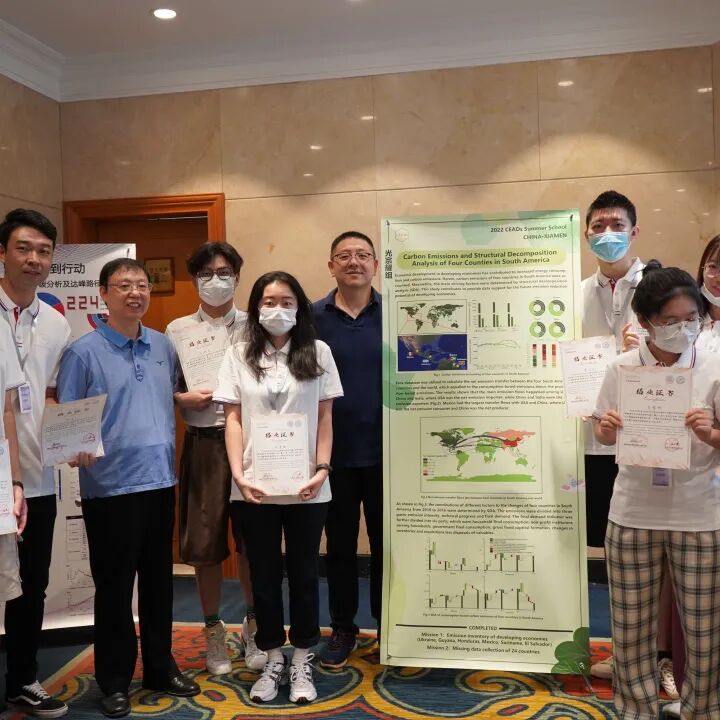
The Glory to the Ancestors group mainly accounted for carbon emission inventories for four South American countries, although the specific countries and years were not clear from the slide. They then analyzed net-zero emission transfers among the four countries. At the same time, they used SDA methods to conduct structural decomposition of carbon emissions in the four countries, providing a useful foundation for identifying reasonable emission reduction pathways. At the end of the work, some regrets remained because real-world constraints prevented the completion of carbon emission data for some countries.
13
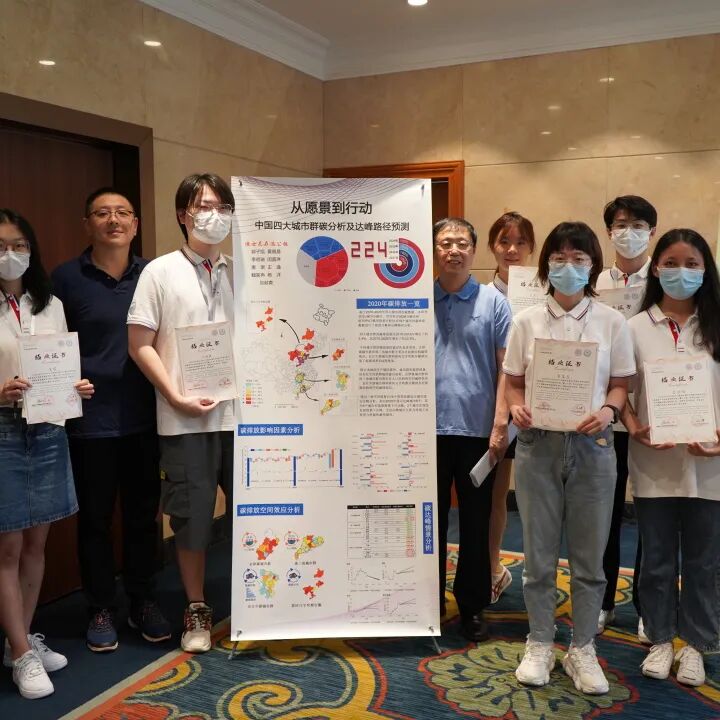
The Runaway Disney Princess group presented From Vision to Action: Carbon Analysis and Carbon-Peaking Pathway Forecasts for Four Major Urban Agglomerations in China. They used LMDI decomposition, the spatial Durbin model decomposition method, and the STIRPAT method to verify and decompose carbon emission data for 79 cities in four major Chinese urban agglomerations from 2010 to 2020, aiming to identify reasonable pathways for achieving carbon peaking.
14
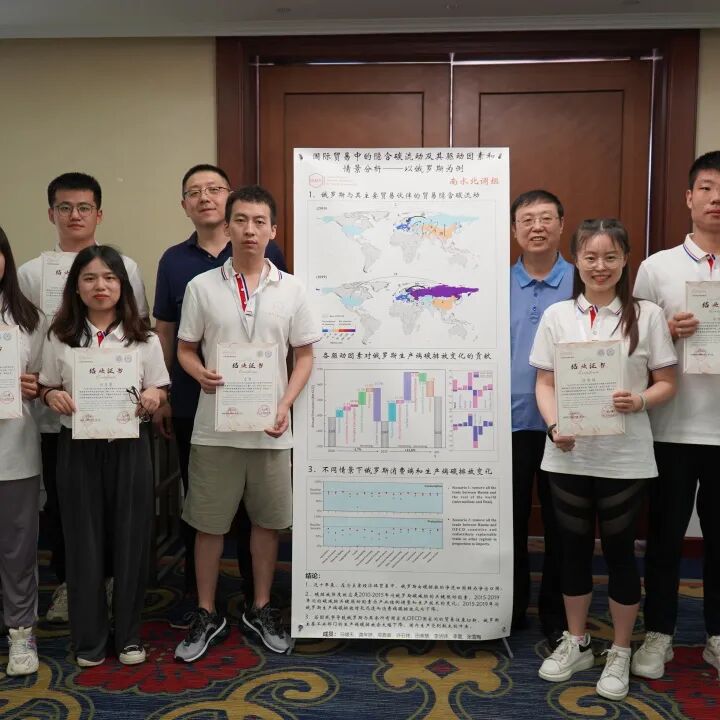
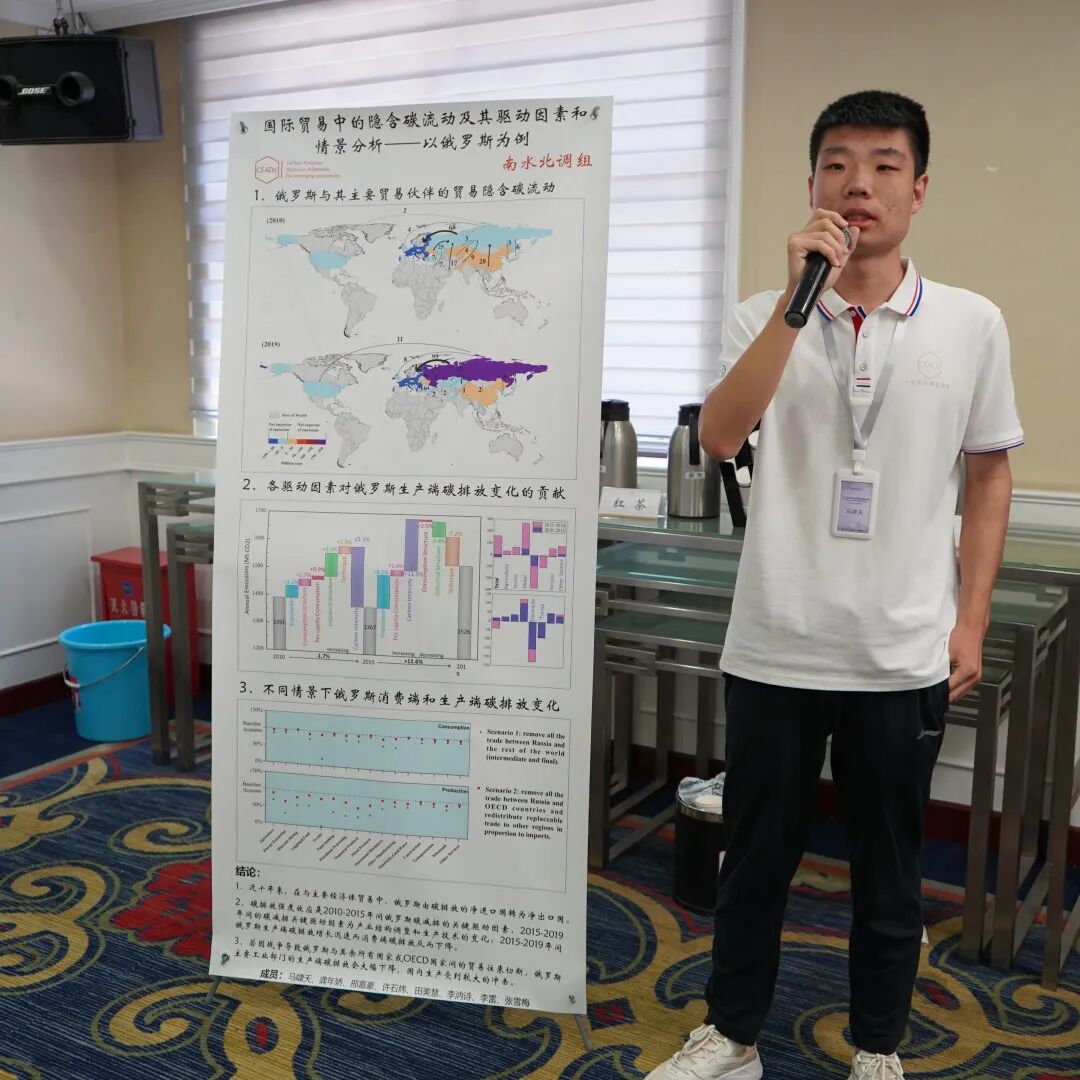
The South-to-North Water Diversion group collected input-output, trade, and tax data for 75 countries in Europe and Oceania. They merged regions in the input-output tables and accounted for consumption-based carbon emissions and trade-embodied carbon. In addition, they used SDA decomposition to analyze the driving factors behind changes in production-based and consumption-based carbon emissions in 2010, 2015, and 2019. Finally, they discussed output changes and changes in production-based and consumption-based carbon emissions for Russia and other regions under different scenarios.
3. Awards


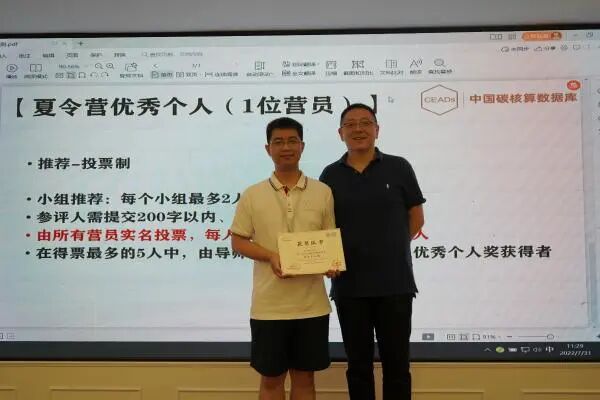
After the group presentations, five experts, the mentor team, and the leaders of the 14 groups scored the presentations and selected the outstanding teams. For each group, the highest and lowest scores were removed and the average of the remaining scores was used as the final score. The outstanding teams were selected according to these final scores. Outstanding individuals were first nominated through votes by the public review panel, and then selected by expert voting.
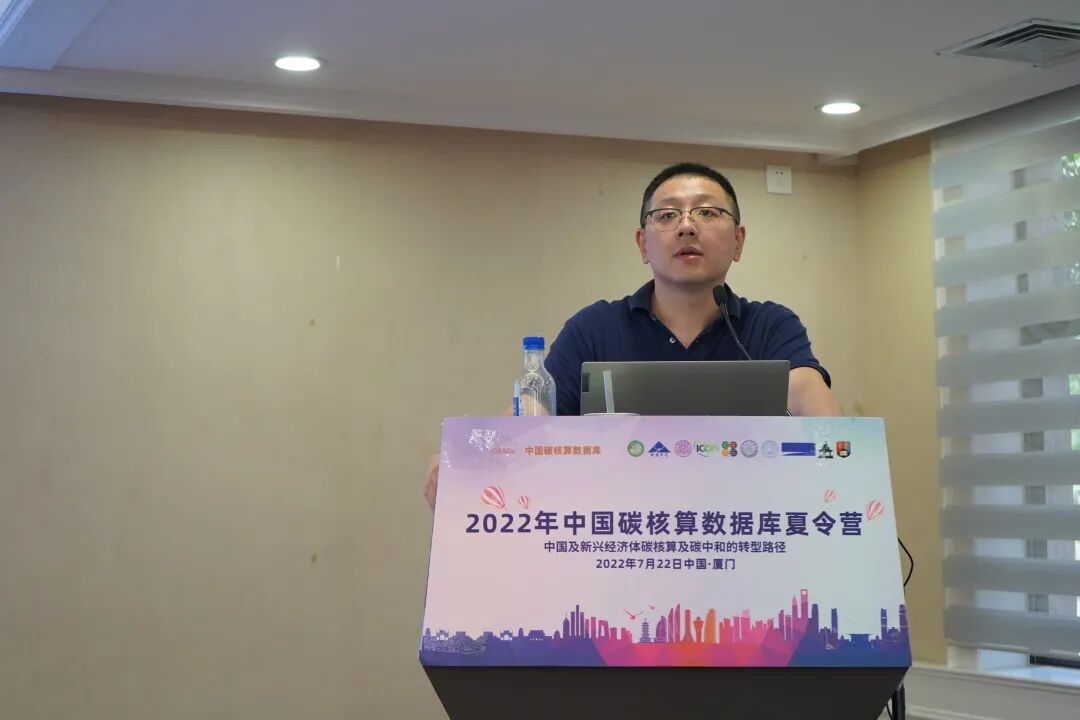
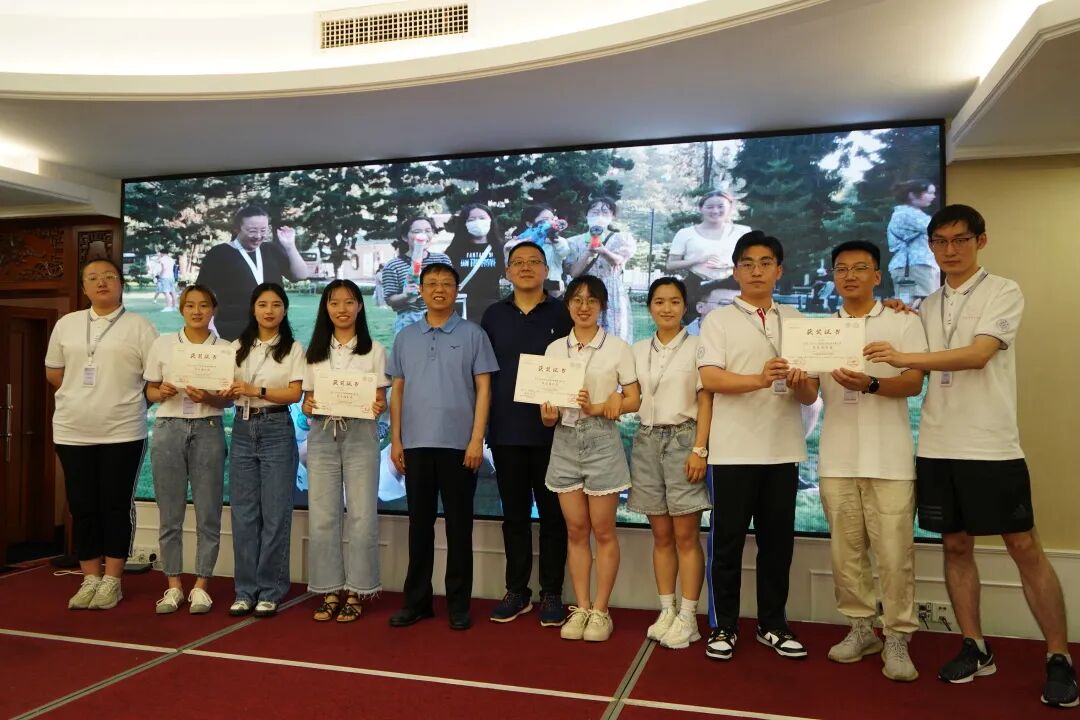
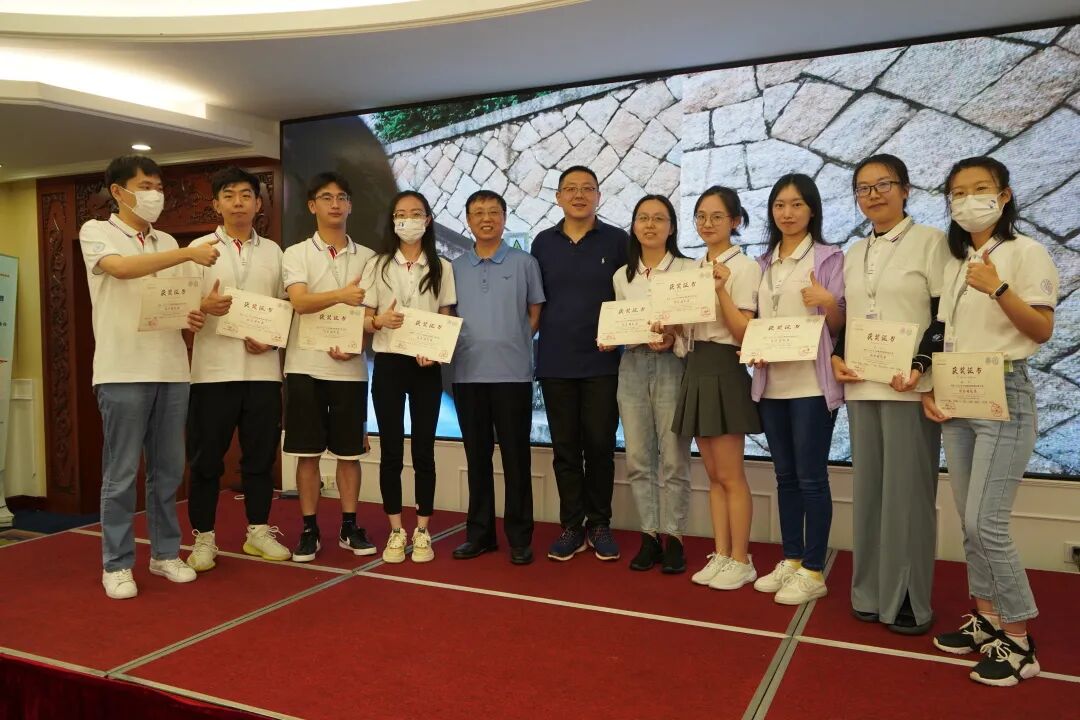
After the group scores were finalized, the award ceremony that all campers had been waiting for arrived. Everyone turned their eyes to Professor Guan. He kept the suspense and first announced the second-place outstanding team: That Summer. Dean Xue Xiongzhi presented the award certificate to the That Summer group.


4. Closing

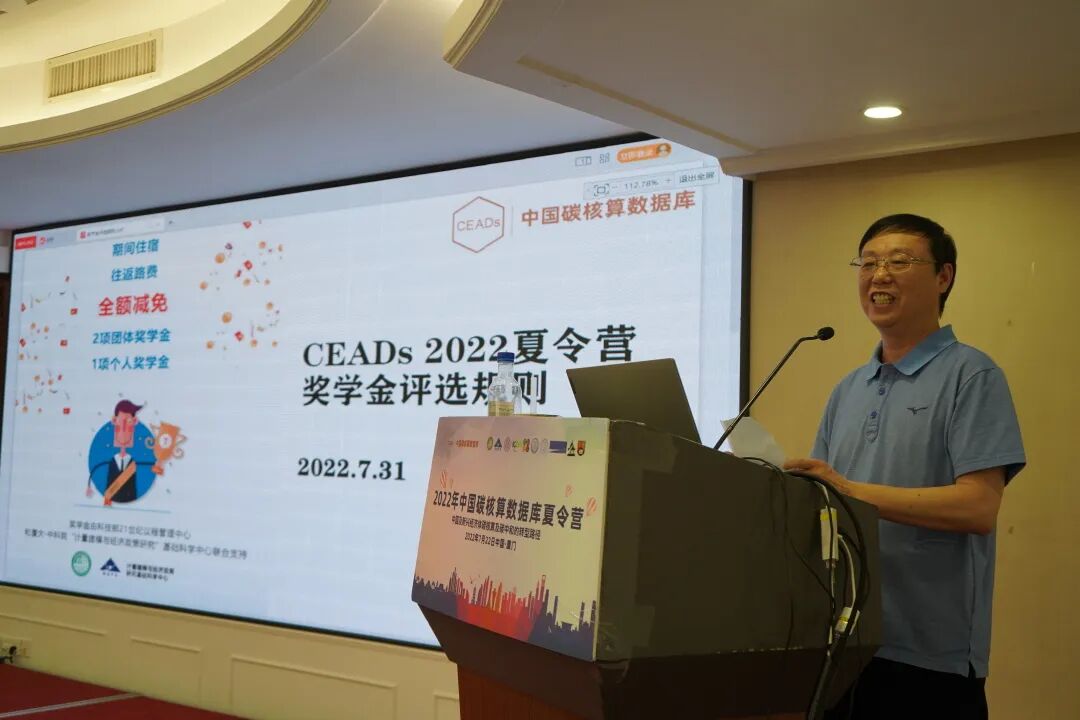
At the end of the summer camp, Dean Xue Xiongzhi of the Fujian Ocean Institute for Sustainable Development delivered the closing remarks. He noted that climate change, carbon neutrality, and sustainable development are widely discussed global issues. Against the background of the 3060 dual-carbon goals, carbon accounting is work of major practical and strategic importance. This summer camp provided an open service platform for outstanding young scholars from across China to learn and exchange ideas on carbon data and climate-change-related systems research. The active participation of young scholars will contribute youthful strength to the achievement of the dual-carbon goals. In the future, drawing on the strengths of Xiamen University as a comprehensive university, the Fujian Ocean Institute for Sustainable Development, a provincial interdisciplinary research platform, will continue to provide strategic and decision-support services and capacity building in carbon neutrality and sustainable development, contributing youthful strength to the national 3060 dual-carbon strategy.

Postscript 1: We Broke Out of the Circle

Postscript 2: Friends Have Something to Say
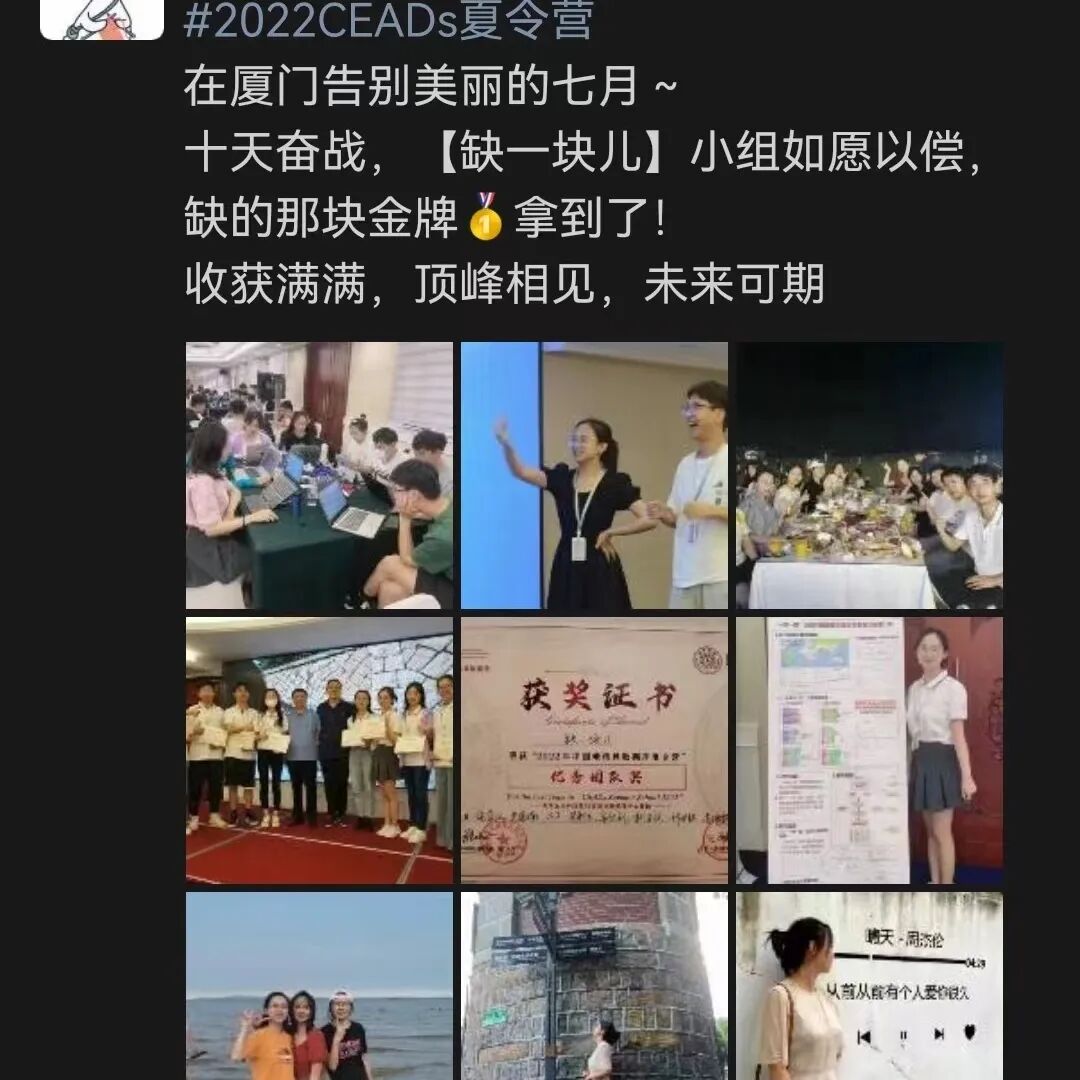
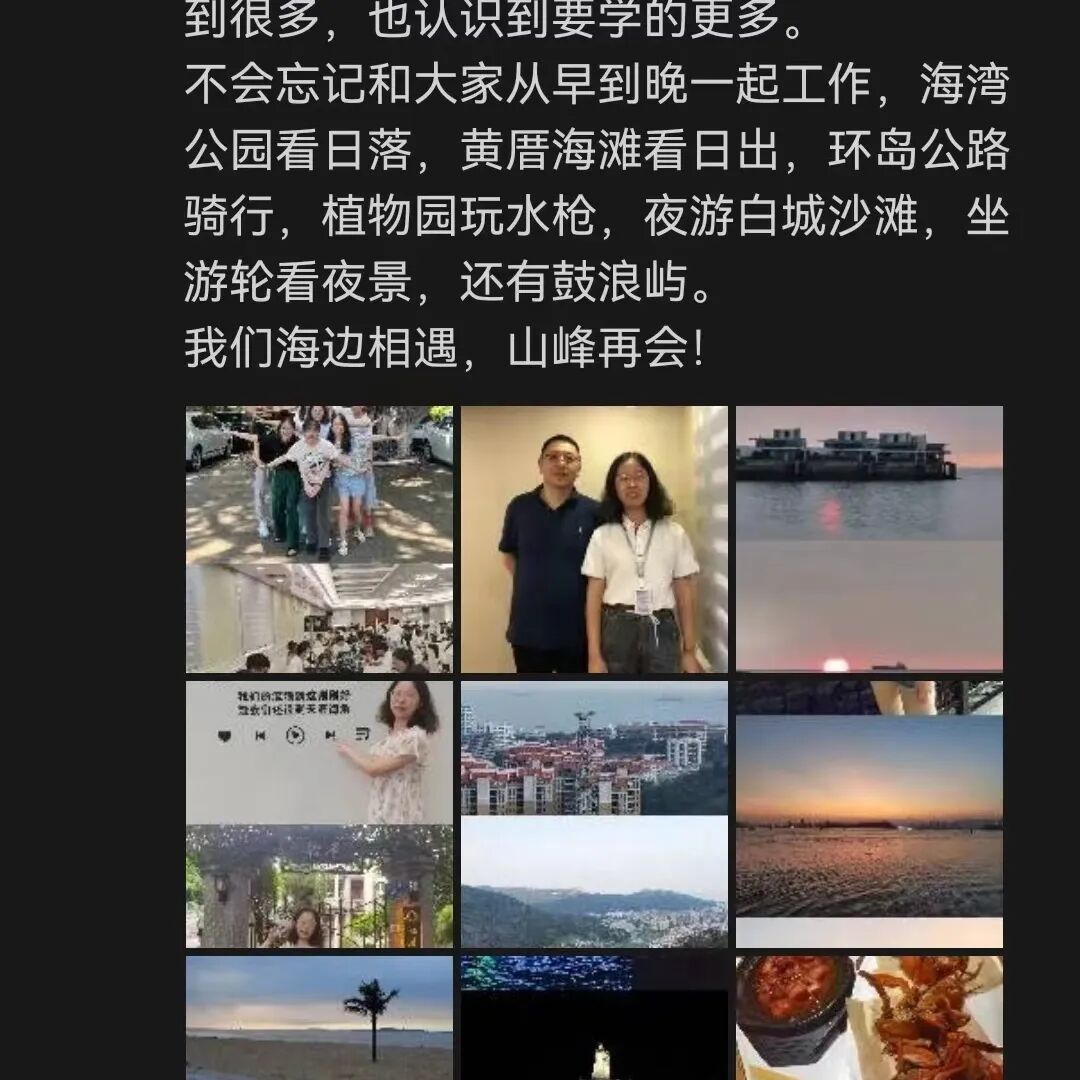
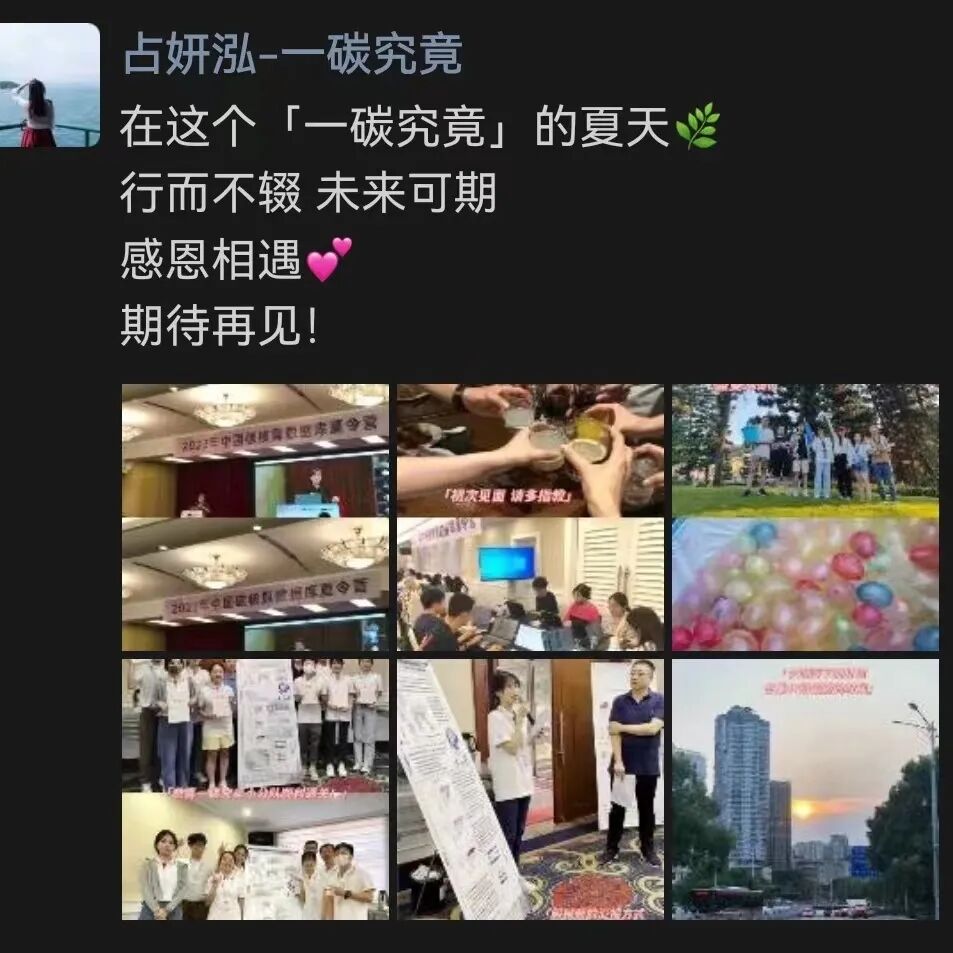
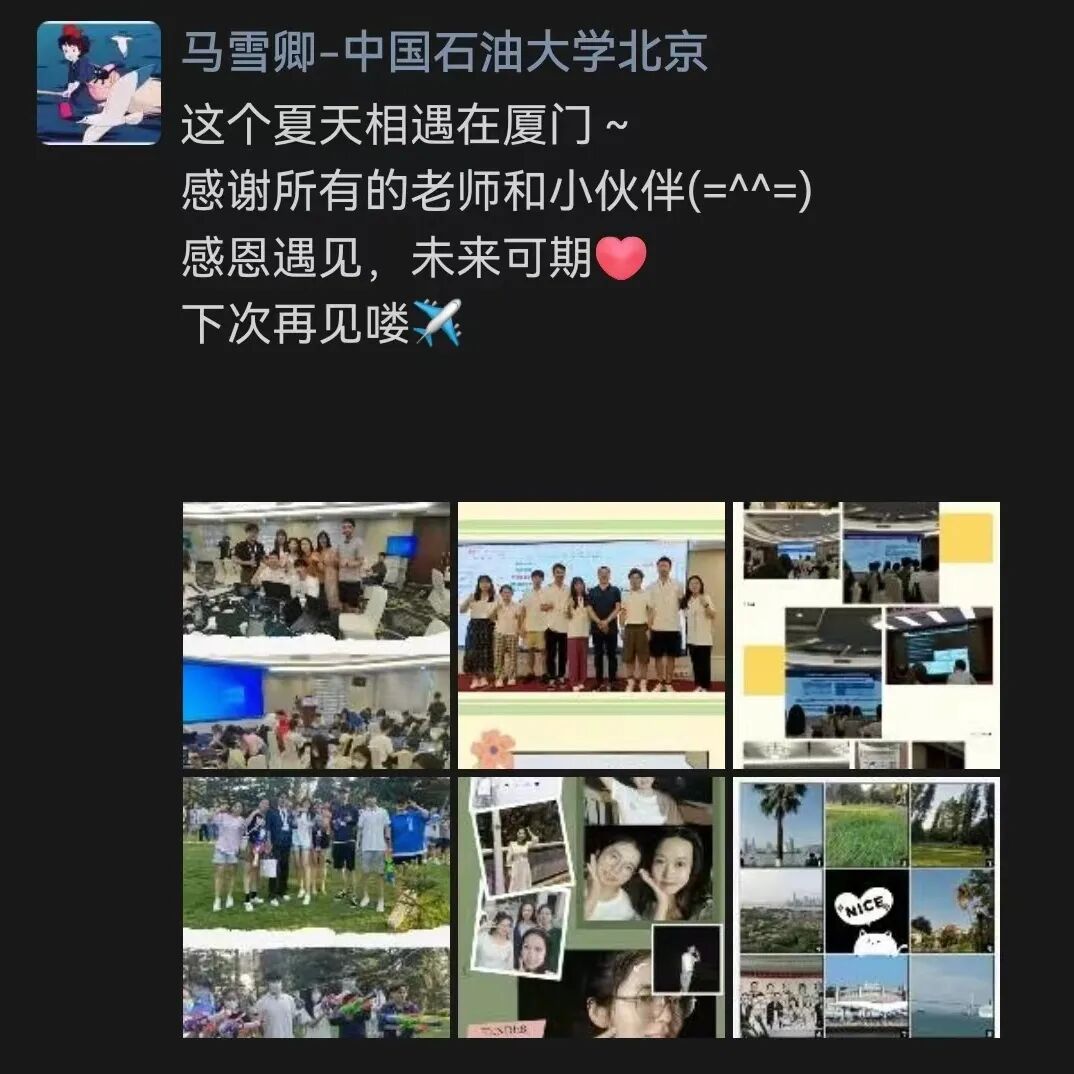
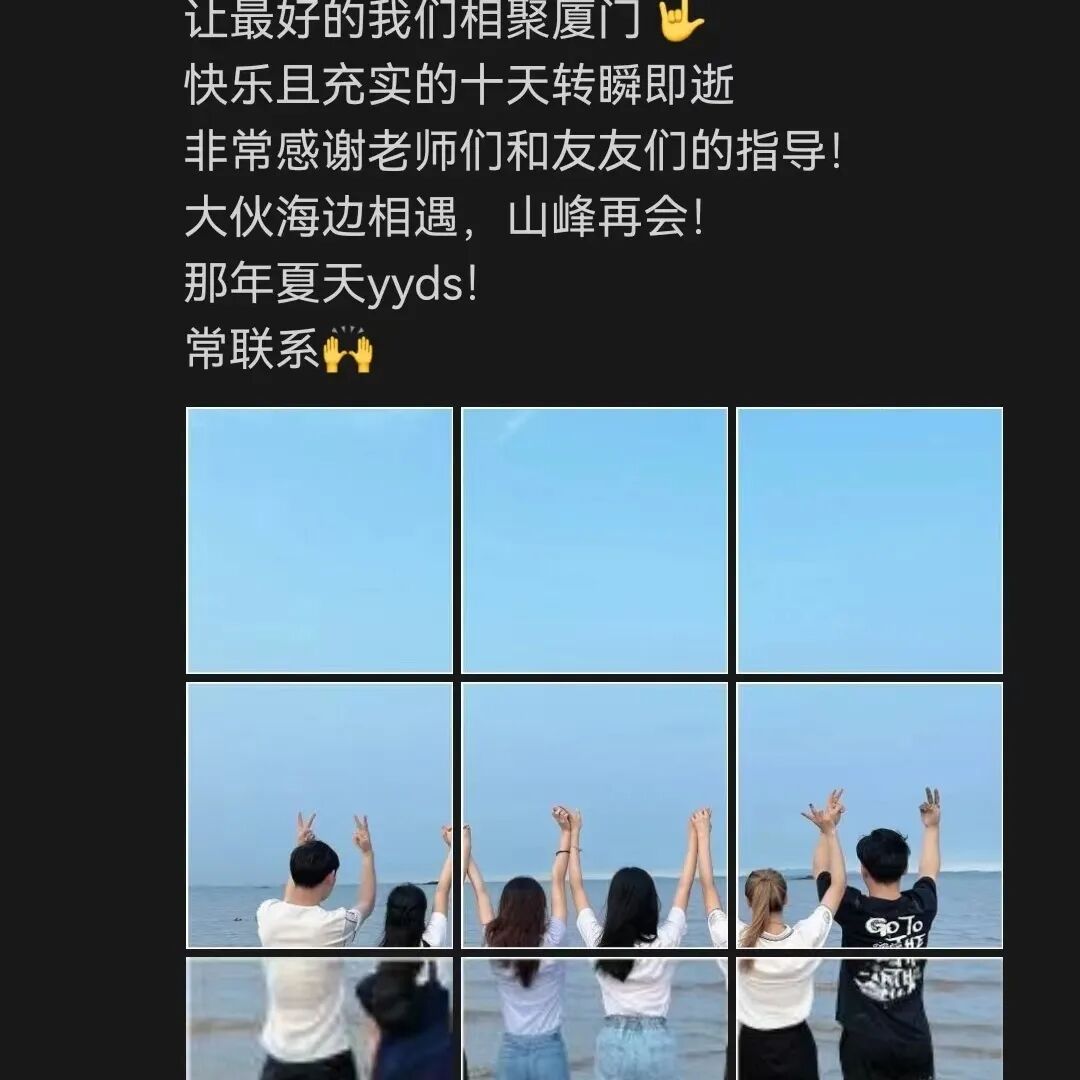
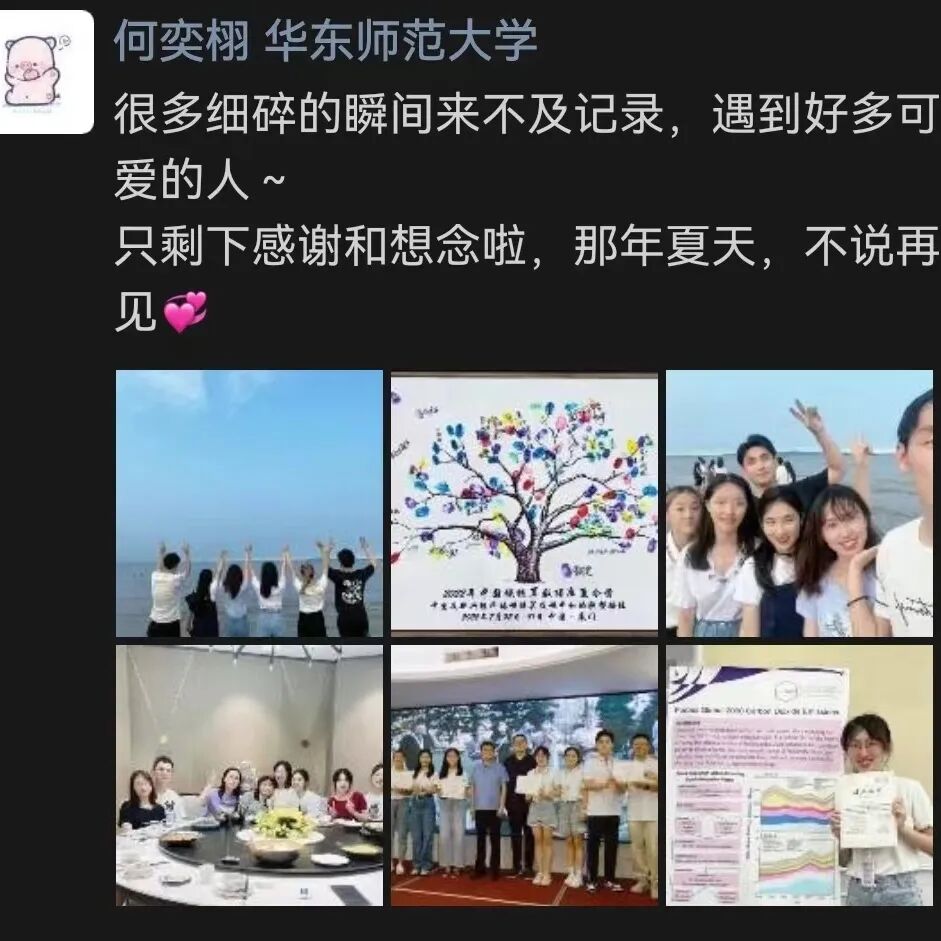
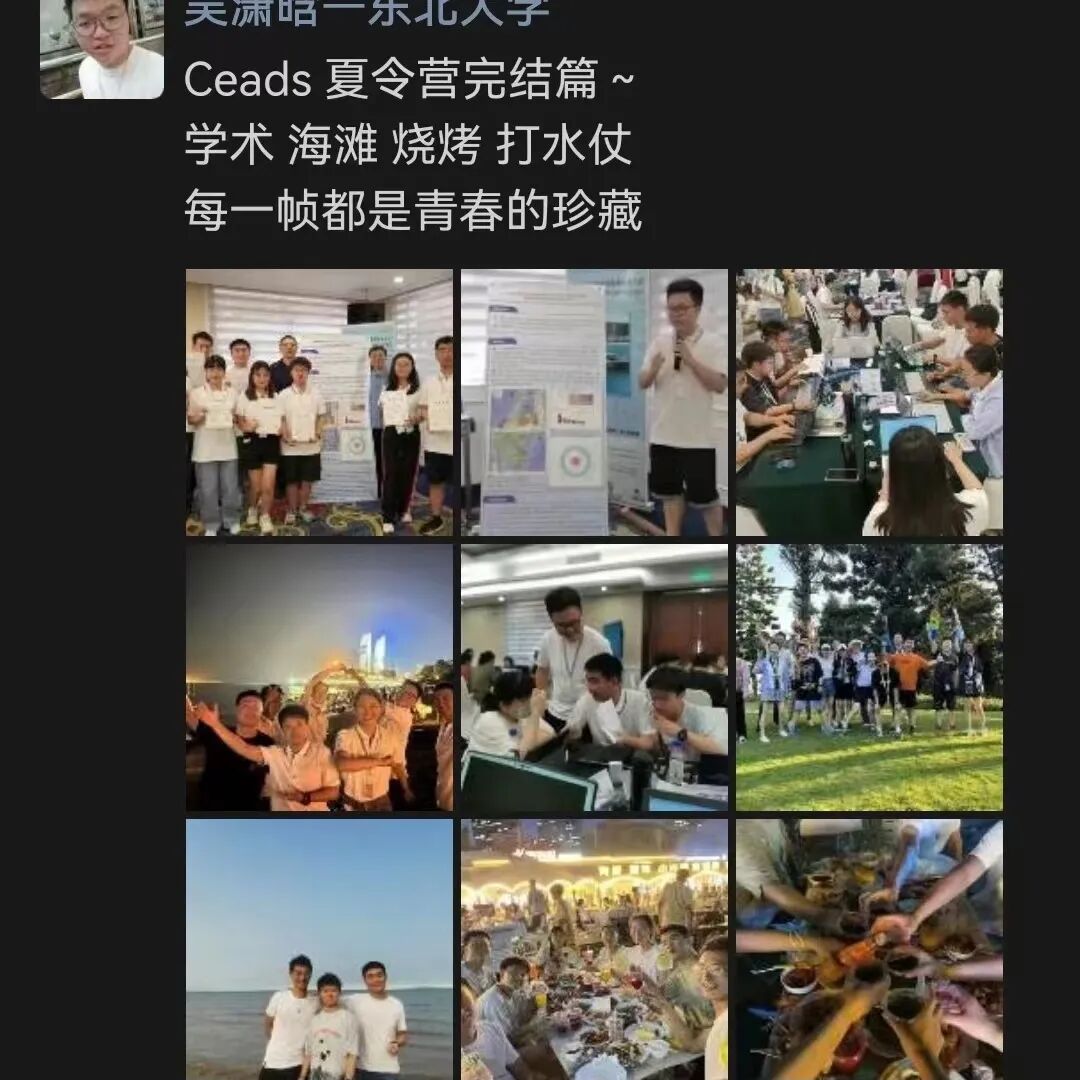
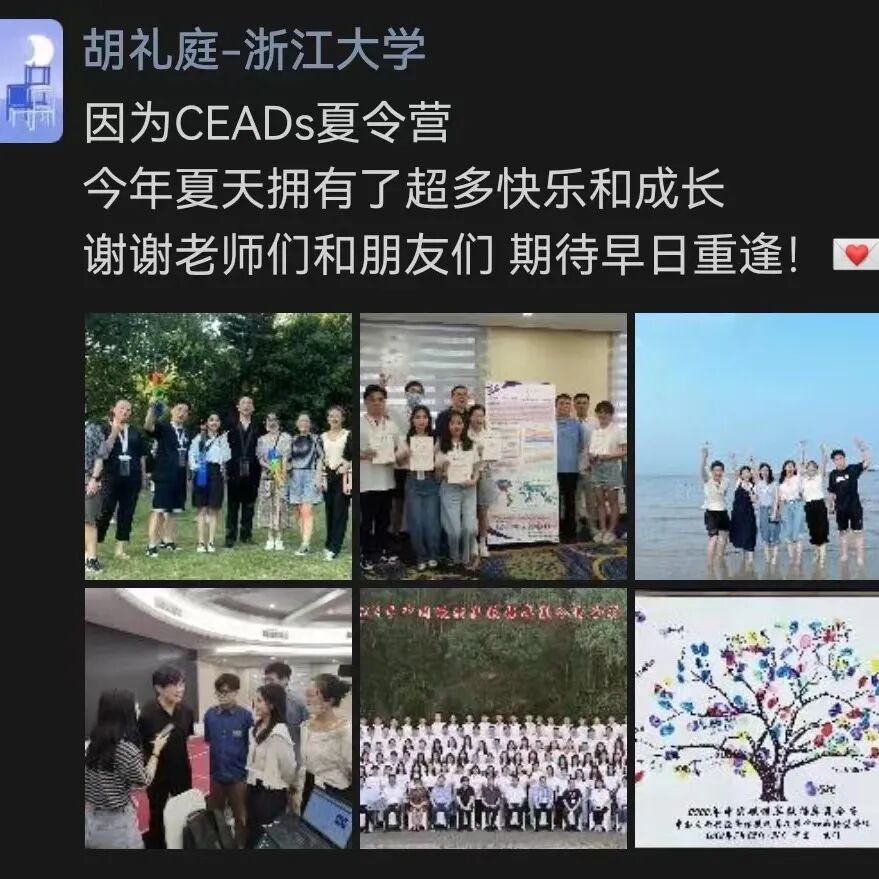
Zhang Lanxin: During these ten days, through teamwork, we carried out a research exploration from zero to one. Compared with listening to lectures, hands-on practice helped deepen our application and understanding of knowledge. The drive of a team working together toward one goal made these ten days extraordinarily fulfilling. The happiest part was meeting a group of like-minded friends. We came from across the country and gathered in Xiamen. People with shared aspirations are not kept apart by mountains and seas. The memories left on beautiful Egret Island in midsummer 2022 will surely be remembered by every camper.
Student Wen: I first learned about CEADs through a search. When I clicked in, I discovered this database, and it has stayed in my bookmarks ever since. I also followed the public account and became an academic fan of Professor Guan. First, I would like to thank all members of the CEADs team. This is not just a polite expression. Without the careful planning of the CEADs team, these ten days would have been much less interesting. Second, I would like to thank Senior Huo Jingwen, Senior Cui Can, Senior Wang Zhenyu, Senior Hao Qi, and Senior Sun Yida for their patient answers. I feel as if I am standing before a new door. Next, I want to walk in and see what lies beyond it. Finally, I want to thank my group members. Fate is a wonderful thing. Some people may know one another for three or four years and exchange fewer than ten sentences in total, while others may know one another for three or four days and already have so much to say. I was lucky to meet such a group of people at the summer camp. I look forward to good news from everyone.
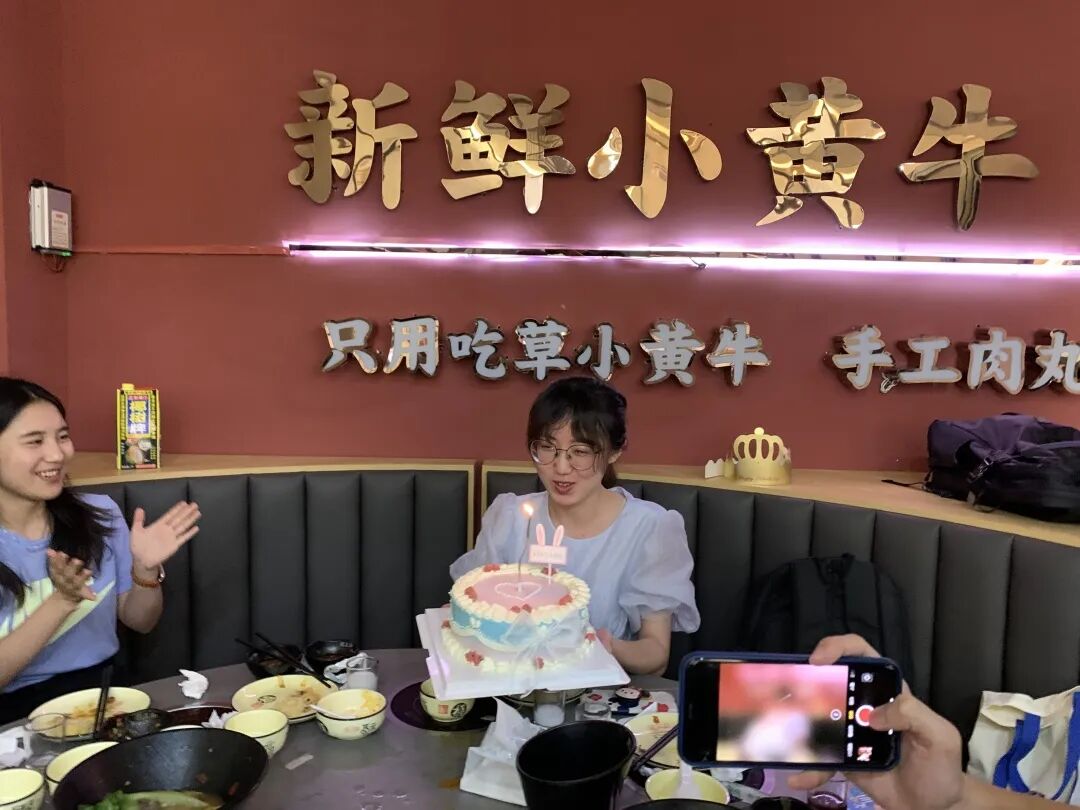
Pizza: Three people in our group had birthdays in one week. What a wonderful coincidence. Many thanks to the CEADs team for providing such a good platform, allowing everyone to spend ten happy and fulfilling days together in beautiful Xiamen. Here I met many leading scholars whom I had previously only seen in references, and many talented young people from different fields, people who know so much and have such good personalities that they leave little room for the rest of us. I also gradually changed from someone afraid of social situations into someone very active in them. At next year gathering, I will definitely say a few words. I learned a lot here, and there is even more to learn. May the CEADs platform and all friends have bright futures. I will keep working hard to catch up with everyone.
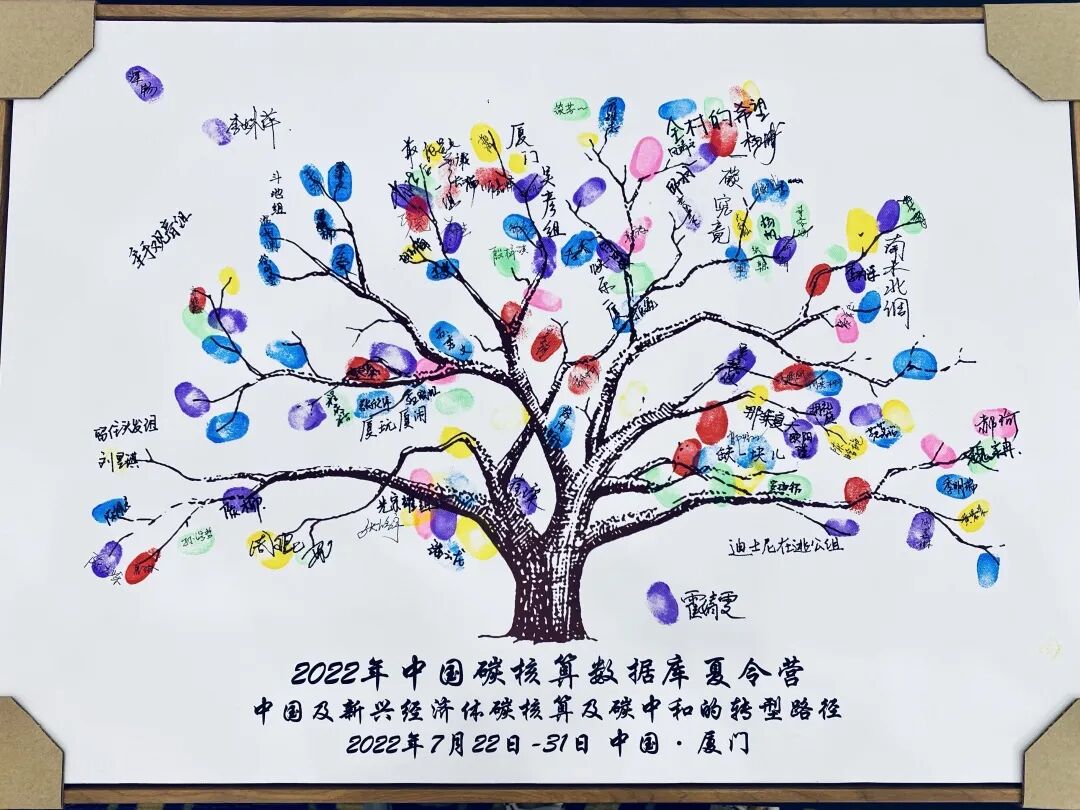
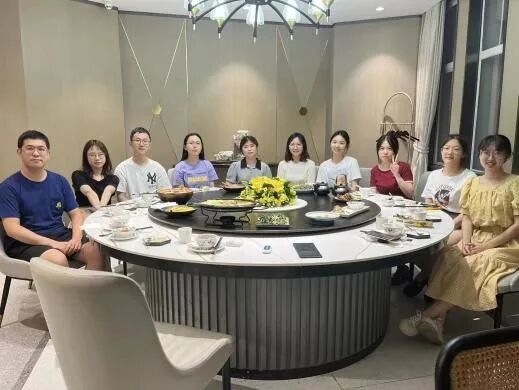
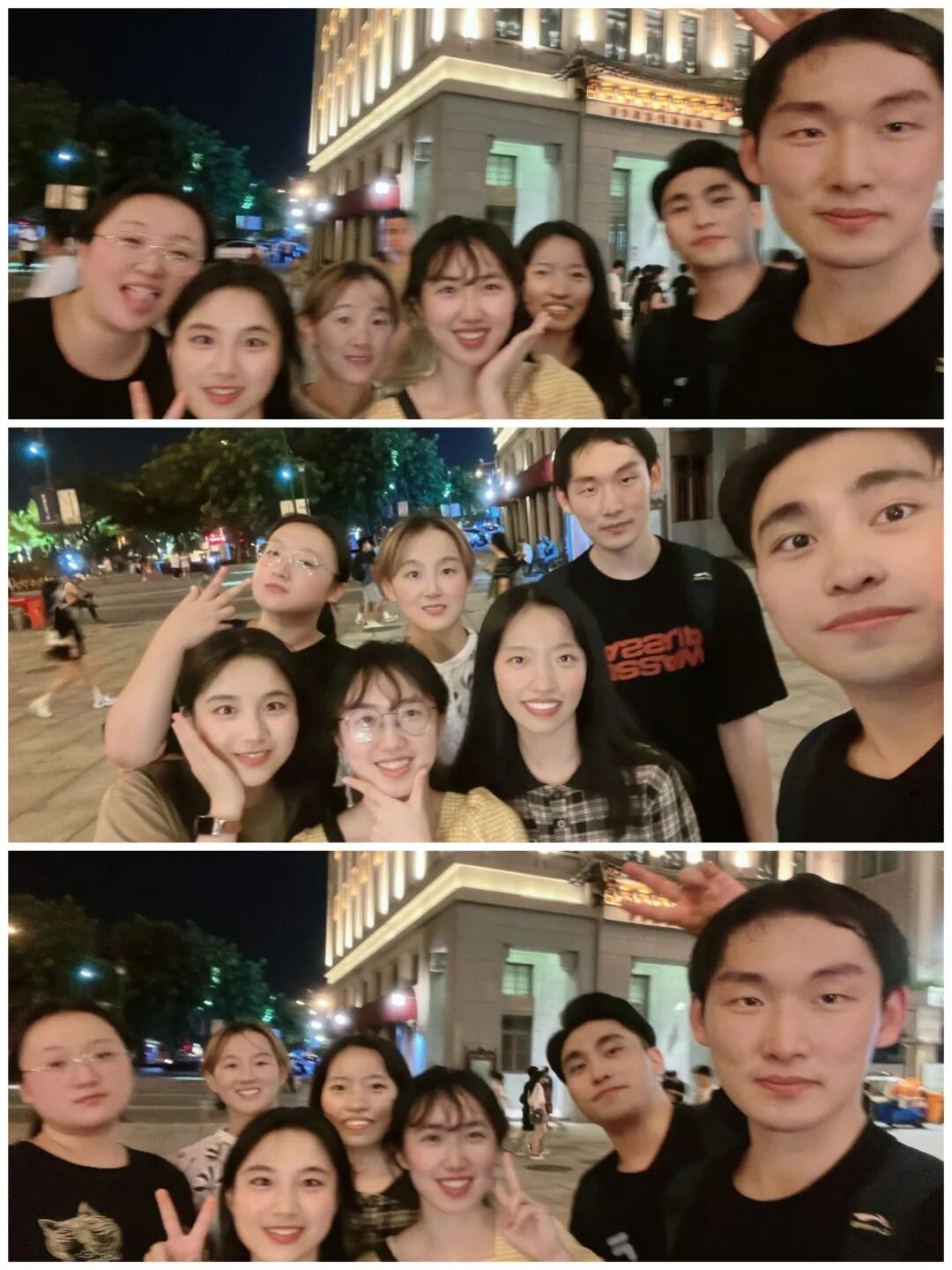
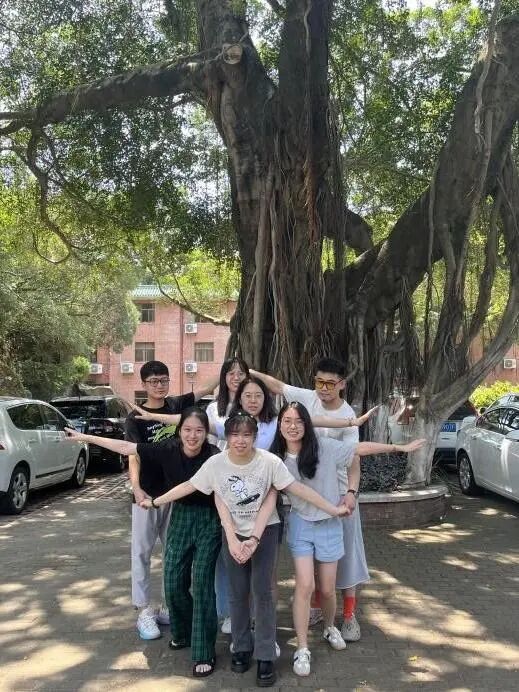
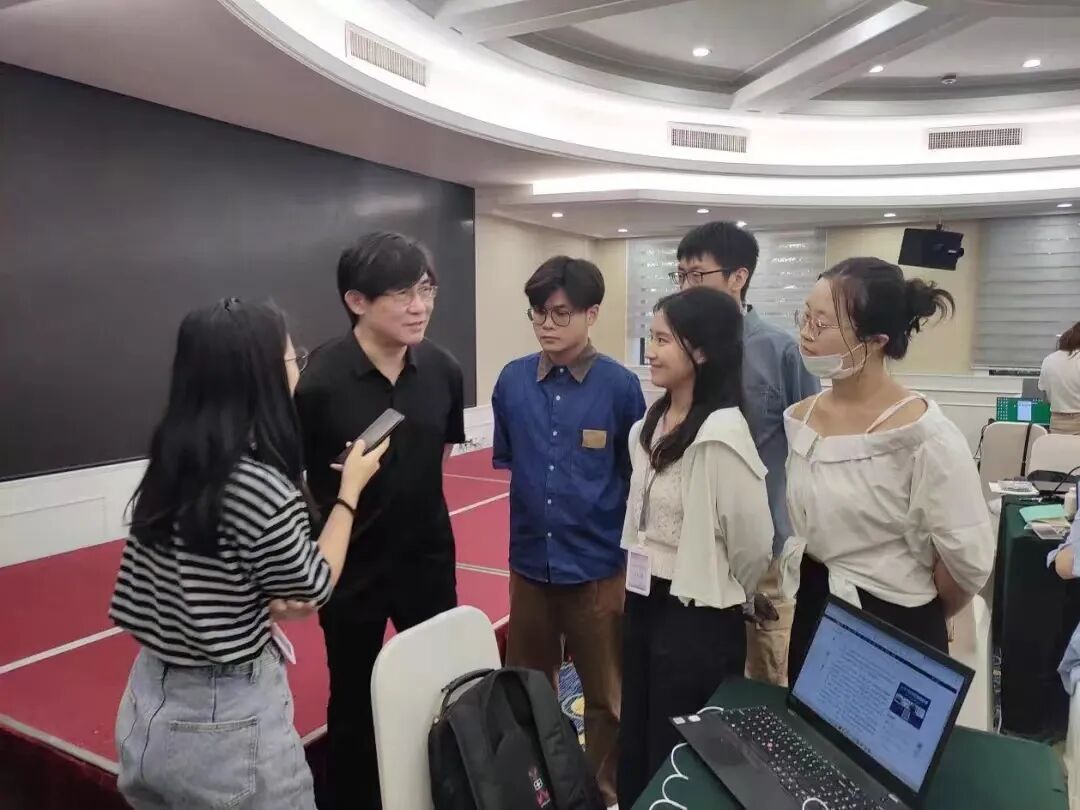
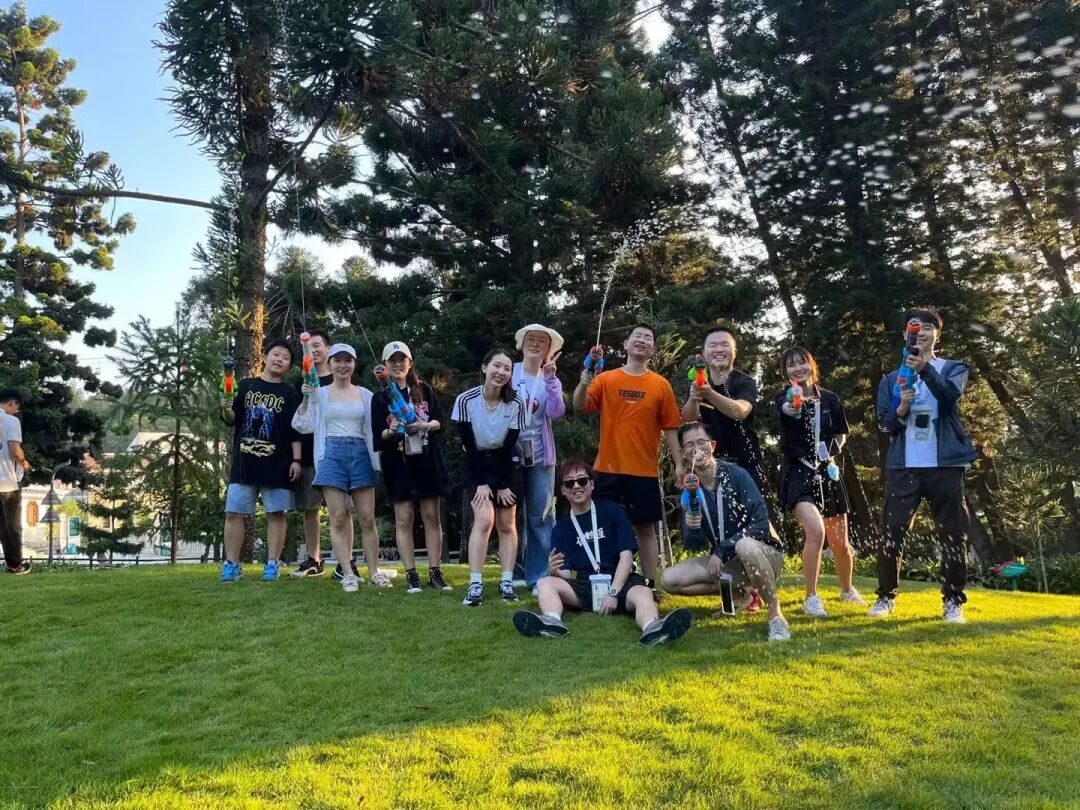
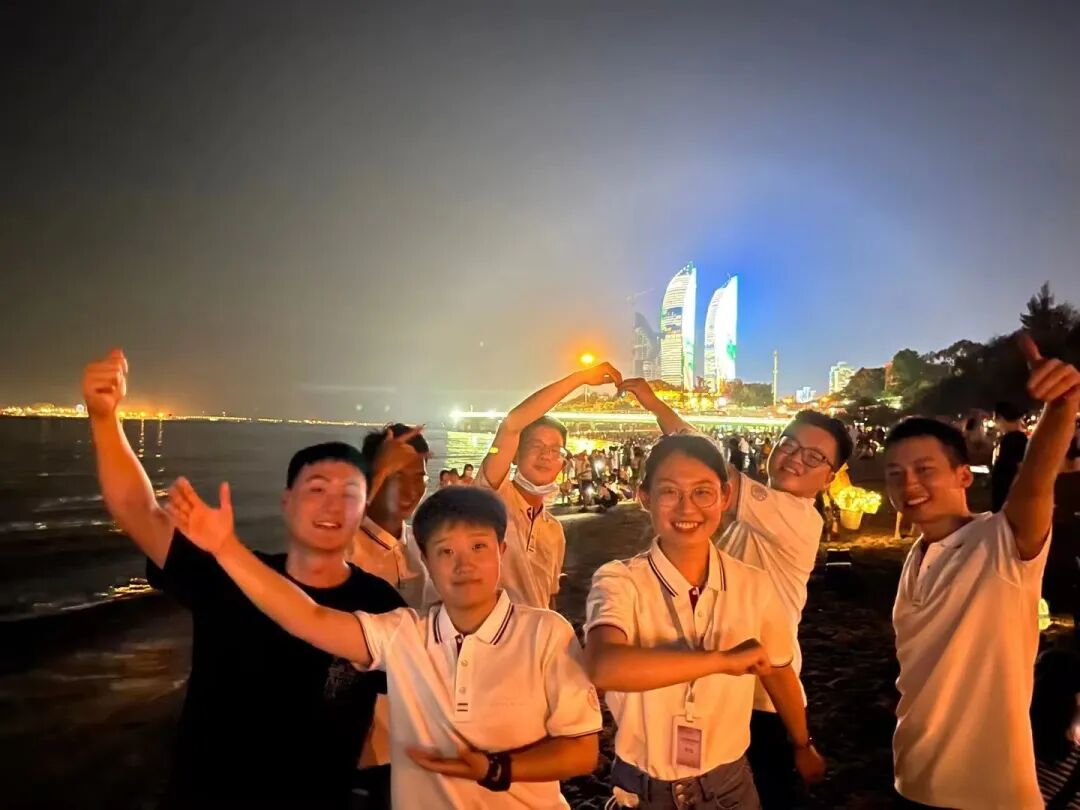
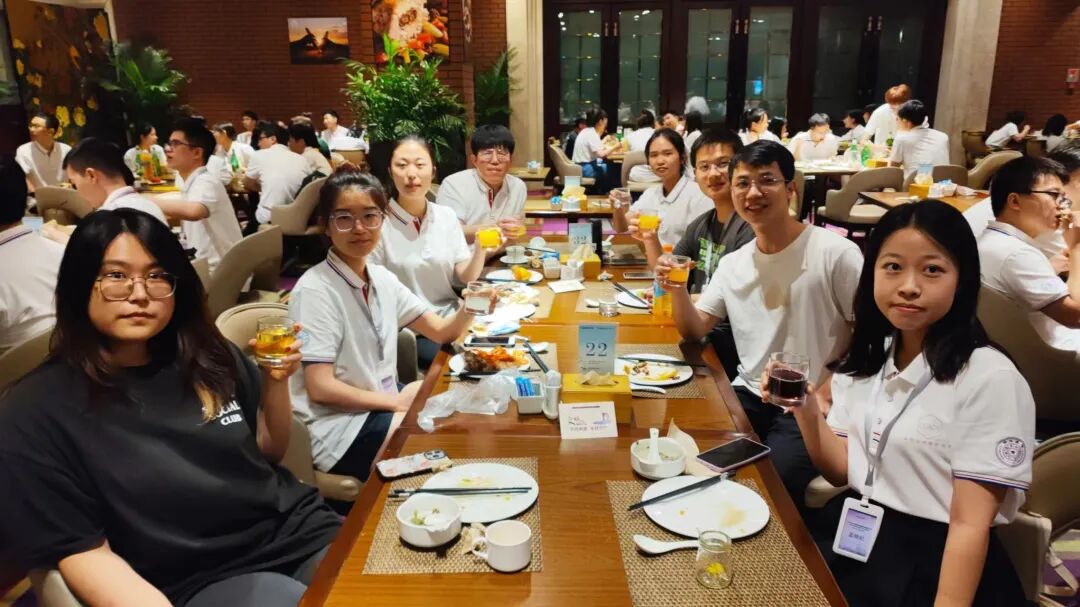
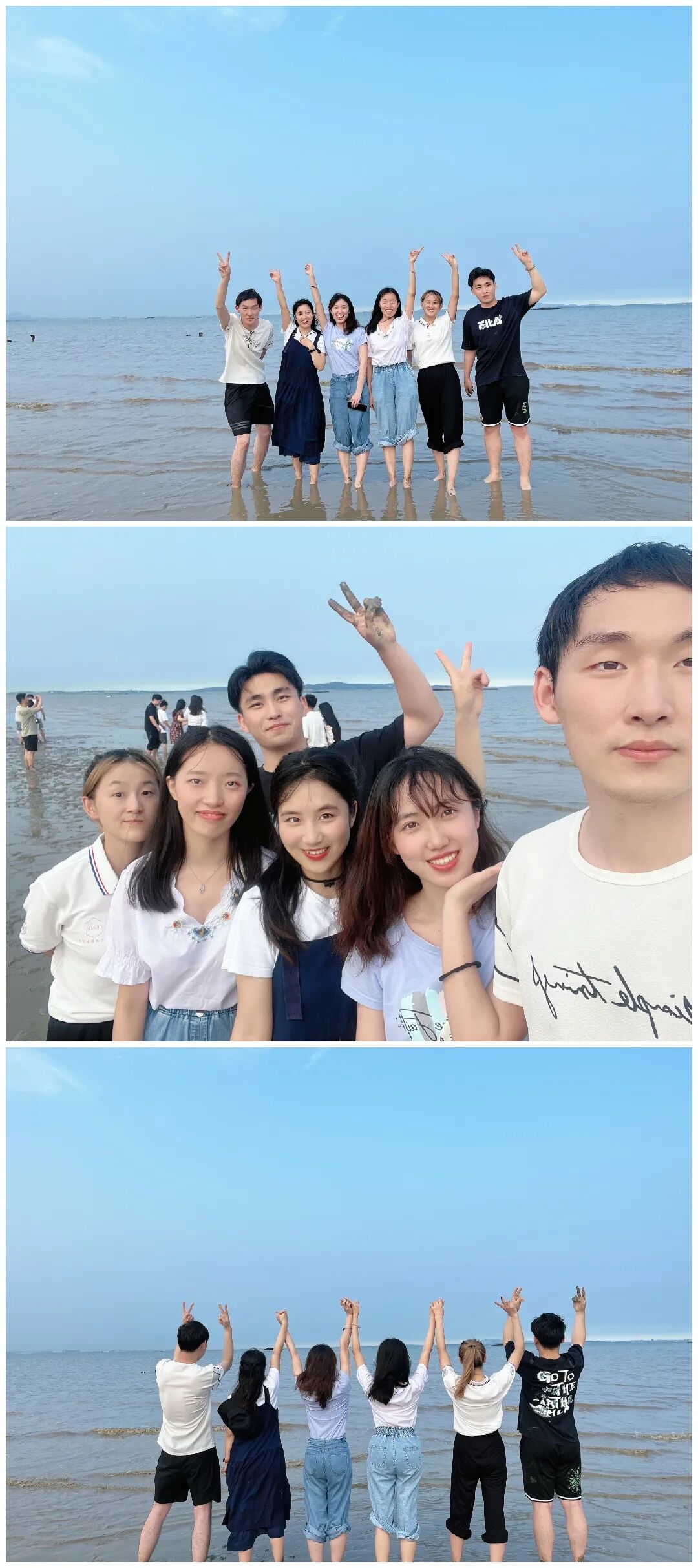
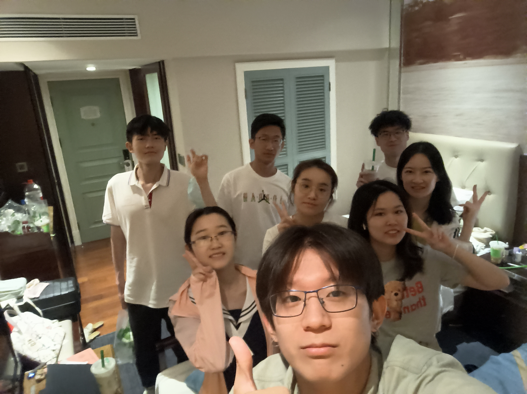
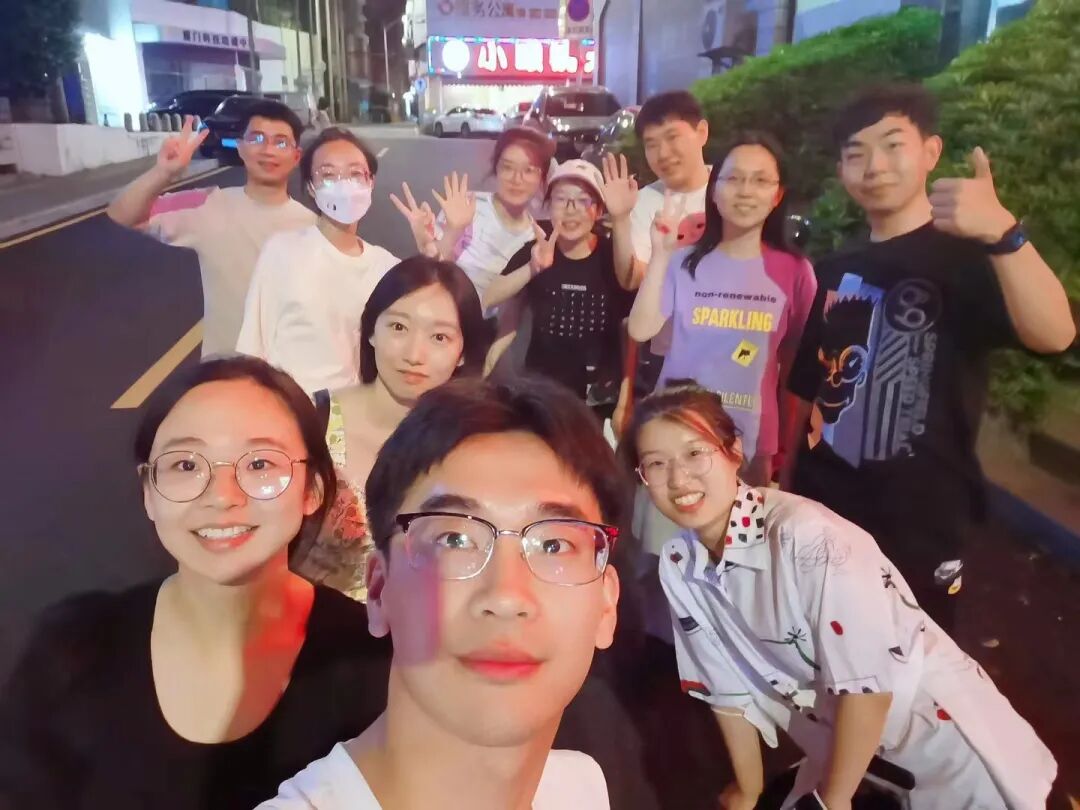
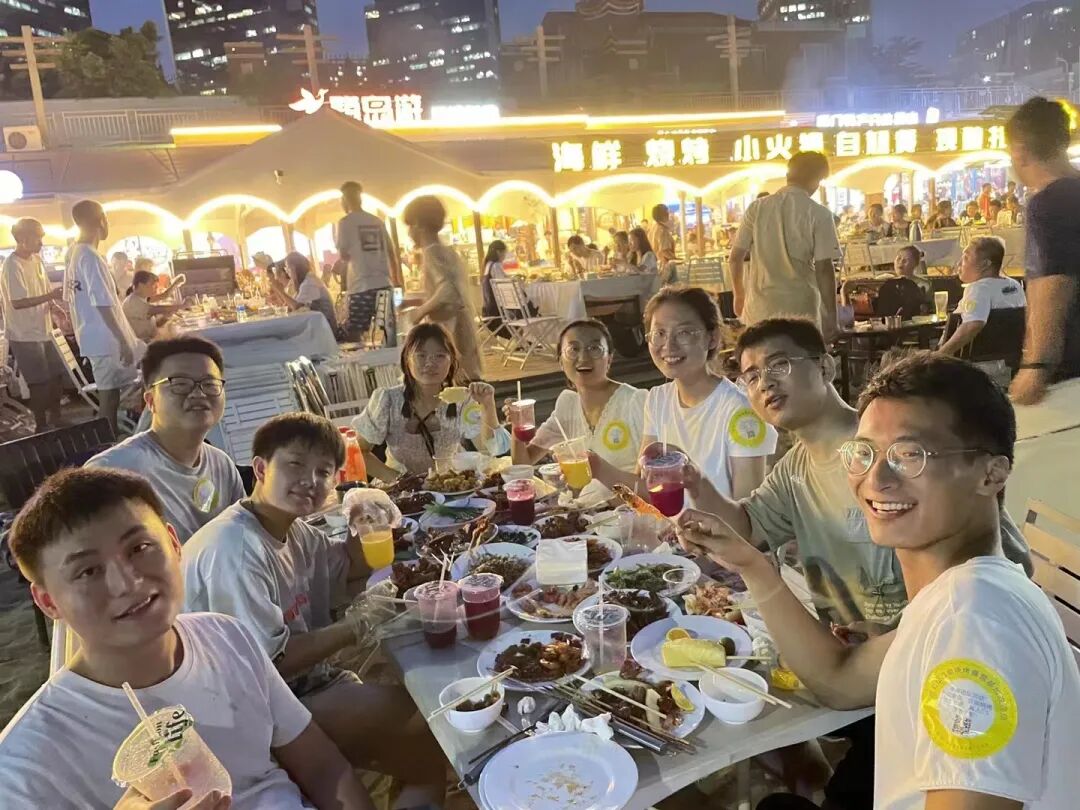
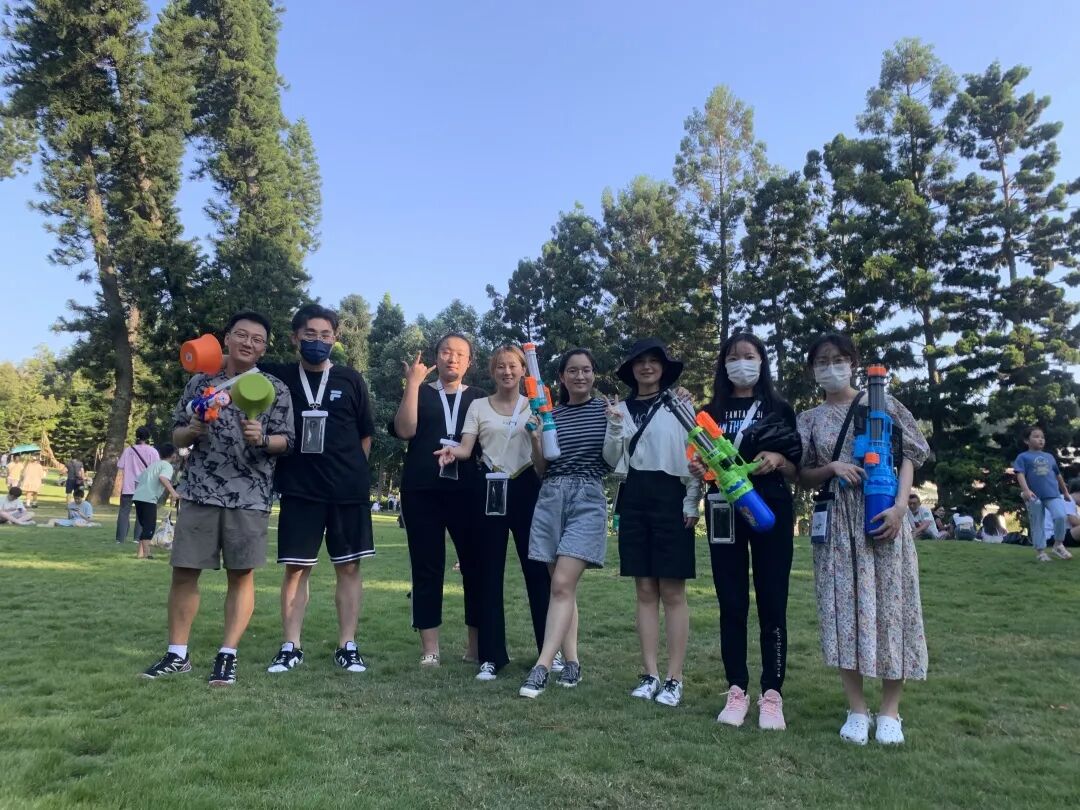
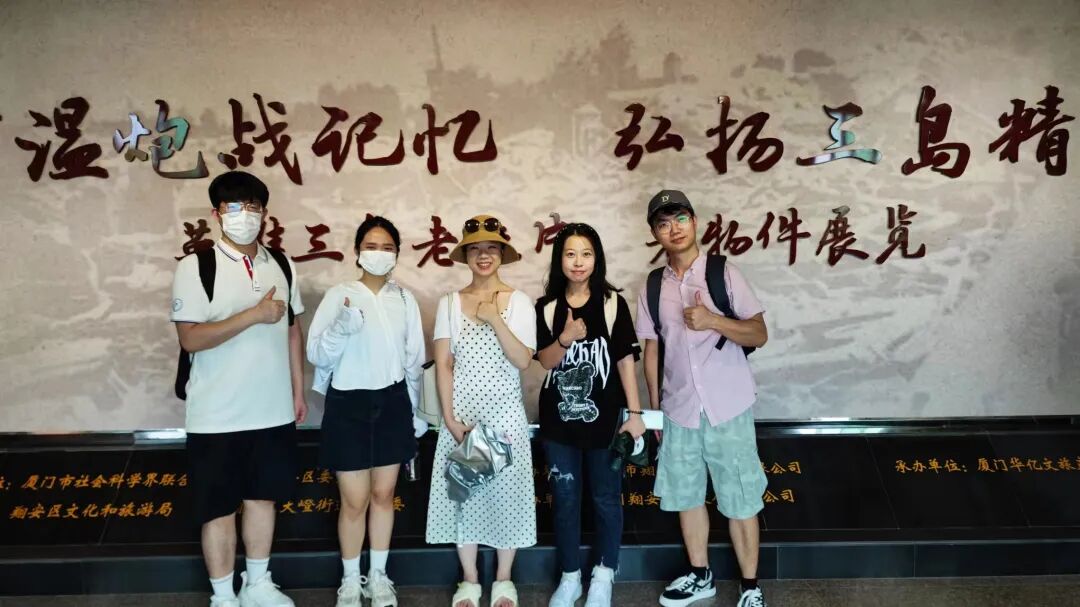
Postscript 3: Memory Wall






Postscript 4: A Note from the Editor
This hard-won gathering feels even more precious against the background of the pandemic. In beautiful Xiamen, every day had a balance of learning and rest. Here, we sincerely thank the lovely mentor team for ten days of hard work and dedication, and thank all staff members of Xiamen University for their careful preparation.
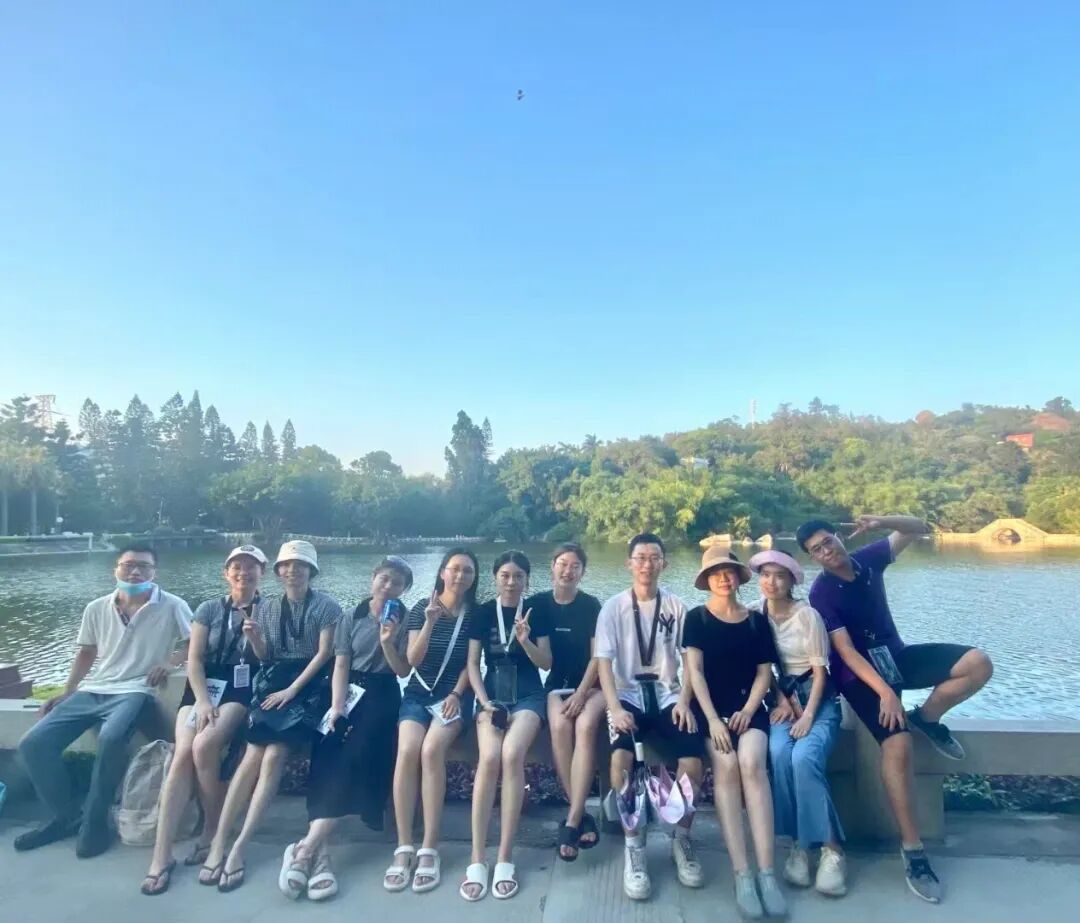

One person can walk fast, but a group can go far. We look forward to more opportunities for exchange and cooperation in the future. May everyone give full play to their strengths, shine in scientific research, and produce more high-quality achievements. Let us move forward together, temper ourselves through effort, and become responsible young people with commitment. Forward!