CEADs Nurtures Outstanding Young Talents in Carbon Neutrality Who Take Faculty Positions at Leading UK Universities
Over the years, with joint support from the Ministry of Science and Technology of China, the Administrative Center for China's Agenda 21, the National Natural Science Foundation of China, the Chinese Academy of Sciences, UK Research Councils and other institutions, the China Emission Accounts and Datasets (CEADs) team has brought together scholars from research institutions in China, Europe, the United Kingdom, the United States and other regions. The team compiles and freely shares multi-scale carbon emission inventories for China and other emerging economies, and analyzes global and regional carbon emission patterns. The database has supported more than 800 journal papers worldwide, provided a solid scientific basis for green and low-carbon development across regions, and contributed to policy design and implementation for greenhouse gas emission control in emerging economies.
The CEADs team has organized experts and scholars to develop a training curriculum that offers theoretical and practical guidance on carbon peaking, carbon neutrality and carbon accounting. It is committed to cultivating interdisciplinary professionals with strong expertise and practical capabilities for the 3060 carbon peaking and carbon neutrality goals, while also helping build a reserve of outstanding young leaders in the field. Recently, several CEADs team members have taken up faculty positions at leading UK universities: Dr. Zhifu Mi has been promoted to tenured full professor at University College London; Dr. Yuli Shan has been appointed tenured associate professor at the University of Birmingham; Dr. Mengfei Jiang has been appointed tenured assistant professor at the University of Edinburgh; Dr. Zaihan Gao has been appointed tenured assistant professor at University College London; Dr. Heran Zheng has been appointed tenured assistant professor at University College London; and Dr. Daoping Wang has been appointed Hoffmann Fellow at Hughes Hall, University of Cambridge.
Member Profiles
In alphabetical order by surname pinyin
Assistant Professor Zaihan Gao

Assistant Professor in Sustainable Construction and Investment at The Bartlett, University College London, and PhD in Finance from Durham University Business School. His research areas include corporate finance, green finance, climate investment and finance, sustainability, and transport economics. He has published several papers in related fields and has led or participated in multiple research projects, including studies on carbon peaking and carbon neutrality for Chinese central state-owned financial institutions and research on efficient motors supporting China's dual carbon goals.
Assistant Professor Mengfei Jiang

Assistant Professor in Climate Finance at the University of Edinburgh Business School. She received a PhD in Carbon Finance from the University of Edinburgh and a master's degree in Finance and Investment Management from the University of Aberdeen. From 2021 to 2022, she served as a research fellow at Heriot-Watt University Business School, participating in the UK Research and Innovation (UKRI) sustainable cold-chain finance project (Va Co BD Program) and the UK National Interdisciplinary Circular Economy Research programme (NICER Program). From 2018 to 2020, she worked as a research fellow at the University of Edinburgh Business School, where she was responsible for research and management of the BHP China steel industry carbon capture, utilization and storage project (BHP CCUS Project). Her main research interests include climate investment and finance, sustainable finance, energy and climate change policy assessment, circular economy, energy conservation and emission reduction, and business model, policy and finance research on carbon capture, utilization and storage.
Professor Zhifu Mi
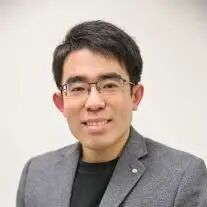
Vice Dean for Research at The Bartlett School of Sustainable Construction, University College London, and tenured Professor of Climate Change Economics. He received a bachelor's degree from the School of Mathematics at Shandong University and a PhD from the School of Management and Economics at Beijing Institute of Technology under the supervision of Professor Yiming Wei, followed by postdoctoral research at the University of East Anglia. He focuses on climate change economics and policy, with achievements in integrated assessment models of climate change, carbon emission accounting, and input-output analysis. His work has appeared in leading international journals including The Lancet, Science Advances, Nature Energy, Nature Geoscience and Nature Sustainability. He has been named to the Forbes Europe 30 Under 30 list and the Clarivate Highly Cited Researchers list, and has received numerous awards including the UCL Outstanding Research Supervision Award, the World Sustainability Award, the Chinese Economics Outstanding Doctoral Dissertation Award, China's 100 Most Influential International Academic Papers Award, the Energy Economics Best Paper Award, the Environmental Research Letters Best Early Career Paper Award, and the Applied Energy Highly Cited Original Paper Award. He is currently co-editor-in-chief of the SSCI journal Structural Change and Economic Dynamics (IF: 5.059).
Associate Professor Yuli Shan
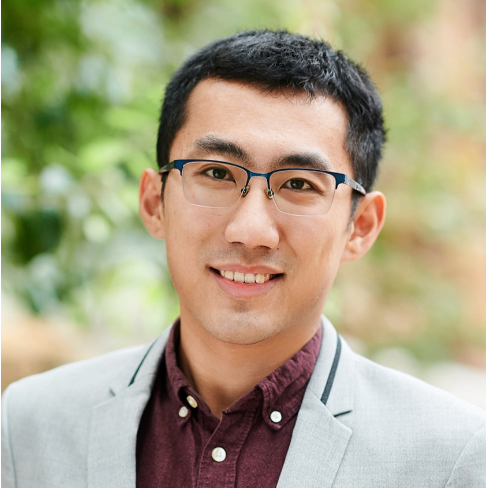
Tenured Associate Professor in Low Carbon Transition and Sustainable Development at the University of Birmingham and PhD supervisor. He is a contributing author to the IPCC Sixth Assessment Report, a Clarivate global Highly Cited Researcher, and has been listed among Stanford University's global top 2% scientists. He has received more than ten academic honors, including Germany's Green Talents Award and China's 100 Most Influential International Academic Papers Award. He serves as an associate editor of journals including Journal of Cleaner Production and as the first overseas executive council member of the China Input-Output and Big Data Association. Dr. Shan has long focused on carbon emission accounting, regional sustainable development, and climate change economics. His research provides important foundational data support for management practices related to carbon peaking and carbon neutrality at all levels of government. Over the past five years, he has published multiple papers in top international journals including Nature Climate Change and Nature Sustainability, with more than ten papers selected as ESI hot papers or highly cited papers. His papers have received more than 6,000 positive citations and have been widely covered by major media including CGTN, Xinhua News Agency, Reuters and the Financial Times.
Research Fellow Daoping Wang

Junior Research Fellow at the Centre for Climate Engagement, Hughes Hall, University of Cambridge, and Hoffmann Fellow of the World Economic Forum. He received his bachelor's degree from Xi'an Jiaotong University and his PhD from Shanghai University of Finance and Economics. His research interests include integrated assessment model development for climate change, climate change risk assessment and adaptation, with a focus on studying climate change issues and response strategies from a network perspective. He was selected for the Young Scientists Summer Program at the International Institute for Applied Systems Analysis (IIASA). His related research has been published in leading international journals including Nature Human Behaviour, Nature Sustainability and Nature Climate Change, and aims to provide foundational scientific support for government and corporate risk management practices.
Assistant Professor Heran Zheng
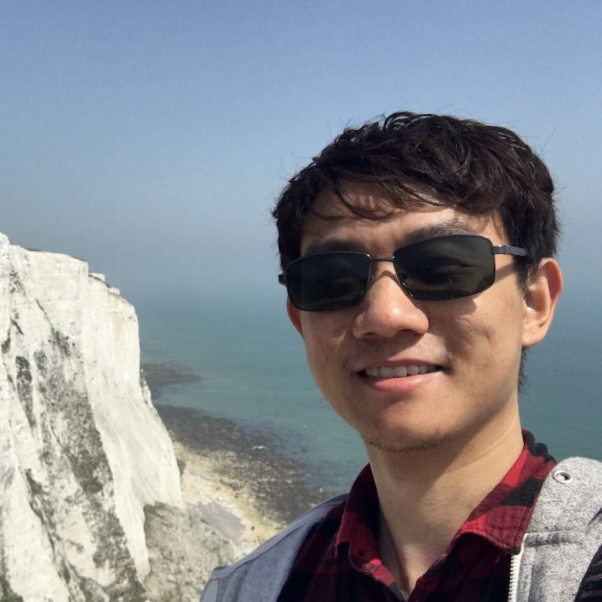
Tenured Assistant Professor in Low Carbon Infrastructure Transitions at The Bartlett School of Sustainable Construction, University College London. He received his PhD in climate change economics from the University of East Anglia and completed postdoctoral research in the Industrial Ecology Programme at the Norwegian University of Science and Technology. His research spans industrial ecology, climate change economics, national economic accounting and related fields, with a focus on compiling small-scale national input-output tables, analyzing environmental impacts along regional industrial chains, and interdisciplinary research on sustainable production and consumption. In recent years he has published nearly 60 studies, including papers in well-known journals such as Nature Climate Change, Nature Sustainability and One Earth.
University Profiles
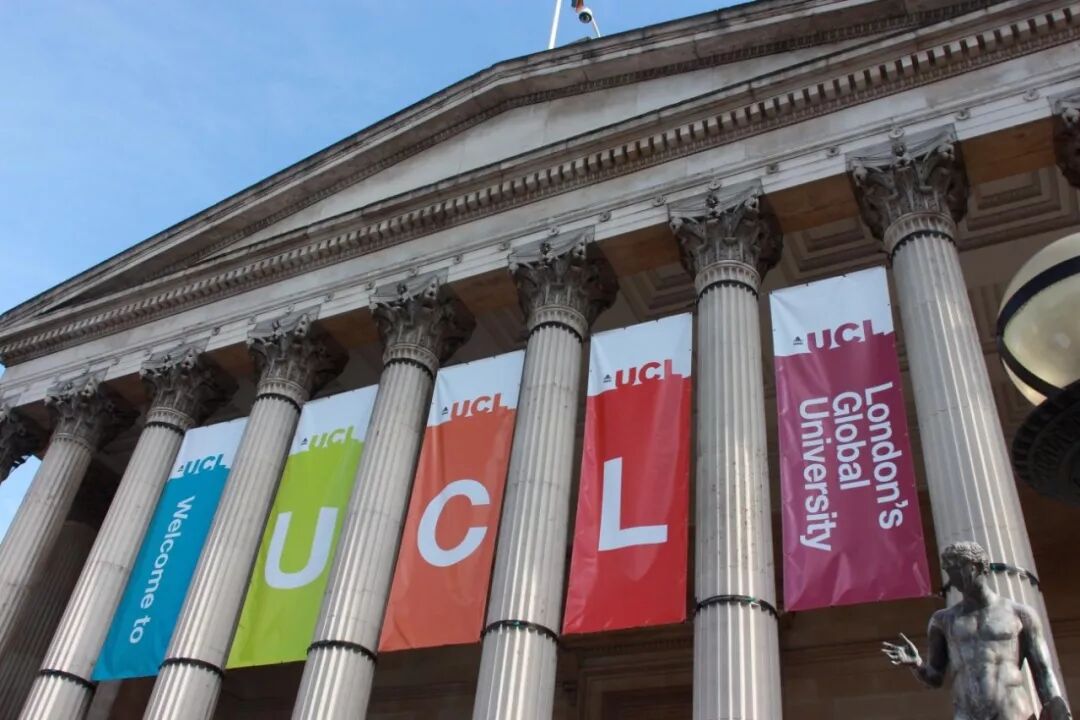
University College London, or UCL, was founded in 1826 and is located in London. It is a world-leading public comprehensive research university, consistently ranked among the global top ten and widely recognized as one of the United Kingdom's most prestigious historic universities. In the official UK ranking of university research quality, UCL ranks second in the country, behind only the University of Oxford. It is the founding college of the University of London and is often grouped with the University of Cambridge, the University of Oxford, Imperial College London and the London School of Economics and Political Science as part of the G5 super-elite universities. It is also a member of the Golden Triangle, the Russell Group, the China-UK University Engineering Education and Research Alliance, and SES-5.
UCL has produced 35 Nobel Prize winners and three Fields Medalists, as well as prominent figures in science, politics and culture, including Charles K. Kao, known as the father of fiber optics; Alexander Graham Bell, known as the father of telephone communication; Francis Crick, co-discoverer of DNA; Peter Cook, a core figure of Archigram; Demis Hassabis and David Silver, creators of the AlphaGo algorithm; literary master Rabindranath Tagore; and Mahatma Gandhi.
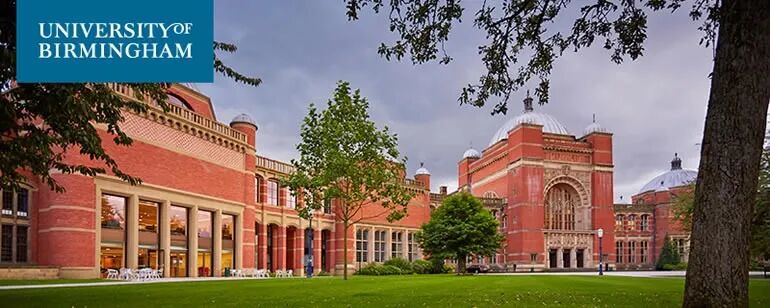
The University of Birmingham was founded in 1825 and is located in Birmingham, the United Kingdom's second-largest city. It is ranked among the world's top 100 universities, placing 90th in the 2022 QS World University Rankings and 92nd in the 2022 U.S. News Best Global Universities Rankings. It ranked first in The Times Top 100 Graduate Employers list in 2020 and received a Gold rating in the UK Teaching Excellence Framework (TEF) assessment in 2017. The University of Birmingham is one of the UK's red brick universities and received its royal charter from Queen Victoria in 1900. It is a member of the Russell Group, Midlands Innovation, the global Universitas 21 network and other alliances. By the end of 2017, the university had educated 11 Nobel Prize winners, three British prime ministers and five foreign heads of government. Notable alumni include British prime ministers Stanley Baldwin, Neville Chamberlain and Robert Anthony Eden; Francis Aston, Nobel laureate and inventor of the mass spectrometer; and Chinese scholars Siguang Li, Tongbin Yao and Jun Ke.
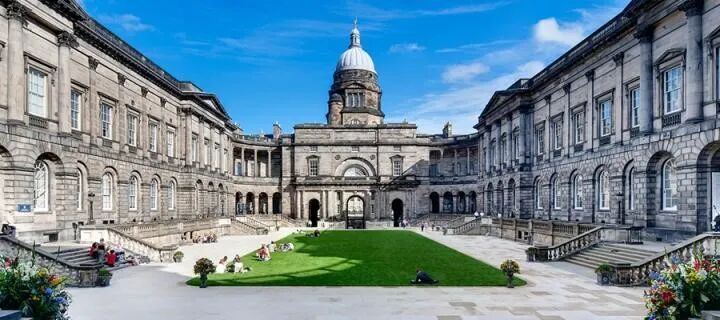
The University of Edinburgh Business School, part of the College of Arts, Humanities and Social Sciences at the University of Edinburgh, has a history of nearly 100 years. The University of Edinburgh ranked 20th in the 2020 QS World University Rankings. Its business school is one of the leading business schools in the United Kingdom, and Edinburgh's business programmes have consistently ranked around the top 20 in The Times university subject rankings. The University of Edinburgh is a world-renowned public comprehensive research university located in Edinburgh, the capital of Scotland. It is Scotland's highest institution of learning and one of the United Kingdom's historic universities.
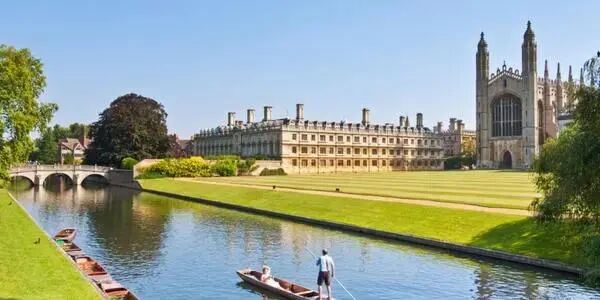
The University of Cambridge is a member of the Russell Group, the Golden Triangle, Doxbridge and the G5. Located in Cambridge, England, it is one of the top universities in the United Kingdom and the world. In 2021-2022, it ranked 5th in the THE World University Rankings, 3rd in the QS World University Rankings and 3rd in the Academic Ranking of World Universities. Over more than 800 years of history, Cambridge has brought together scientific giants including Newton, Kelvin, Maxwell, Bohr, Born, Dirac, Oppenheimer, Hawking, Darwin, Watson, Crick, Malthus, Marshall, Keynes, Turing, Wiles and Hua Luogeng.