CEADs Team Joined the ACCA21 Delegation on Visits to the UK and Germany
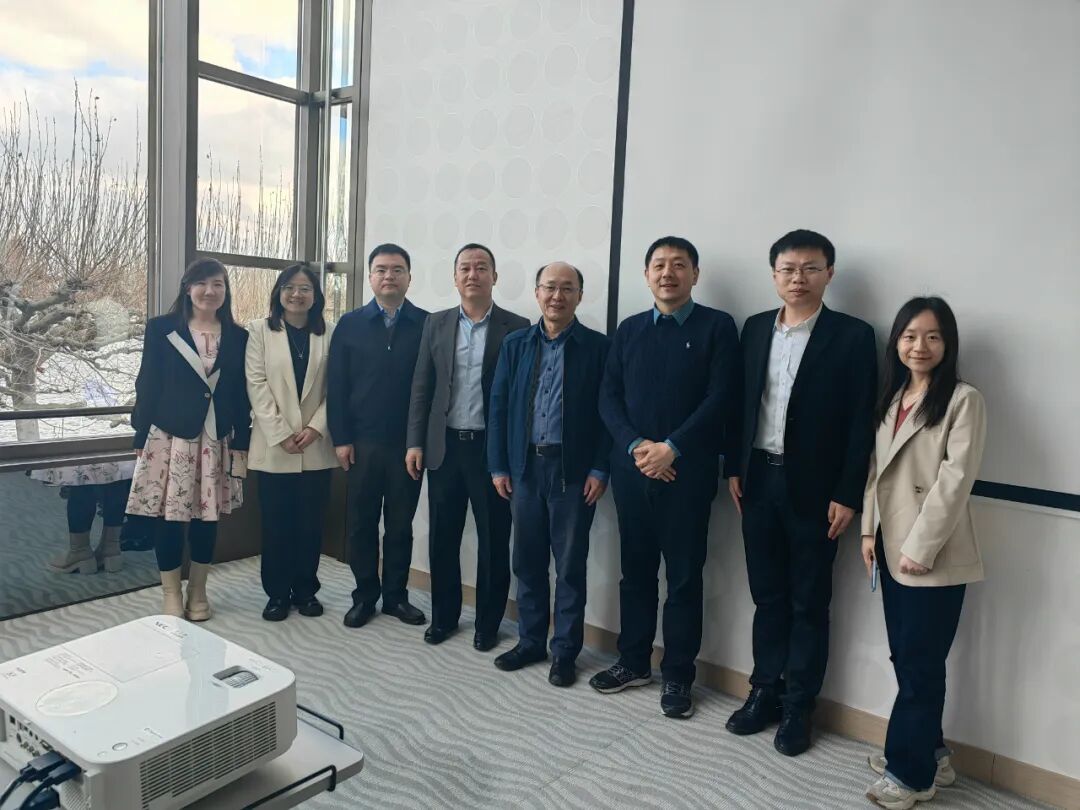
From February 21 to 28, 2023, Huang Jing, Director of the Administrative Center for China's Agenda 21, led a delegation to the United Kingdom and Germany. The delegation attended China-UK and China-Germany bilateral seminars on carbon neutrality cooperation and visited institutions including UK Research and Innovation (UKRI), University College London (UCL), Imperial College London, the University of Cambridge, the Max Planck Institute for Chemistry (MPIC), and the National Energy Group European Research Institute. The delegation also held discussions with Minister-Counsellor Jiang Sunan of the Chinese Embassy in the UK and Minister-Counsellor Chen Linhao of the Chinese Embassy in Germany. Professor Guan Dabo and Associate Professor Meng Jing from the CEADs team joined the exchange visit.
Seminar
Towards Carbon Neutrality: China-UK Cooperation Opportunities
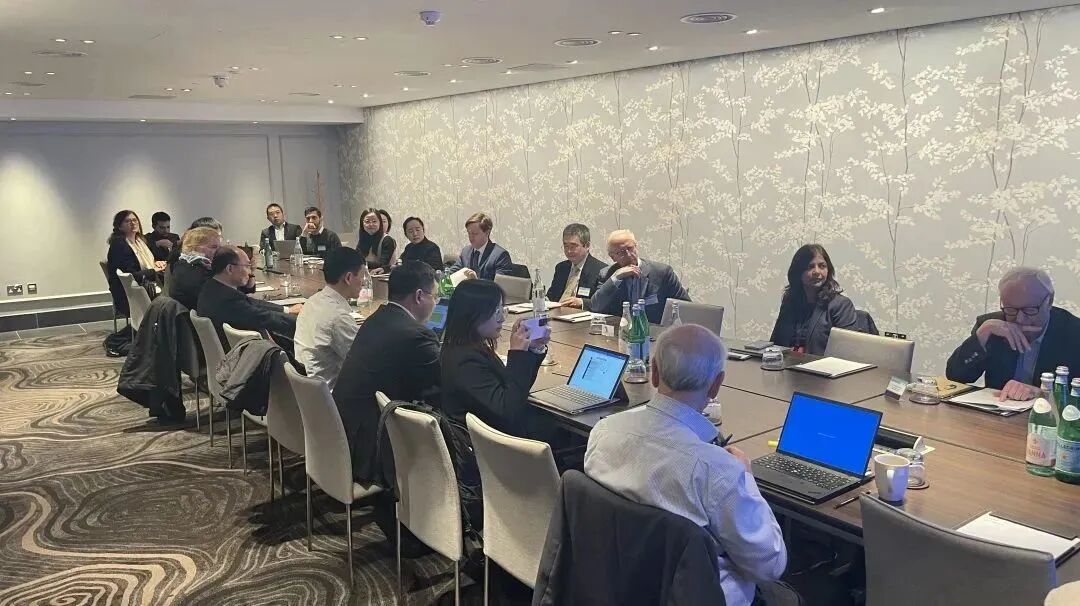
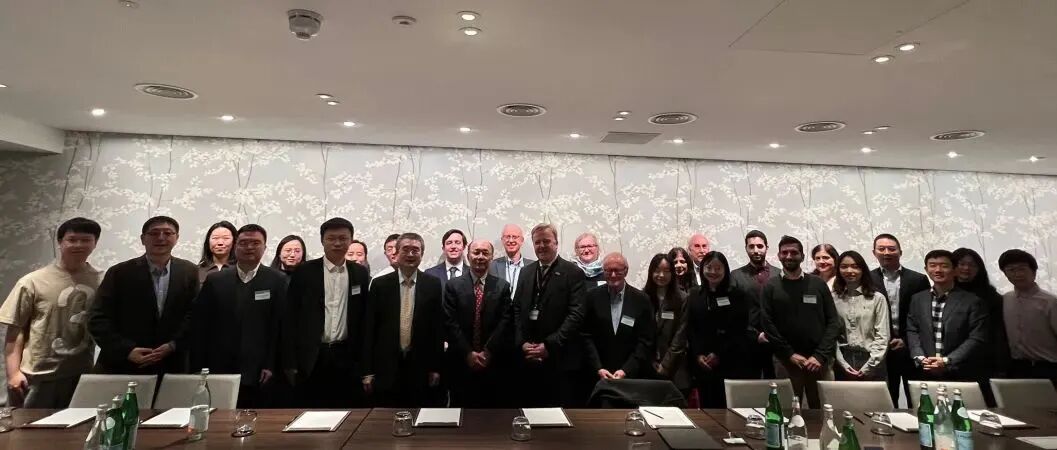
On February 22, the seminar “Towards Carbon Neutrality: China-UK Cooperation Opportunities,” hosted by The Bartlett School of Sustainable Construction at UCL, was held in London. More than ten fellows, experts, and scholars from UCL, the London School of Hygiene & Tropical Medicine, the University of Birmingham, the University of Oxford, the International Energy Agency (IEA), and other institutions attended, together with representatives from UKRI and the Chinese Embassy in the UK. The meeting was chaired by Professor Guan Dabo.

Keynote Remarks
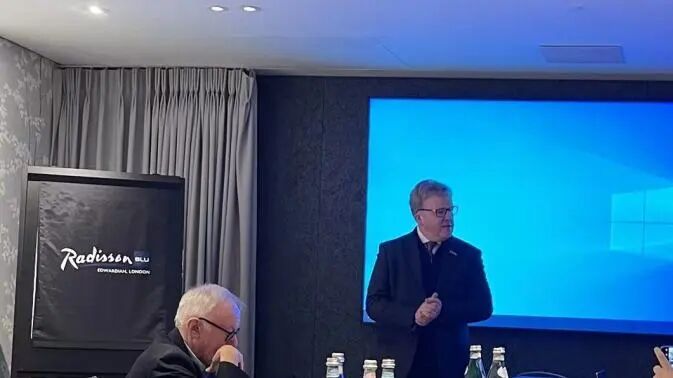
Professor Geraint Rees, UCL Vice-Provost, delivered welcome remarks, greeting the guests and expressing expectations for future cooperation. He introduced UCL's international research and education cooperation in climate change and said he looked forward to deeper China-UK collaboration in the field. He noted that UCL is willing to take a leading role in China-UK climate cooperation, connecting universities and research institutions in both countries, building a hub for research cooperation, and helping both sides move together toward a carbon-neutral society.
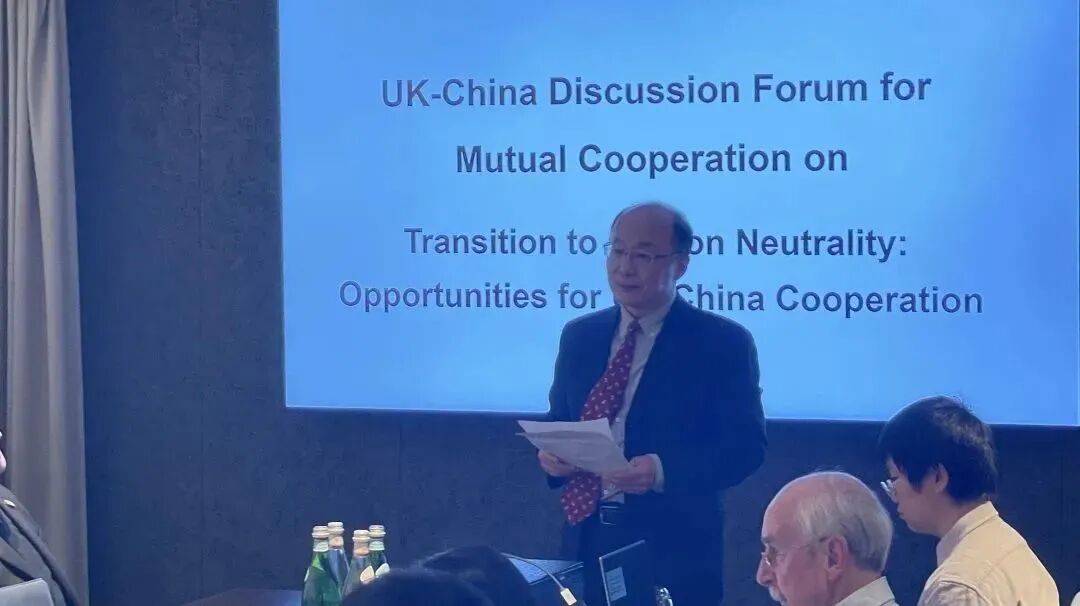
Director Huang Jing thanked both China and the UK for their efforts to advance climate cooperation, introduced the Ministry of Science and Technology's work on carbon peaking and carbon neutrality, and shared research led by ACCA21 on China's carbon neutrality technology roadmap. During the visit, Director Huang and the delegation held a closed-door meeting with heads of major departments at UKRI, where the two sides reviewed previous China-UK work in industry and CCUS technology cooperation and discussed future directions.
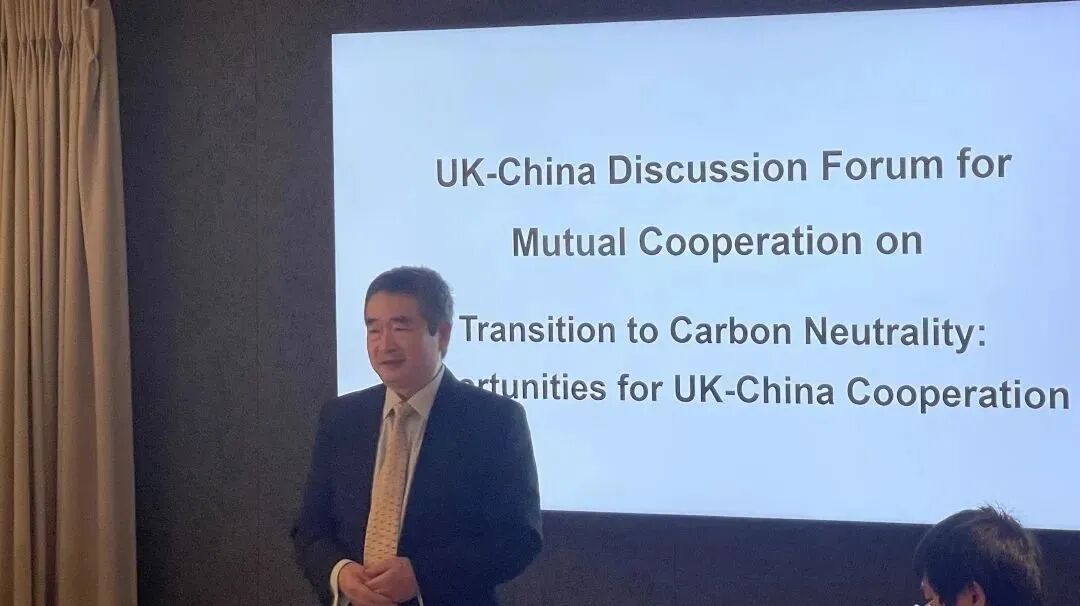
Jiang Sunan, Minister-Counsellor for Science and Technology at the Chinese Embassy in the UK, said in his remarks that China-UK science and technology cooperation on climate change is an important part of the broader bilateral science and technology framework. The two sides have carried out practical cooperation in basic research, application development, innovation and entrepreneurship, and responses to common global challenges. China and the UK have complementary strengths in low-carbon development, and green development through innovation cooperation serves the shared interests of both countries, with great potential and broad prospects.
Dr. Daniel Brooker, Science Counsellor at the British Embassy in China and Director of the UKRI China Office, introduced the UK's policies, cooperation agreements, and organizational arrangements for international science and technology cooperation, and discussed future opportunities and potential for China-UK collaboration.

Discussion on Carbon Neutrality Technologies
Participants from the Royal Society and the Royal Academy of Engineering exchanged views on China-UK carbon neutrality technologies, benefits and risks, and international cooperation.
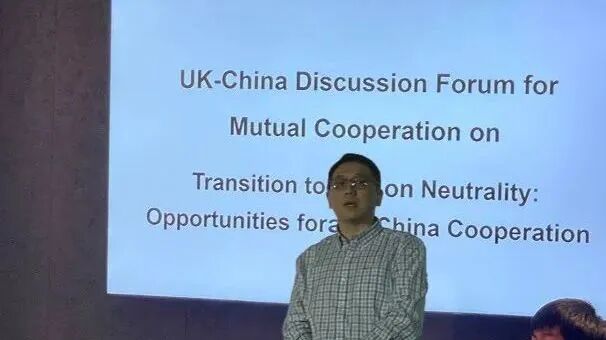
Professor Guan Dabo first introduced progress and potential in China-UK cooperation on carbon emissions data, with a focus on building a future database of key industrial point sources. The database provides strong scientific support for clarifying existing industrial processes, identifying relevant low-carbon technologies, and designing decarbonization pathways.
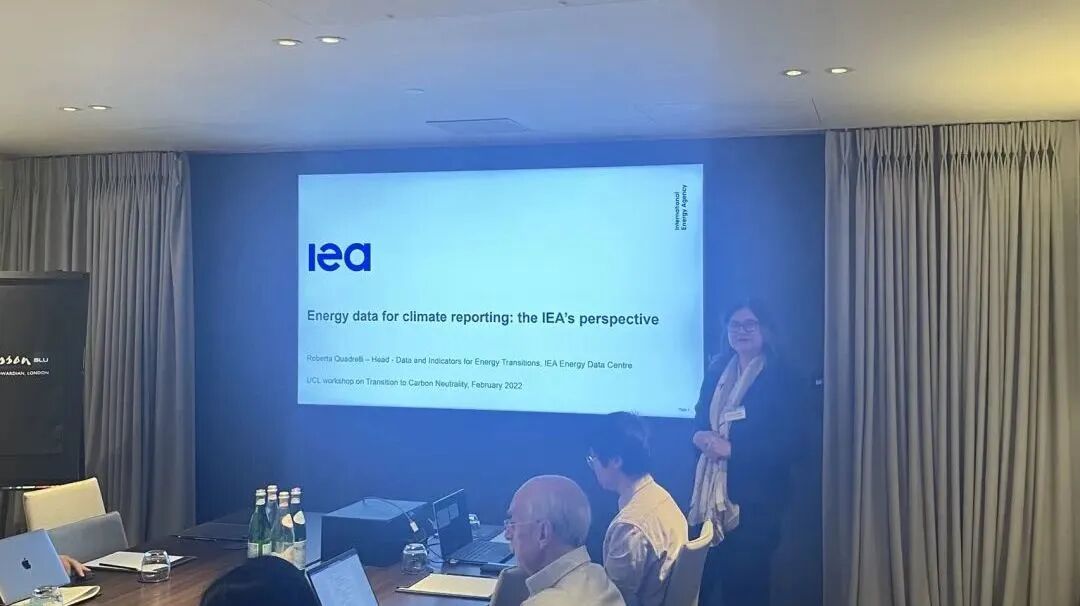
Dr. Roberta Quadrelli, Head of the IEA Energy Data Centre, introduced IEA clean energy reports, including work on energy storage, carbon capture and utilization, and related technologies. She expressed the IEA's confidence and commitment to developing sustainable energy technologies and promoting relevant policies, and looked forward to future China-UK cooperation on carbon neutrality technologies.
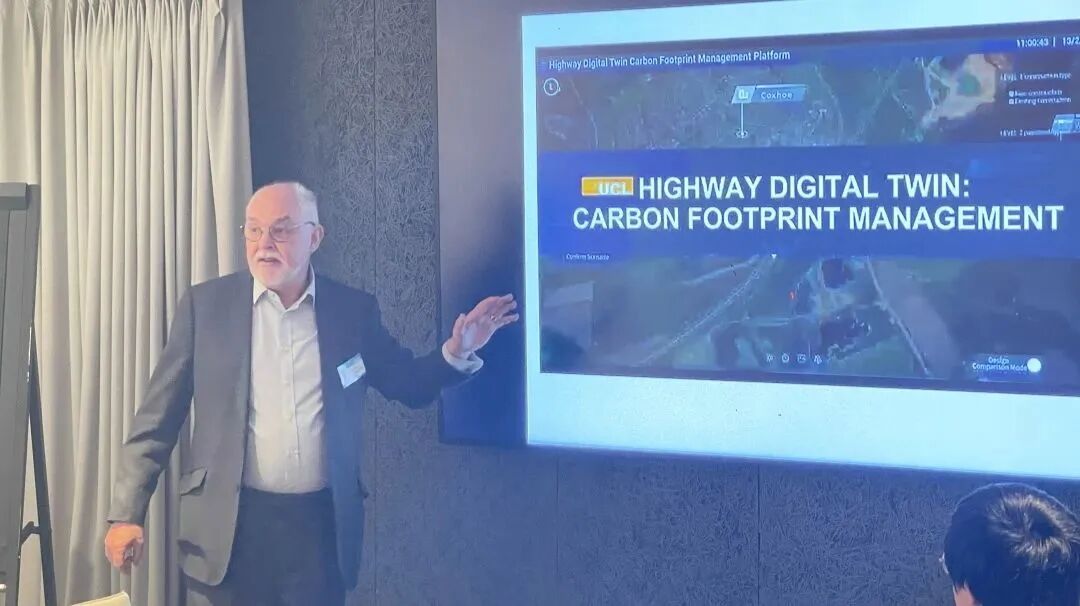
Professor Tim Broyd, Fellow of the Royal Academy of Engineering, Director of UCL's Institute for Digital Innovation in the Built Environment, and professor at The Bartlett, introduced his research experience in infrastructure and sustainable development. He noted that China-UK carbon neutrality cooperation should focus not only on emissions-reduction technologies but also on adaptation technologies for related infrastructure, so as to mitigate the severe impacts of climate change.
Discussion on Benefits and Risks of Carbon Neutrality
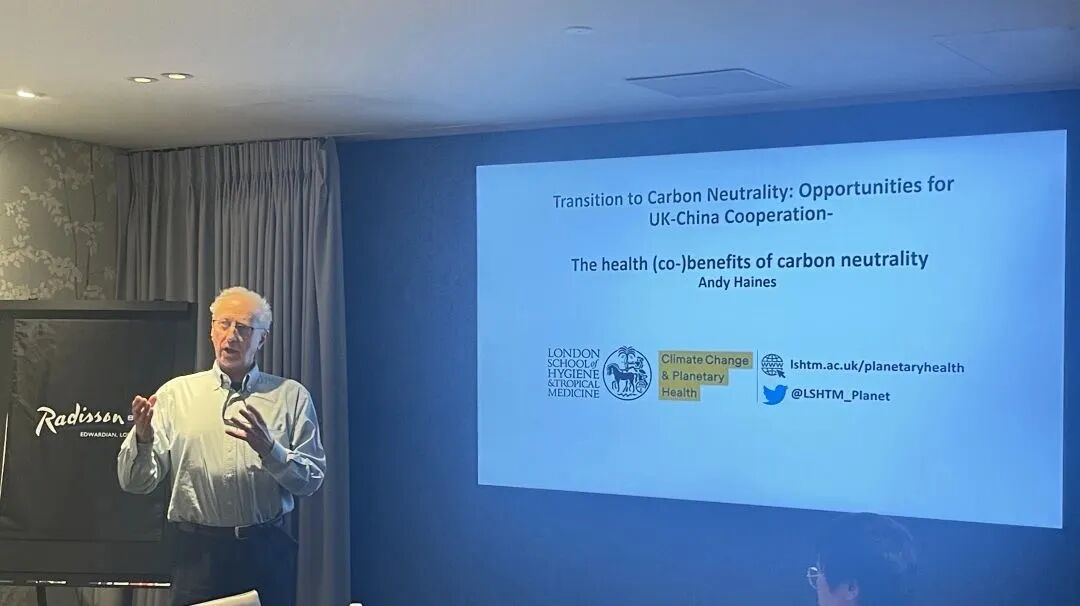
Sir Andrew Haines, Fellow of the Academy of Medical Sciences and professor at the London School of Hygiene & Tropical Medicine, introduced the health co-benefits of carbon neutrality. He highlighted the importance of cities for climate adaptation and mitigation, and noted that carbon neutrality has become a global consensus, creating opportunities for deeper cooperation between China and the UK in urban climate change and many other fields.
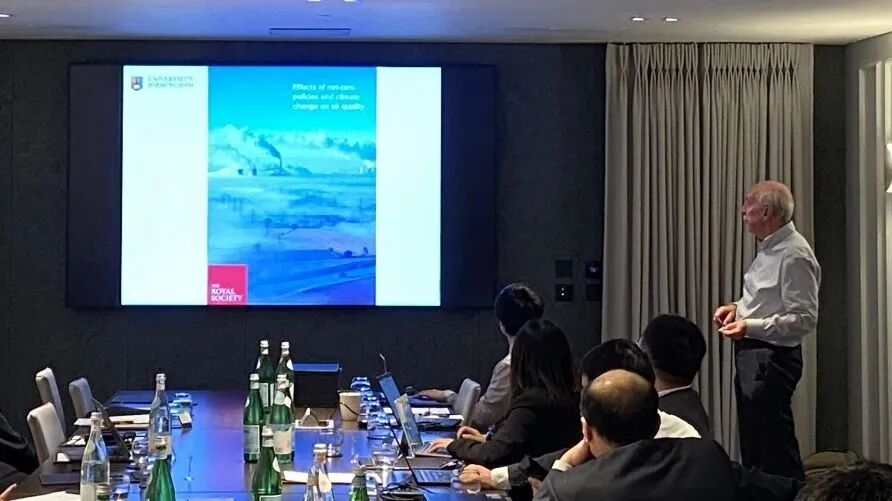
Professor Roy Harrison of the University of Birmingham, an OBE recipient and Fellow of the Royal Society, introduced research findings on urban air quality and energy policy, and said China and the UK have substantial potential for cooperation in climate and health.
Professor Michael Batty, Fellow of the Royal Society, Fellow of the Academy of Social Sciences, Fellow of the Royal Academy of Engineering, and professor at UCL's Centre for Advanced Spatial Analysis, introduced urban computer models and visualizations developed by his team over many years. He explained how long-term structural changes in cities can be simulated and dynamically visualized, demonstrating the potential and importance of future big data and smart cities in carbon neutrality.
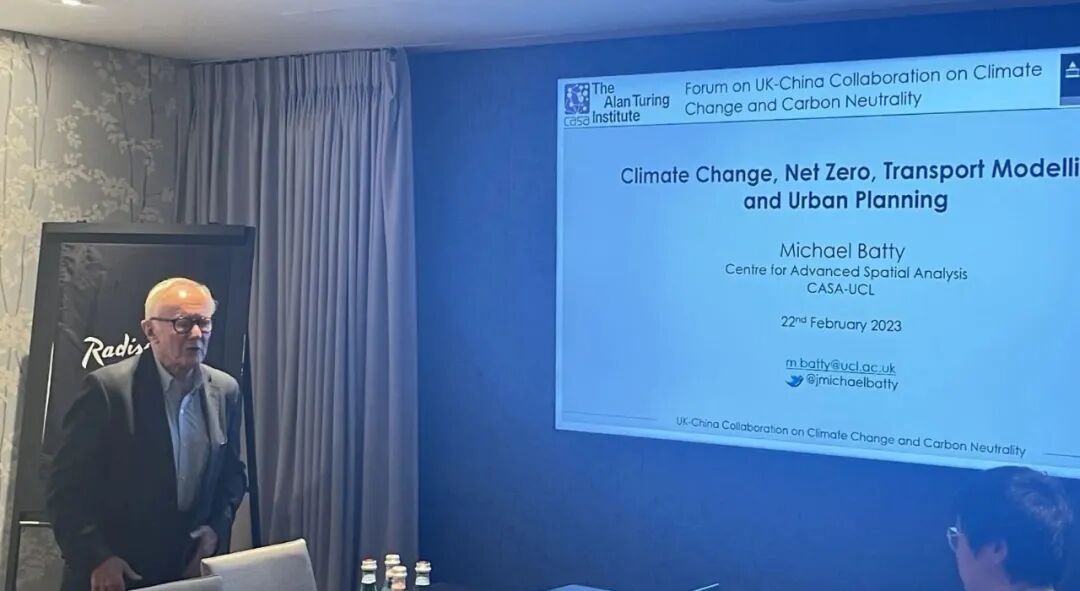
▲Professor Michael Batty of UCL's Centre for Advanced Spatial Analysis delivered a thematic report
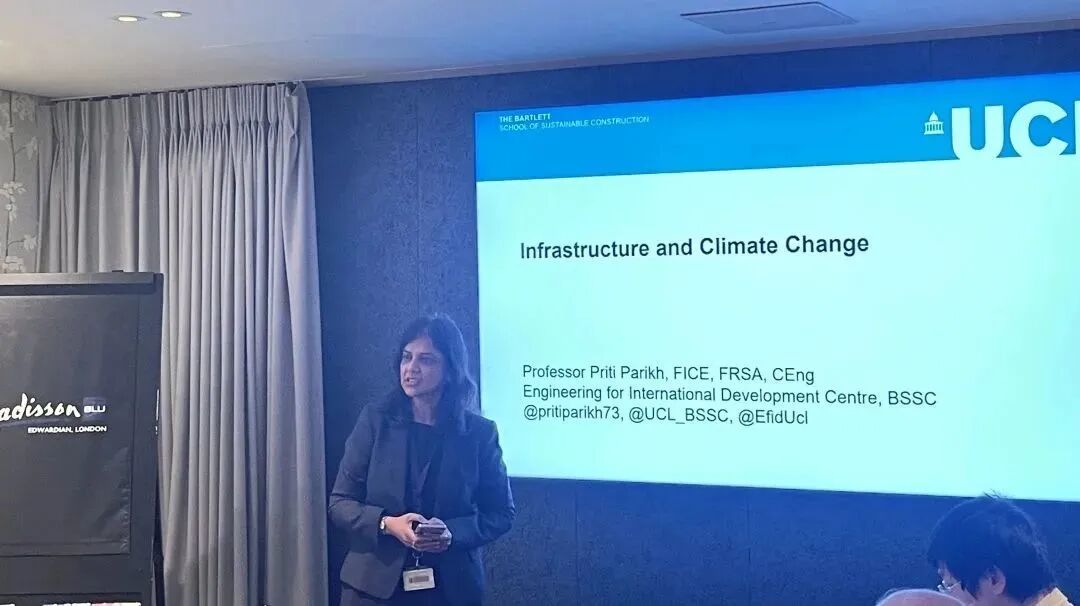
Professor Priti Parikh of The Bartlett at UCL introduced the latest research on how urban infrastructure development worldwide affects climate equity and vulnerability. She also expressed confidence in China's efforts to improve resilience to climate change through energy conservation and emissions-reduction policies. The two sides should strengthen research cooperation on a just climate transition and, while ensuring fairness, advance feasible energy-transition solutions in line with their respective stage-based goals.
Professor D'Maris Coffman, Director of The Bartlett School of Sustainable Construction at UCL, discussed the key roles of markets and states in addressing climate change. She called for stronger international cooperation to support low-carbon energy transitions in emerging economies and said future China-UK cooperation in academia and industry is highly promising. The Bartlett School of Sustainable Construction will fully support UCL's cooperation with universities around the world, especially those in China and the UK, as a core force in UCL's climate change work.
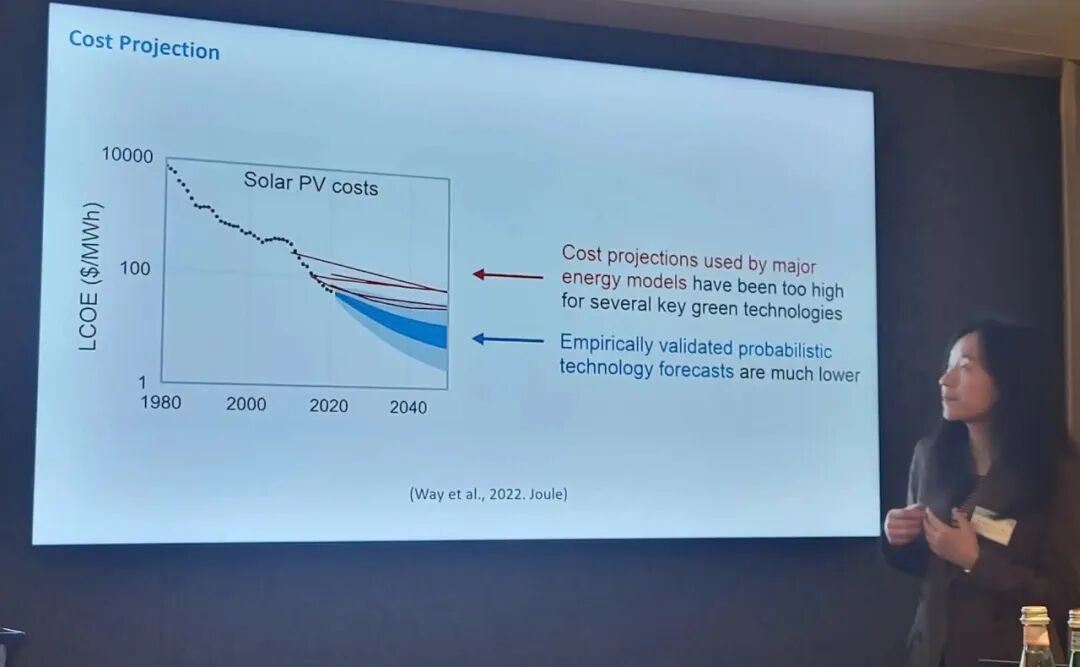
Associate Professor Meng Jing of The Bartlett School of Sustainable Construction at UCL gave a report on the importance of properly forecasting innovation costs for low-carbon energy technologies in the energy transition. She introduced four transparent model-based approaches for projecting future low-carbon technology costs and trends, compared expert forecasts and model results with actual cost data, and showed the effectiveness of different forecasting methods as well as the validity and policy significance of applying these projections.
Institutional Visits
Imperial College London and the University of Cambridge
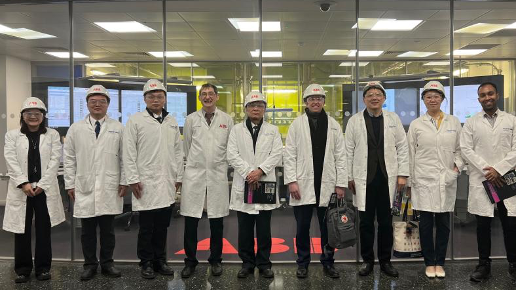
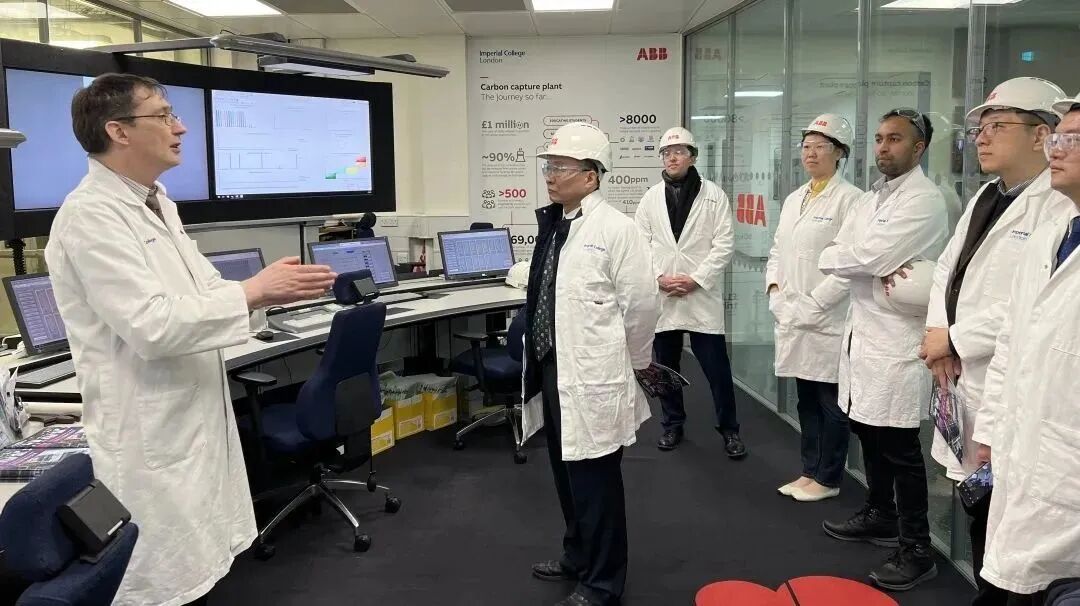
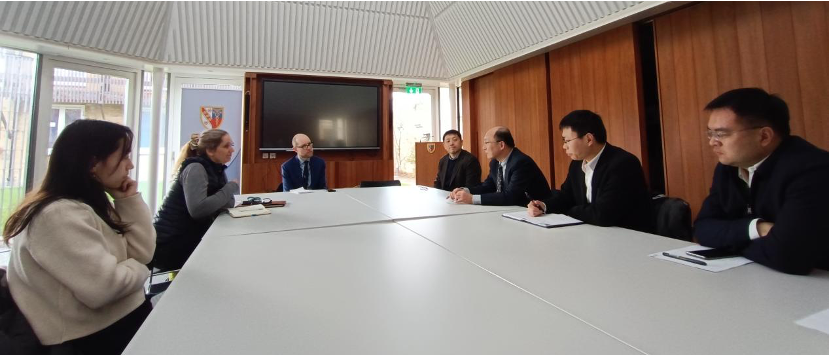
During the visit to the UK, Professor Guan Dabo accompanied Director Huang Jing and the delegation to the Centre for Environmental Policy at Imperial College London and the Institute for Climate and AI at the University of Cambridge, where they discussed future cooperation on climate change, CCUS project clusters, and artificial intelligence in climate-related interdisciplinary fields. During exchanges with Professor Niall Mac Dowell's team at Imperial College London, the delegation learned about the latest European research progress and enabling environment for CCUS, especially the development of CCUS project demonstrations and clusters, and discussed further cooperation on CCUS, carbon removal technologies, and CCUS cluster demonstrations.
At the University of Cambridge, the discussion focused on the intersection of artificial intelligence and climate change. Professor Emily Shuckburgh introduced the latest research on digital technologies such as AI in carbon emissions reduction and climate-change adaptation. Professor David Reiner introduced practical cases in which climate finance models, laws, and regulations promote green technology development. Associate Professor Meng Jing of The Bartlett at UCL introduced her team's latest research on low-carbon technology cost forecasting, noting that AI will have a major role in predicting and reducing low-carbon technology costs and will significantly influence technology forecasting.
Seminar
Opportunities and Challenges in the Global Transition to Carbon Neutrality
On February 26, the seminar “Opportunities and Challenges in the Global Transition to Carbon Neutrality,” jointly organized by China Energy Investment Corporation and the Max Planck Institute for Chemistry, was held in Frankfurt, Germany. Experts and scholars from the National Energy Group European Research Institute, MPIC, Tsinghua University, UCL, and other institutions exchanged views. Participants introduced the National Energy Group European Research Institute's research and development plans in new energy, new power systems, advanced chemicals, carbon emissions reduction, new environmental protection, and digitalization, as well as MPIC's research progress in carbon neutrality. Professor Guan Dabo, as the lead expert of the China-Europe Climate Change and Biodiversity flagship cooperation project under the Ministry of Science and Technology, introduced the current progress of the China-Europe CCB flagship program and potential future cooperation areas, and said that the CEADs team he leads will provide necessary support to all parties. Participants agreed that China and Germany have considerable cooperation potential in carbon neutrality and energy transition, and said they would continue to advance cooperation on China-Germany carbon neutrality technology roadmaps.