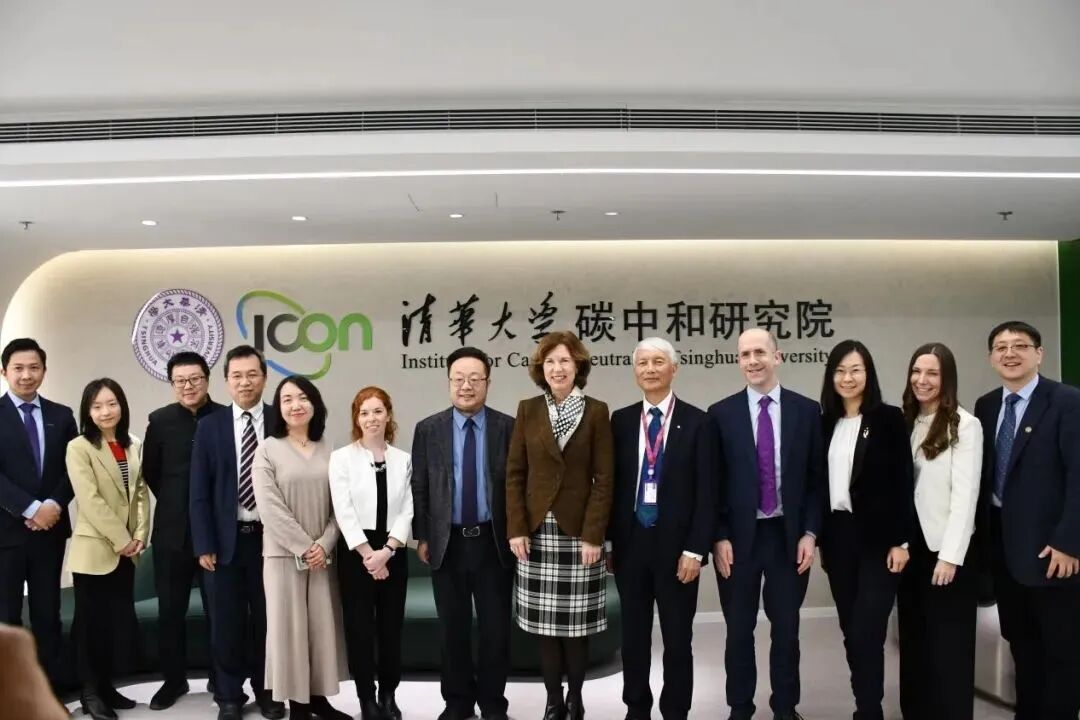
Delegation from the British Embassy in China Visits the Institute for Carbon Neutrality, Tsinghua University
On January 8, a delegation from the British Embassy in China visited the Institute for Carbon Neutrality, Tsinghua University. Experts and scholars from Tsinghua University, University College London, the University of Cambridge, King's College London, and other leading Chinese and UK universities, together with representatives from the British Council, the UK Department for Business and Trade, and other institutions, held in-depth exchanges on research collaboration, talent development, and industry-academia cooperation in climate change and carbon neutrality. Hosted by the Institute for Carbon Neutrality, Tsinghua University, the visit aimed to advance cooperation between China and the UK in responding to climate change and to contribute jointly to the global goal of carbon neutrality.
Professor Guan Dabo, Vice Dean of the Institute for Carbon Neutrality, first introduced the institute. Academician He Kebin, member of the Chinese Academy of Engineering and Dean of the Institute for Carbon Neutrality, Tsinghua University, welcomed Ambassador Caroline Wilson and the delegation from the British Embassy in China, and expressed his hope for deeper China-UK cooperation in climate change and carbon neutrality.
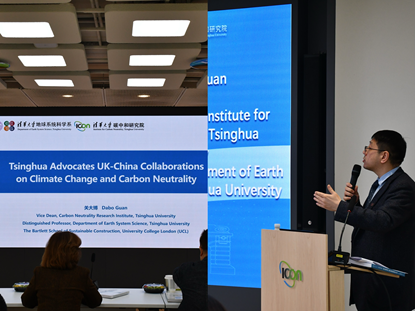
Several experts and scholars introduced China-UK cooperation in climate change and carbon neutrality. Professor Guan Dabo presented Tsinghua University's cooperation with the UK in these fields, covering more than 50 UK institutions including the University of Edinburgh and Imperial College London, which have jointly promoted climate change research and innovation collaboration. Tsinghua University has signed a memorandum of understanding with the University of Cambridge to jointly conduct research on carbon neutrality and energy system transition, and has also worked with the University of Surrey on climate change issues. Tsinghua University actively participates in the Global Alliance of Universities on Climate (GAUC), promoting joint research and young talent development. Since 2016, the carbon accounting database team led by Professor Guan Dabo has held six carbon accounting summer schools, attracting policymakers, researchers, and scholars from China and abroad and becoming a platform for international academic exchange.
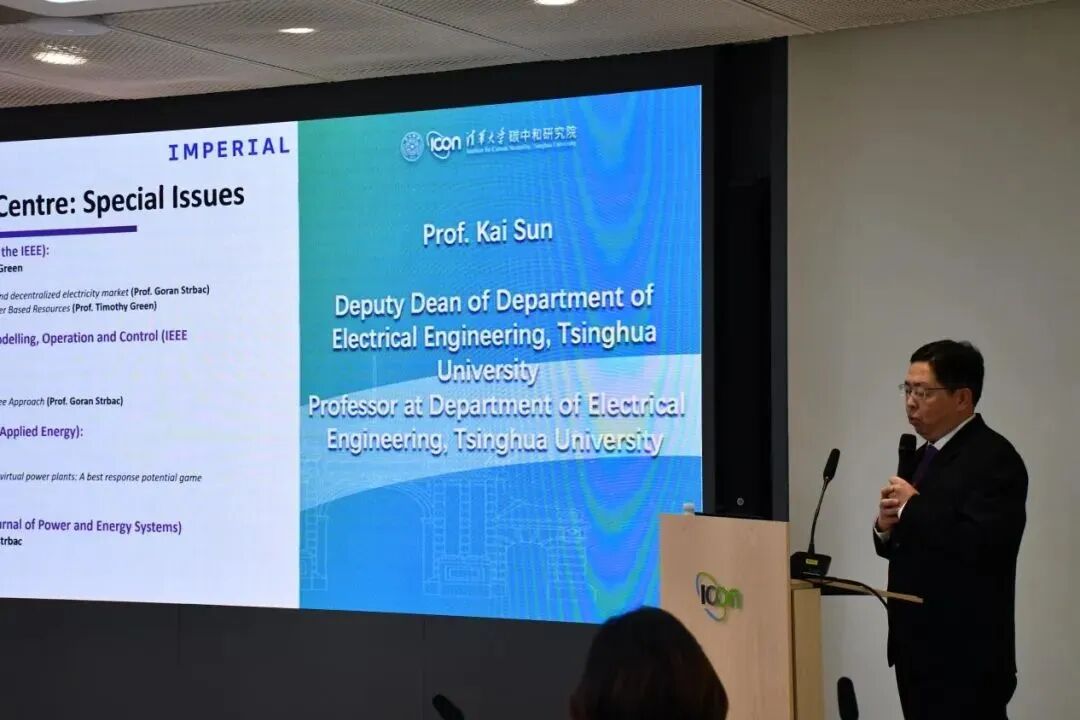
Professor Sun Kai, Deputy Head of the Department of Electrical Engineering at Tsinghua University, introduced the Tsinghua-Imperial Joint Research Centre, a collaboration that marks an important step for Tsinghua University in energy technology innovation and international research cooperation. The joint centre focuses on clean energy and smart grid technologies, aiming to promote energy transition and low-carbon development and contribute to global sustainable development. Professor Sun emphasized the close cooperation between the two sides in research, talent training, and technology transfer, and presented the latest progress made by the joint centre in advancing frontier technology research and application. Through this platform, Tsinghua University and Imperial College London will jointly train energy technology talent with an international perspective and deepen China-UK cooperation in carbon neutrality and energy.
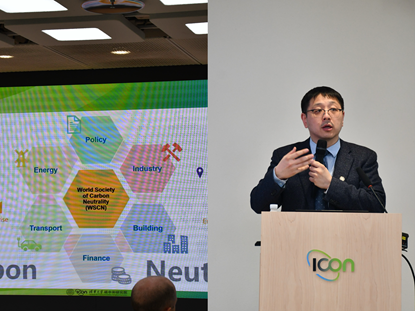
Professor Lu Xi, Assistant Dean of the Institute for Carbon Neutrality and professor at the School of Environment, Tsinghua University, introduced cooperation between Tsinghua University and Mingyang Smart Energy Group in China-UK new energy and sustainable development. He highlighted joint research and development in key areas including high-efficiency wind turbines, intelligent control systems, and integrated technologies for new energy power systems, which have promoted technological innovation and strengthened Mingyang's leading position in the global clean energy market. This integrated model of university-industry-research cooperation has not only advanced technology, but also trained new energy talent with international vision, further strengthening China-UK cooperation in the new energy sector and demonstrating broad prospects and far-reaching impact. Mingyang has played a key role in this process, helping deepen sustainable development cooperation between research institutions and enterprises in both countries.
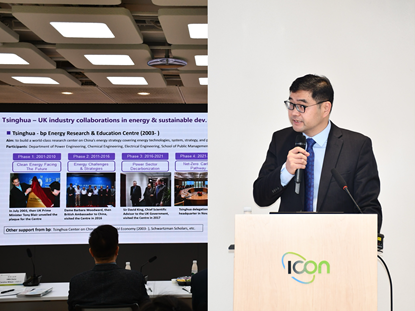
Finally, Professor Guan Dabo introduced the multilateral cooperation program on carbon neutrality and energy interconnection, which promotes energy system transition through international cooperation to achieve carbon neutrality goals. He emphasized the importance of decentralizing power systems and proposed innovative solutions that integrate high shares of renewable energy, energy storage systems, and demand-side management. Professor Guan also presented trends in global energy-related carbon dioxide emissions, underscored the key role of international cooperation in achieving net-zero emissions, and discussed goals for building low-cost carbon-neutral energy systems and promoting carbon neutrality technology innovation.
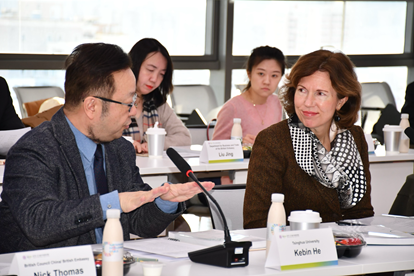
During the discussion and closing session, Chinese and UK experts and scholars looked ahead to research cooperation between the two countries in climate change and carbon neutrality and held in-depth discussions. Participants including Ambassador Caroline Wilson of the British Embassy in China, Counsellor Venda Green, and Academician Chen Deliang from the Department of Earth System Science at Tsinghua University said that cooperation between the two sides in climate change and carbon neutrality is highly significant and is key to achieving the global carbon neutrality goal.
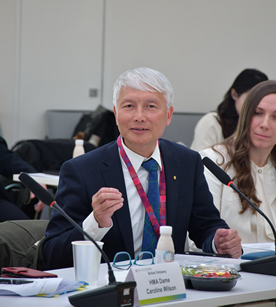
In her remarks, Ambassador Caroline Wilson emphasized that China-UK cooperation in climate change and carbon neutrality is mutually beneficial and supports global sustainable development. She thanked the participants and reaffirmed the UK government's firm commitment to carbon neutrality, noting that China-UK cooperation is vital to the global carbon neutrality goal. Taking the MENA project as an example, she praised its 30 years of cooperation with China and paid particular attention to the BP project, describing it as an outstanding achievement of China-UK cooperation. Ambassador Wilson called for the results of cooperation to be showcased, encouraging both sides to deepen cooperation and jointly address global climate challenges.

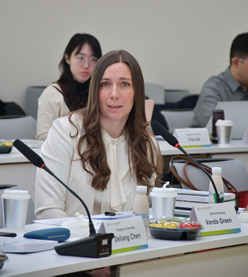
Ms. Venda Green, Counsellor at the British Embassy in China, shared her experiences from six months in China, emphasizing that climate change is a global issue and recalling how she personally witnessed the social and economic impacts of extreme weather during last year's super typhoon. She said China-UK cooperation is essential, expressed pride in the joint efforts of the two countries, and looked forward to more opportunities for cooperation. Ms. Green encouraged continued deepening of cooperation to jointly respond to global climate challenges.
Academician Chen Deliang, member of the Royal Swedish Academy of Sciences, foreign member of the Chinese Academy of Sciences, and professor in the Department of Earth System Science at Tsinghua University, emphasized China-UK cooperation in climate change and carbon neutrality. He shared his experience in international projects, especially the notable achievements of a major urban air pollution project. He said he was pleased to see the continued development of China-UK cooperation and looked forward to more future collaboration. He encouraged both sides to continue deepening cooperation, jointly address global climate change challenges, and promote climate change governance.
During the discussion session, participating experts and scholars conducted in-depth exchanges on cooperation between China and the UK in climate change and carbon neutrality, and offered suggestions on further strengthening cooperation and advancing the global carbon neutrality goal. They agreed that China and the UK should strengthen cooperation in policy communication, technological innovation, and talent development to jointly address climate change challenges.